Minneapolis-Saint Paul
A region where people have learned to build together
Some places respond to difficult challenges by competing for advantage. The Minneapolis-Saint Paul region has developed a different instinct: bringing people and institutions together to tackle problems that are difficult to solve alone.
That instinct is not the only thing distinctive about the region. But it may be one of the most consequential, because it gives Minneapolis-Saint Paul a particular capacity to act collectively at a moment when regions everywhere are asking the same fundamental questions: What comes next? And can we deliberately build a better future?
The region’s habit of collaboration has deep roots in Minnesota, from its business and civic institutions to its history of invention and international engagement. Today, leaders are increasingly trying to turn that aspect of regional character into an intentional economic strategy.
The GREATER MSP Partnership brings this culture of collaboration together as a cross-sector coalition of leaders and organisations, working across business, government, education, philanthropy and the wider civic community.
Today, GREATER MSP and its leaders are taking on an increasingly ambitious question: how can the region use what is distinctive about the place to help build the economy it wants next?
A Habit of Working Together
There is a particular way of responding to difficult problems in Minnesota: people show up, look beyond the boundaries of their own organisation and try to work out what can be done together.
The instinct has been described as “neighborism”. It is more than a slogan. The idea is rooted in a broader culture of civic participation, institution-building and collaboration that has shaped the region over time.
That culture matters because many of the challenges facing a modern economy cannot be addressed by a single company, government agency or university. They require relationships that already exist, and the willingness to bring them together around something larger than any one organisation.
GREATER MSP is built around precisely that premise. It brings together businesses, universities, public institutions, foundations and other organisations across the Minneapolis-Saint Paul region, creating a platform for working on issues that have a long-term impact on the region’s economic future.
What Collaboration Makes Possible
The value of that model becomes clearer when it moves from principle to practice.
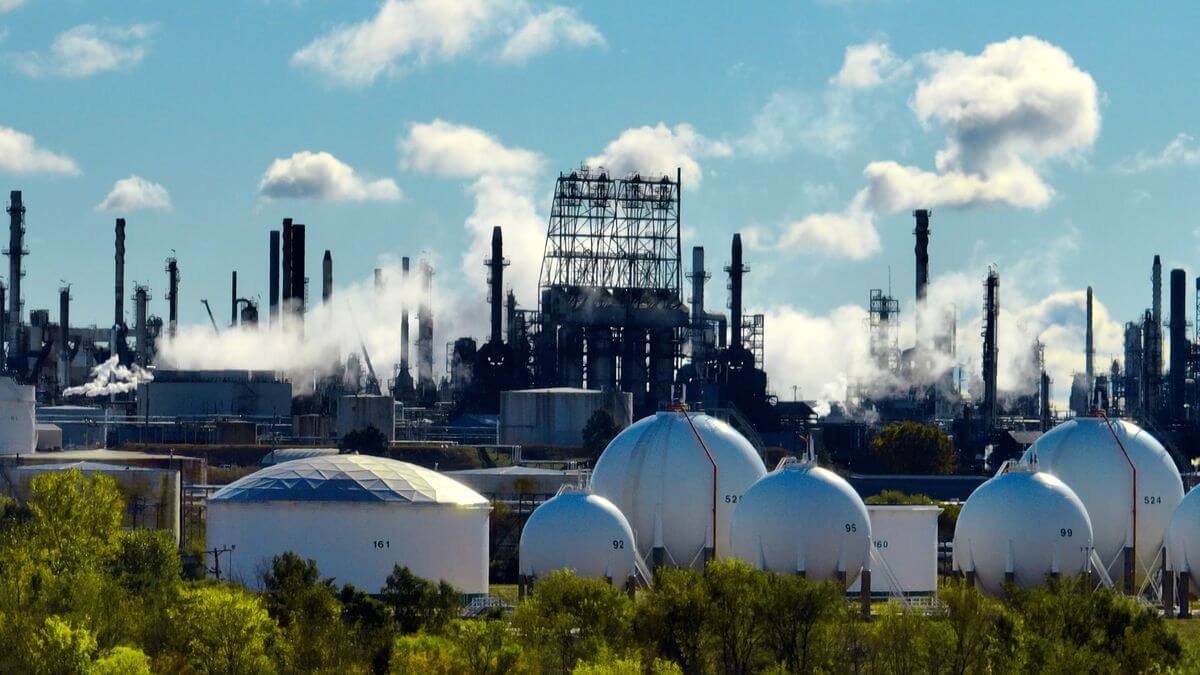
One example is Minnesota’s work to establish a sustainable aviation fuel industry. The effort has brought together companies, government, universities and environmental organisations around a shared opportunity, with the aim of building the infrastructure and relationships needed for an industry that did not yet exist at scale.
The same approach is visible in other emerging areas, from advanced manufacturing and semiconductors to sustainable proteins and medtech innovation. The common thread is not simply investment in a promising sector. It is the attempt to build the wider ecosystem around it by connecting organisations that hold different pieces of the puzzle.
For GREATER MSP, this is a different way of thinking about economic development. Rather than waiting for the next industry to emerge, the region is increasingly trying to create the conditions in which new industries can take root.
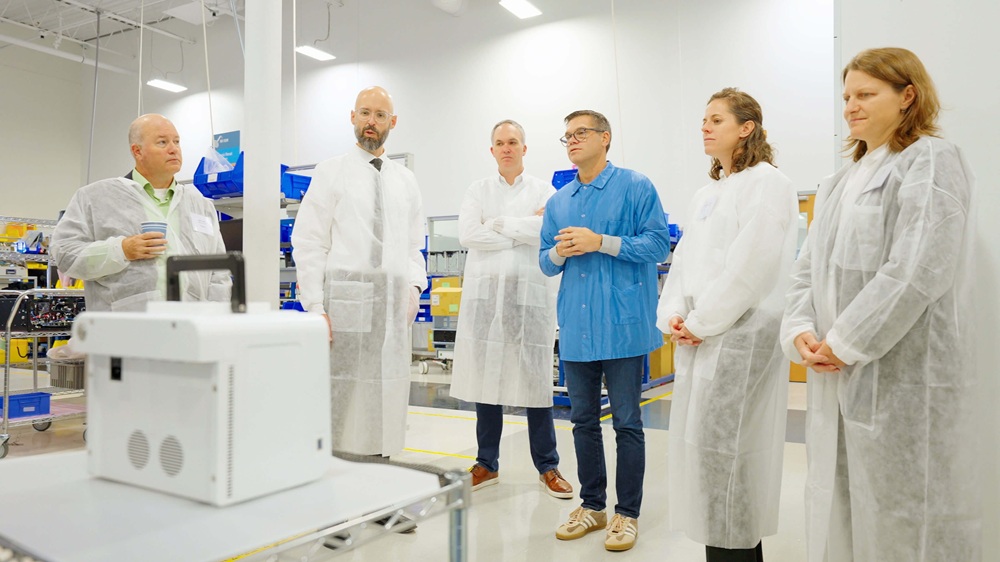
Medtech tour: Regional partners tour a Minnesota medtech facility. Cross-sector collaboration is helping the region turn longstanding strengths into new opportunities for investment, innovation and growth.
SAF blending facility: The opening of a new SAF blending facility in 2026 marked a major step in building Minnesota’s sustainable aviation fuel industry, enabling SAF to be blended, certified and delivered directly to MSP International Airport at commercial scale.
Putting Regional Character to Work
Every region has characteristics that distinguish it. The more consequential question is whether those characteristics can be put to work intentionally.
Minneapolis-Saint Paul is now testing that idea. Its capacity for collaboration is not being treated simply as a cultural virtue or a way of managing difficult moments. Increasingly, it is being used as a tool for shaping the region’s economic future.
GREATER MSP has introduced a concept called “Greater Growth,” an ambition to accelerate economic growth while concentrating effort on areas where Minnesota has genuine strengths and where economic expansion can create broader opportunity. It also reflects a wider question: what kind of economy does Minnesota want to build for the future, and how can that growth remain aligned with the values that have shaped the state?
This puts the region’s collaborative culture to a new test. Bringing people together is one thing. Using that capacity to make deliberate choices about the future - and then mobilizing enough people and institutions to build it - is something more significant.
The question is no longer simply whether Minnesota can grow. It is whether a distinctive regional character, applied with intention, can help determine what comes next.
Behind the Scenes: Peter Frosch on Leading GREATER MSP
Peter Frosch has worked across business, civic leadership and economic development. In this conversation, he reflects on the experiences that have shaped his leadership, the idea of “neighborism” and the people who influence his thinking, while sharing some of the initiatives and achievements that have shaped GREATER MSP’s work.

Why the Minneapolis-Saint Paul Story Matters
There are many things that distinguish Minneapolis-Saint Paul. What makes this story significant is the effort to take one of them - a deeply rooted habit of building together - and use it intentionally to shape the future.
The questions GREATER MSP is taking on are important ones: Can a region accelerate growth while widening opportunity? Can existing strengths be turned into entirely new industries and markets? Can collaboration that works in moments of challenge also work at the scale required to transform an economy?
Those questions are hardly unique to Minnesota. Regions around the world are wrestling with their own versions of them.
What makes Minneapolis–Saint Paul worth watching is the direction it has chosen: not simply adapting to whatever economy comes next, but deliberately trying to build it. If the region can turn its culture of collaboration into a durable capacity for economic transformation, that will matter well beyond Minnesota. It would offer evidence that regional character, matched with shared ambition and sustained action, can become a source of competitive advantage - and help shape a better future.
Follow GREATER MSP online
More Places to Watch
Discover other cities and regions featured by TPBO for their distinctive approaches to place positioning and development.
Explore the collection →