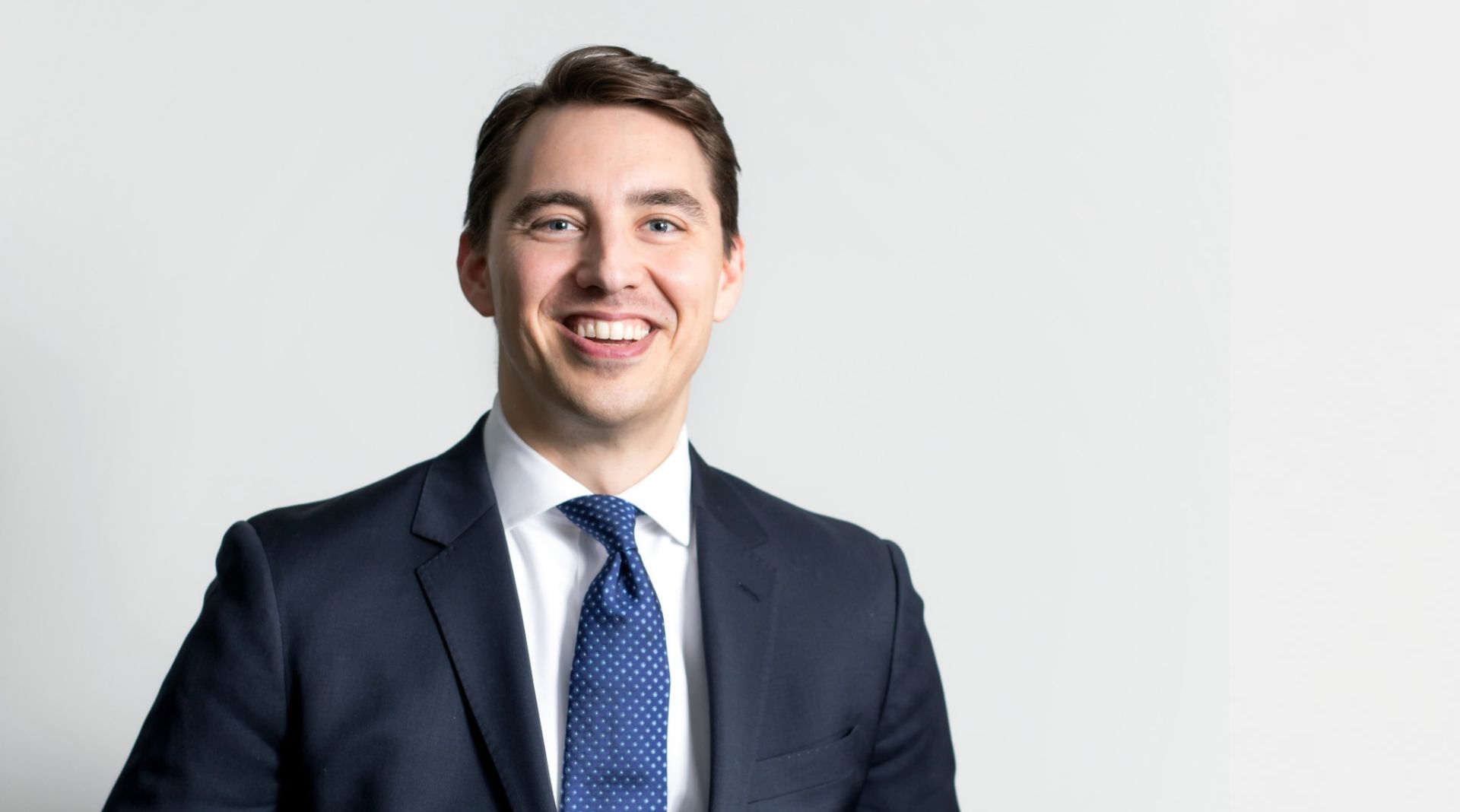
Peter Frosch is President and CEO of the GREATER MSP Partnership, the Minneapolis–Saint Paul Regional Economic Development Agency which brings together business, government, higher education and civic leaders across a region of more than 200 cities. Before joining GREATER MSP, he worked for an environmental NGO and as legislative director in the US House of Representatives.
When we first spoke with Peter in 2019, he was about to take the helm and GREATER MSP was relaunching as a regional partnership. Back then, he said the region needed bigger thinking and bolder action. Seven years on, we asked him what that has looked like in practice: from the end of incrementalism and the spirit of “neighborism” to sustainable aviation fuel and the missions Minnesota has set itself.
Peter, you’ve worked across business, civic leadership and economic development. Which experiences have most shaped the way you lead GREATER MSP today?
One of the moments that has mattered most is the experience of the pandemic. For me, it led to a recognition of the time we’re living in, not only in this region and state, but in this country and maybe even the world.
It was the end of incrementalism. I realized that we have to embrace the work of transformation. So we shifted our mindset: GREATER MSP exists to help drive a transformation in our economy, for the benefit of opportunity, security and hope for the people who live in our region today and tomorrow. That shift has made all the difference.
In the winter of 2026, the Minneapolis–Saint Paul region faced a significant challenge during Operation Metro Surge. What the nation and the world saw in your response was called “neighborism”. What does that idea mean to you personally?
The idea of neighborism resonates with me because it describes something fundamental about the character of this region: a willingness to come together, often spontaneously and without being asked, to protect and care for one another.
In Minneapolis–Saint Paul and Minnesota in 2026, that habit (our culture of doing the extra thing and looking out for your neighbor) caught the world’s attention. It helped us respond to a difficult moment, but it also revealed something important about who we are. Our interdependence isn’t a vulnerability; it’s a great reservoir of strength.
We had real momentum as a region before Operation Metro Surge, and that experience did not diminish it. If anything, it showed us more clearly what we’re capable of when we act together. We’re now learning to tap that strength not just to respond to challenges or play defense, but to keep building: to shape the culture and economy we want and aspire together toward something better.
Our interdependence isn’t a vulnerability; it’s a great reservoir of strength.
Your Partnership brings together people and organizations that do not always have the same priorities. What have you learned about getting people to work together when the stakes are high and the interests are different?
We’ve done hundreds of projects over the past decade and not all of them have succeeded. That’s how we learned to do what we’re doing today. Some of those lessons come down to the basics: what you’re doing, why you’re doing it and how you’re doing it.
We’ve learned that if we do bigger things, if we start with greater aspirations and more complex challenges, it might be harder, but the solutions are worth a lot more, and those solutions can deliver real value to different partners in different ways.
We’ve also learned that you can create entirely new spaces where you don’t have to play by the old rules. You can create a new set of rules.
For example, we embarked on the huge challenge of decarbonizing air travel because Delta Air Lines brought that challenge to GREATER MSP. No one knew how to do it. But we knew that no entity, whether it’s the biggest private company in the world, the biggest airline in the world, a state government or a university, was big enough for that challenge.
A little humility in the face of a big challenge and a little excitement about what’s possible led to an innovative partnership where everybody is doing their part and solving the problems they know about. We’re making progress and now leading North America in building an entirely new industry and market around sustainable aviation fuel (SAF).
Another thing we’ve learned is that collaboration doesn’t have to be about convincing people. When people are inspired, understand the plan and develop trust in how the work is coming together, they see the value and choose to participate.
What’s least understood about Minnesota’s economic prospects right now?
What nobody knows is that Minnesota is rallying around an incredibly bold vision for the future of the economy, not just in our state or even the country, but for the world.
We’ve given ourselves a set of missions that motivate us, connect us and connect us to the world. Those missions include developing the next generation of cures and treatments in health technology, driving North America’s clean transition, feeding nine billion people in the face of global climate change, and finding ways to make advanced technologies like artificial intelligence actually work for us and for humanity.
Those are big missions. And I think articulating them is being received as a form of leadership because they point toward a better future and give people something meaningful to build together. The work of making those missions real has led us to build partnerships across America and with countries, companies and universities around the world.
We’re also seeing encouraging signs that more young people want to be part of what’s happening here. Net migration of young people to our region has been rising over the past couple of years.
That kind of big thinking, paired with the work of developing solutions the world urgently needs in the 21st century, is why Minnesota’s economic prospects are so bright.
How do you see the GREATER MSP region and the rest of Minnesota working together to build the state’s next economy?
We’re rethinking geography.
We are, of course, working together across the 200 different cities in the Minneapolis–Saint Paul region. But we’re also developing innovation corridors that connect Minneapolis–Saint Paul with other parts of the state, where shared strengths and a shared strategy can unlock much bigger opportunities.
For example, we’re working with northern Minnesota and the Duluth area to build an industrial decarbonization economy. That includes sustainable aviation fuel made from wood waste, as well as green methanol, green hydrogen and green ammonia, and new relationships between the Port of Duluth (North America’s most inland ocean-going port) and global ports like Rotterdam and Liverpool.
We’re doing something similar with Rochester, home of the Mayo Clinic. Through our MedTech 3.0 strategy, we’re connecting the assets of Rochester and Minneapolis–Saint Paul around the future of medical technology, including areas like neurotech.
The point is that the next economy won’t be built within traditional geographic boundaries. Whether we’re talking about industrial decarbonization, biomanufacturing, med and health technology or new agricultural systems, the biggest opportunities require us to connect the strengths of different parts of Minnesota and build at a scale none of us could achieve alone.
What gives you confidence about where Minnesota can go from here?
My confidence comes from the evidence of what we’re already accomplishing, and from the fact that some of that progress is happening faster than we might have expected, even in the face of headwinds we could not have anticipated.
On sustainable aviation fuel, for example, in September 2026, after a 36-month innovation sprint, we succeeded in delivering SAF to Minneapolis–Saint Paul International Airport. That was the first step in a 15-year strategy to build this industry for North America.
That kind of progress opens an entirely new horizon of opportunity and gives us growing confidence in what we can achieve next.
Who are the people in Minnesota who have changed the way you think about the region, and what have you learned from them?
One leader who is relatively new to Minnesota but has become one of our most important visionaries is Tonya Allen, president of the McKnight Foundation.
Tonya’s experience in Detroit gave her a distinctive view of the opportunities in Minneapolis–Saint Paul and across Minnesota, and it led to some bold thinking, including the vision for the GroundBreak Coalition. Its focus is on expanding economic opportunity for low-income communities and communities of color that historically have not had the same access to investment and growth.
Her approach is to turn the gaps we see into goals we can work together to achieve. That has helped unlock billions of dollars in new investment and has become a source of hope and inspiration for what’s possible in this generation.
Christophe Beck, chairman and CEO of Ecolab, is another leader who has changed the way we think. He brings a global perspective and an entrepreneurial mindset that is relentlessly positive while remaining rigorously realistic.
Tonya and Christophe are both leaders within our Partnership, and each in a different way is helping shape and reshape how we think about the work ahead.
If we came back 10 years from now and everything had gone as you hoped, what would we see that tells us Minnesota got it right?
Imagine someone arriving at the airport from Singapore, getting into an Uber and saying, “I’ve never been here before. I’m here for work. What should I know about this place?”
And the driver says, “You’ve come to the problem-solving capital of North America. People come here from all over the world to collaborate, build things and create breakthroughs.”
That’s the kind of future I have in mind. Not just that visitors know something important is happening here, but that the people who live here feel it too. There’s a sense of hope and possibility that has made its way into everyday life, to people you meet in an Uber, on the street or at the grocery store, because people are actually experiencing the benefits of a stronger economy and a better quality of life.
You’d also see people coming here from around the country and the world to understand how it happened: how Minnesota created a new model of greater growth that delivers more economic opportunity, produces solutions the nation and the world need, and builds a stronger sense of unity and shared purpose.
Thank you, Peter.
For the wider regional story, explore our Minneapolis–Saint Paul Region Showcase.
Connect with Peter Frosch on LinkedIn, or learn more about GREATER MSP. Read our 2019 interview with Peter.
For more perspectives from practitioners and thinkers shaping the future of place branding, explore our Place Brand Leaders interviews.