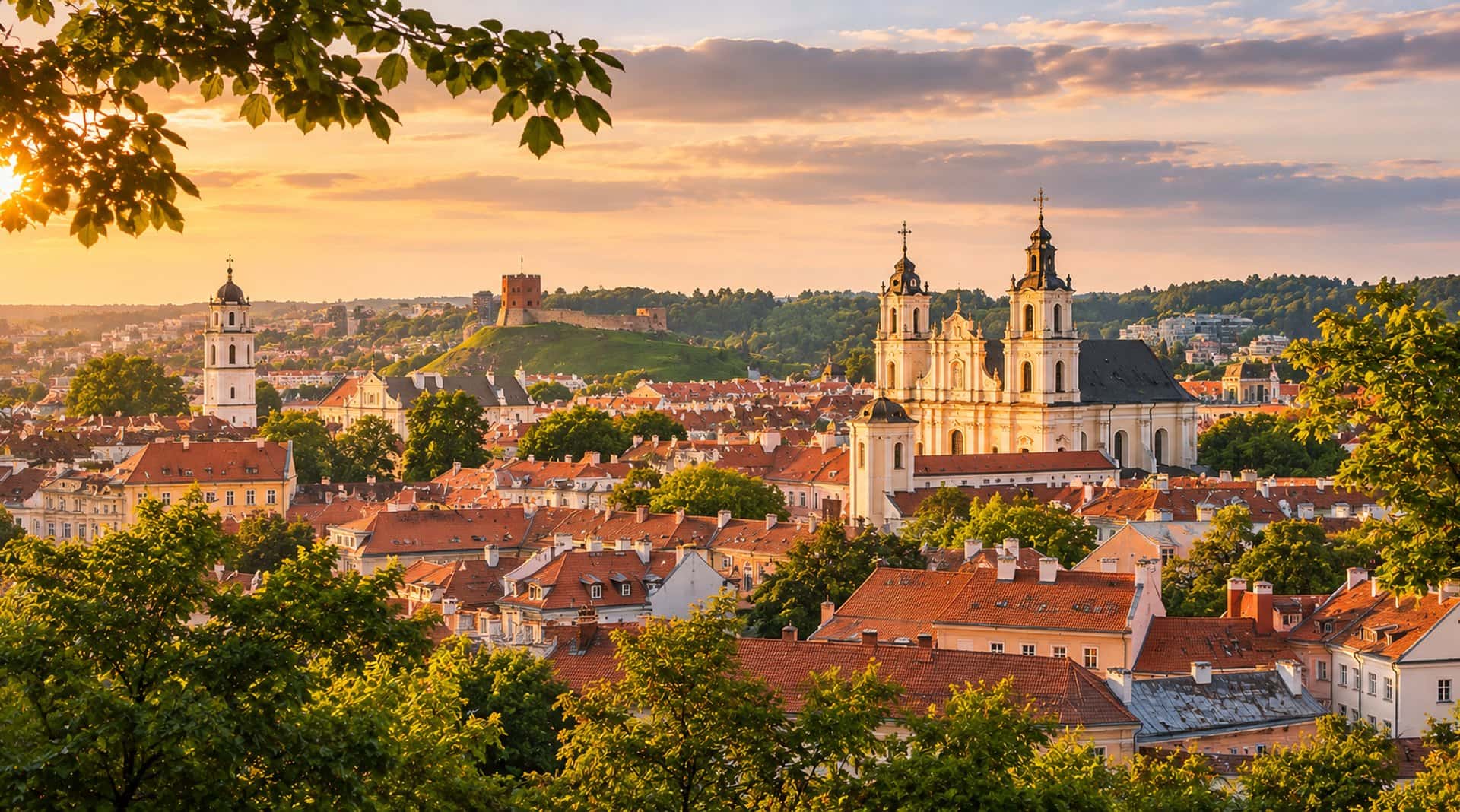
Lithuania is the largest of the three Baltic states. Abroad it is often read through its capital, Vilnius, which has made international talent a central part of how it presents itself.
This profile looks at how Lithuania is positioned, how it is read from outside, and where the two pull apart, drawing on our archive and the international rankings we follow.
Country Brand Strength
Lithuania is still building international recognition. In a 2017 interview, aviation and place branding expert Gregory Pomerantsev noted that few people abroad knew the Baltic national airlines, an example of how thin the region’s visibility was. In our 2023 expert panel, Magdalena Florek named Lithuania among the places to watch.
At City Nation Place Global 2026, Marius Gurskas from the Lithuanian government’s office spoke about the gap between what is happening on the ground and how a place is seen. That gap is a reputational risk, the panel argued, and resident pride should be treated as a business priority.
Economic Position
The economic story is stronger than the image. Indrė Laučienė of International House Vilnius told us that Lithuania’s ICT workforce grew by roughly two-thirds between 2019 and 2023, and that the country scores very well on ease of hiring and on growing talent in international benchmarks. That reputation, she said, has not yet reached the people deciding whether to move.
Appeal to Talent
Talent is where Lithuania, through Vilnius, is most active. International House Vilnius brings relocation, employment, tax and social insurance support together in one place, an approach our review of talent attraction in 2026 names as an example for other cities.
Laučienė is open about the challenges: only 7 to 9% of international students stay in Vilnius after graduating, and only around a quarter of foreigners would actively recommend the city. Her answer is not more promotion, but being honest about what the city offers: less friction, faster decisions and one point of contact.
Sustainability and Quality of Life
Lithuania was one of the strongest risers in the World Happiness Report 2024, placing just inside the top 20. Foreigners in Vilnius rate quality of life and the look of the city highest, Laučienė told us.
Back in 2015, place branding adviser Jeremy Hildreth described recommending a policy step to the mayor of Vilnius: officially linking the city’s forested areas so that it could claim the world’s largest urban forest.
What Stands Out
Lithuania is a clear case of results running ahead of reputation. Its tech workforce, happiness results and talent services point one way; its international visibility points another.
What makes it interesting is how openly this is discussed. A government representative names the perception gap as a risk, and the capital’s talent team works with its own survey data rather than slogans. If that honesty becomes part of the story, Lithuania has a credible way to stand out among mid-sized European countries that all promise quality of life.
Lithuania’s talent and tech results are strong, but they have not yet reached the people choosing where to live and work.
Quality of life and career growth are promised by many European places. Low friction and openness are its own angle.
Workforce growth, rising happiness and practical talent services back the story.
Positions are relative to the places in TPBO’s editorial record and based on public material only.
Want the same reading for your own place? Request a free Outside View →
From Our Archive
- 2026City Nation Place Global 2026: winners and takeaways from London
- 2026Indrė Laučienė on how Vilnius competes for international talent
- 2026The state of talent attraction in 2026: from campaigns to infrastructure
- 2024World’s happiest countries 2024
- 2023Hot destinations in 2023 for talent, investors and tourism
- 2017Gregory Pomerantsev on aviation, travel and place branding
- 2015Jeremy Hildreth, the Indiana Jones of branding
- CityVilnius: city showcase
About this profile. We combine the international rankings we follow with our own interviews and reporting. Rankings change every year, so positions are described in broad terms. See the rankings and indices we follow, or explore our other country profiles.