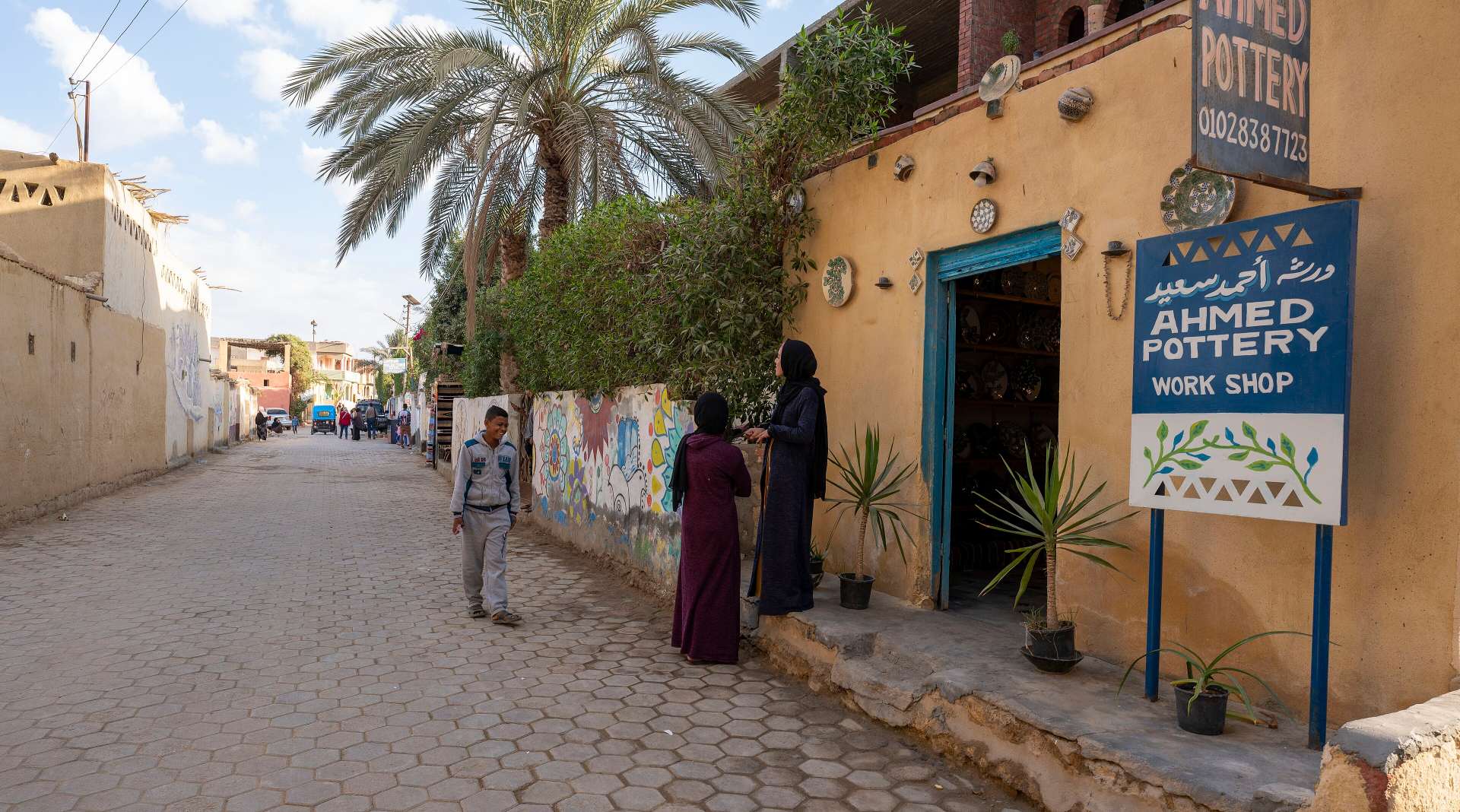
Two places in Egypt show two very different routes to a strong place identity. Tunis Village grew from the community up. El Gouna was planned from the start.
Tunis Village: a grounded revival
Between Lake Qarun and the edge of the desert in Fayoum, Tunis Village has become one of Egypt’s most compelling examples of community-led renewal. It began in the 1980s with a pottery revival sparked by Swiss ceramist Evelyne Porret and has grown into a centre of creativity, craftsmanship and sustainable rural tourism.
The village has no formal place branding strategy, yet it has cultivated a distinct identity. Artists’ studios, earthen architecture and an annual pottery festival draw visitors, investors and admirers of earth art and slow living. The growth feels organic, but it rests on decades of commitment from local artisans and quiet stewardship of the landscape. Tourism flows from community life, which suggests that the most enduring place brands are shaped from the inside out.
“In Tunis village, the collective efforts of the local community and the grassroots approach has attracted investors, artists, and enthusiasts of ground earth art, pottery, and nature. The village’s transformation serves as a compelling example of community-driven development.”
Salma Ghanem, Lecturer, Arab Academy
El Gouna: crafted for living
On the Red Sea coast, El Gouna is more than a resort. Conceived by Orascom as a planned city, it has become one of the region’s most complete examples of place identity, combining architecture, culture and investment.
Lagoons and a yacht marina frame the town, while an international school and a university have attracted a globally minded mix of residents, students and faculty. The annual El Gouna Film Festival ranks among the region’s most prominent and anchors its reputation in cinema and the creative industries.
El Gouna’s identity feels curated rather than manufactured. Local entrepreneurs shape a homegrown food and design scene, and the town is promoted as much as a place to build a life as a place to visit.
“El Gouna’s strength lies in its coherence: a brand built not just for tourism, but for living and belonging.”
Salma Ghanem, Lecturer, Arab Academy
This case study is based on the Egypt feature in TPBO’s special edition Places to Watch: Africa & the Middle East (2025). Photo: Summering2018, CC BY-SA 4.0, via Wikimedia Commons.
More from TPBO
- Places to Watch: Africa & the Middle East: all places and people featured in the special edition
- Egypt: TPBO Observatory profile
- Salma Ghanem: interview