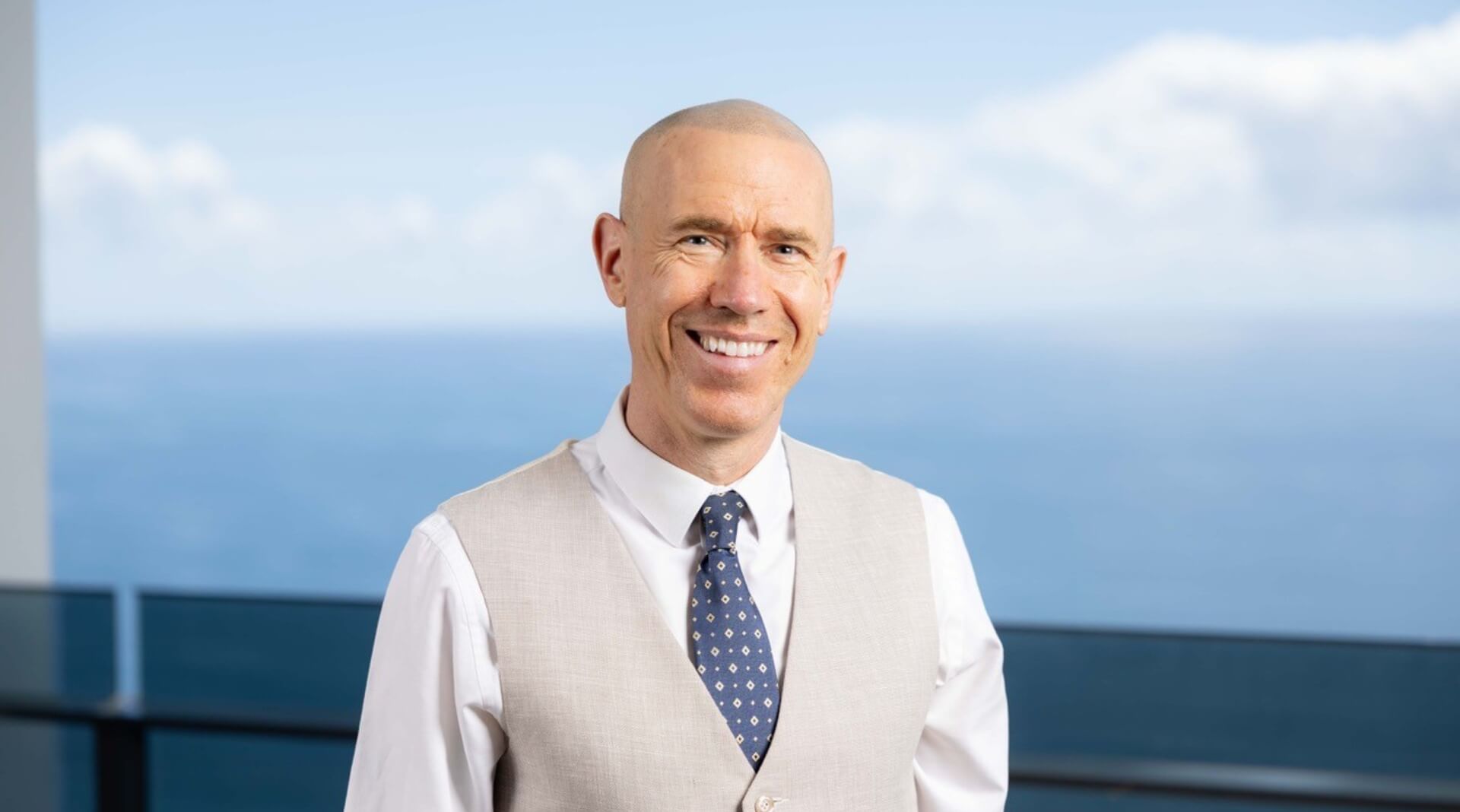
What does it take for a city to articulate who it is — not as aspiration, but as truth? On Australia’s Gold Coast, that responsibility rests with Todd Babiak, CEO of Brand Gold Coast, the city-owned organisation charged with stewarding the region’s place brand as a long-term public asset. Rather than beginning with projection, the organisation began with listening. Before slogans, before campaigns, before positioning, there were conversations.
We spoke with Todd to explore why internal clarity precedes external reputation, how the Gold Coast’s instinct to “say yes” shapes its operating culture, and why stewardship rather than promotion defines the next chapter of city branding.
Todd, coming to the Gold Coast with an international background, what first convinced you the city had a distinctive story to shape and share?
The Gold Coast is well-known in Australia, but its reputation doesn’t fit its reality — the story Gold Coasters actually tell about this city. The more time I spent here, the more I listened, the more I recognised a gap that would be fun and meaningful to close. It was also inherently emotional and inspiring. Gold Coasters are passionate about this place and how it has invited them to change their lives.
You have spoken about the decision to listen before projecting. What does projection risk when it is not grounded in internal clarity? And practically, what does deep listening look like at city scale?
People aren’t consumer products, and places are really just people. They have something in common, and it’s always rich and complex — but places don’t fit inside the traditional advertising agency approach. I’ve tried to learn from all of my mistakes since 2011, and there is no short-cut for listening, for spending time with people and understanding why they live where they live. As for scale, on the Gold Coast we worked with a research partner to find a panel of people who make up a pure cross-section of the city. So science and art.
Through your one-on-one engagement with residents, what surprised you most? Were there assumptions that the listening process quietly dismantled?
Most Gold Coasters have come here relatively recently, from somewhere else. I asked them what they thought of the Gold Coast before moving here, and many admitted to believing some of the outdated stereotypes. The clichés were shattered immediately — but I found it fascinating that they picked up their lives and moved here thinking it was something they weren’t sure they wanted. So there are a lot of natural adventurers and risk-takers here, which creates a culture in itself.
The Gold Coast is often described as a city that “says yes.” Is that cultural, structural, or both? And how do you preserve that openness without dilution?
Culture drives everything. Australia can feel closed — a clubby, highly networked dynamic where new people and ideas struggle to find space. The Gold Coast is the antidote to that. No one cares where you went to school, and they all remember what it was like to be new here. It creates an open culture, and that creates a more permissive, authorising structure. Not yes to everything — but if it’s right for the Gold Coast, your ideas will have unusual velocity.
You have framed the Gold Coast not as a product to be marketed, but as a shared public asset. How does that distinction reshape your mandate?
“Brand” isn’t a great word, to be honest — it can be conflated with marketing. But we are a small team with a small budget who can only scale our efforts by helping other people use the Gold Coast story to communicate and to make decisions. Yes, we use the brand for marketing. We also use it to make investments, to prepare for the future, to say yes and no. It is an operating system.
Stewardship implies responsibility beyond campaign cycles. What disciplines have you put in place to ensure long-term coherence across institutions and partners?
Even if I had legislative power to force people to use the brand, it wouldn’t work. The only way we can do our work is through influence and soft power. It will never be perfect — it’s a long game, using a cultural expression and strategy to build consistency and coherence. “How can we help you succeed?” is a key question for us.
With Brisbane 2032 approaching, what would meaningful success look like for the nearby Gold Coast — beyond metrics, in behaviour and confidence?
A lot of the sports will be played here, and a lot of athletes and spectators will be here.
Gold Coasters are Gold Coasters — this city has a distinct culture and an entirely different proposition. Confidence is the right word. But between now and 2032, the best way to achieve it is through action, by telling our story and by building something no other city in Australia can build. This will be a lot of small things rather than one or two big ones.
Was there a moment where alignment proved harder than expected?
There is always shared language and common goals — ways in which cities start to copy one another, especially a misunderstood city like the Gold Coast that has felt like an underdog for a long time. Our goal is to encourage Gold Coasters to see that being different is good. And we didn’t invent this. Gold Coasters told us this story.
Ten years from now, how would you hope residents describe the role Brand Gold Coast played in the city’s evolution?
In ten years, I would be proud if the Gold Coast brand was alive and humming, building confidence, creating enormous value — and few people knew the role Brand Gold Coast played. The secret orchestrator of a beautiful symphony.
Thank you, Todd!
To explore further, connect with Todd Babiak on LinkedIn, see his Leadership Profile, or visit Brand Gold Coast. You’ll find a printed version of this interview in the 2026 Place Brand Leaders Yearbook, together with a full showcase on the Gold Coast — a short version of which is also available online.