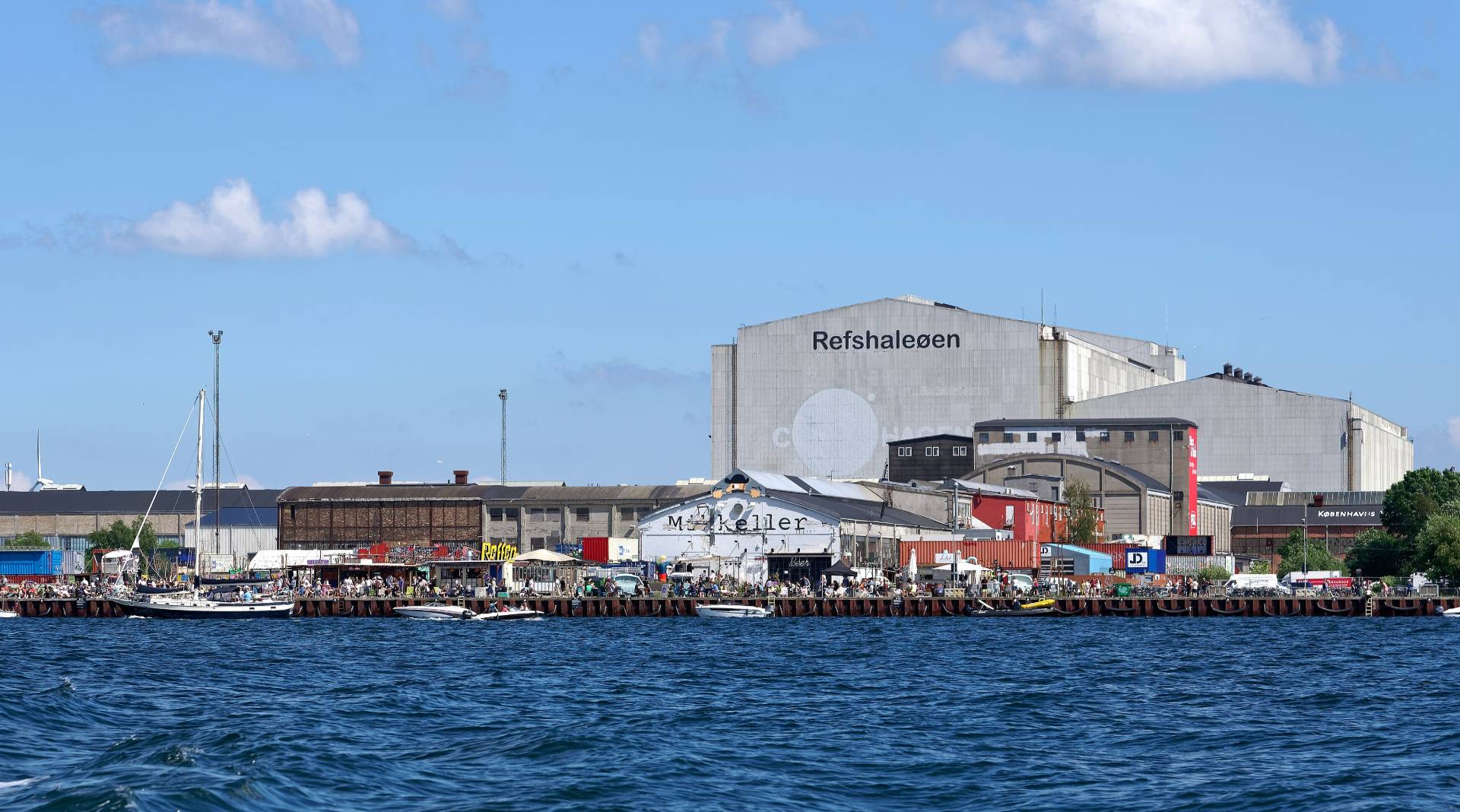
Refshaleøen, in the harbour of Copenhagen, has turned an industrial past into one of the city’s most dynamic cultural and recreational areas. Its story shows how a historic site can be reinvented while keeping its character.
Michael Persson Gripkow, Head of Mpege Branding AB, nominated Refshaleøen for the Place Brand Leaders Yearbook 2025.
An island built for industry
Refshaleøen was originally a separate island and is now joined to the larger island of Amager. Its history goes back to 1624, when a blockhouse was built to guard the entrance to Copenhagen harbour. Land reclamation in the 1870s enlarged the island and made room for the Burmeister & Wain shipyard, established in 1871. The shipyard became an icon of Danish industrial history and employed up to 8,000 people at its peak. Its closure in 1996 ended an era.
A new life for old halls
Since the shipyard’s bankruptcy, Refshaleøen has been redeveloped into a cultural and recreational hub. The former industrial buildings now house creative entrepreneurs, small crafts businesses, flea markets, storage and cultural institutions, among them the theatre Asterions Hus, the restaurant AMASS, the art gallery YARD and the creative community Skabelonloftet.
In 2018, Refshaleøen became home to Reffen, Northern Europe’s largest street food market, with 40 food startups. Innovative businesses followed, including Copenhagen Yacht Services, which opened Denmark’s first indoor marina for motorboats, and the volunteer spaceflight organisation Copenhagen Suborbitals.
A venue for events
Since 2010, the area has hosted the heavy metal festival Copenhell, the final party of the Copenhagen Distortion festival, the Scandinavian Reggae Festival and many other music and theatre events. In 2014, the Eurovision Song Contest was held in the B&W Hallerne, turning the area into “Eurovision Island”, complete with visitor facilities and a press centre.
Planning for sustainability
Refshaleøen covers about 500,000 square metres and is owned by Ejendomsselskabet Refshaleøen A/S, a property company backed by four pension funds. In 2013, it began working with the energy company SE Big Blue and the Energy Academy on the island of Samsø to plan a climate-friendly neighbourhood.
What other places can take from it
Refshaleøen did not erase its industrial past. The halls, the harbour and the shipyard story are what give the area its identity today, and they make it a natural home for food, culture and events.
“Refshaleøen’s journey from an industrial shipyard to a dynamic cultural and recreational destination is a testament to effective place branding and urban renewal. It stands as a vibrant example of how historical sites can be reimagined to meet contemporary needs while preserving their unique heritage.”
Michael Persson Gripkow, Head, Mpege Branding AB
This case study is based on the Refshaleøen nomination in the Place Brand Leaders Yearbook 2025. Photo: Jakub Hałun, CC BY-SA 4.0, via Wikimedia Commons.
More from TPBO
- Place Brand Leaders Yearbook 2025: the places and people featured
- Copenhagen: TPBO Observatory profile
- Placemaking: more examples and interviews