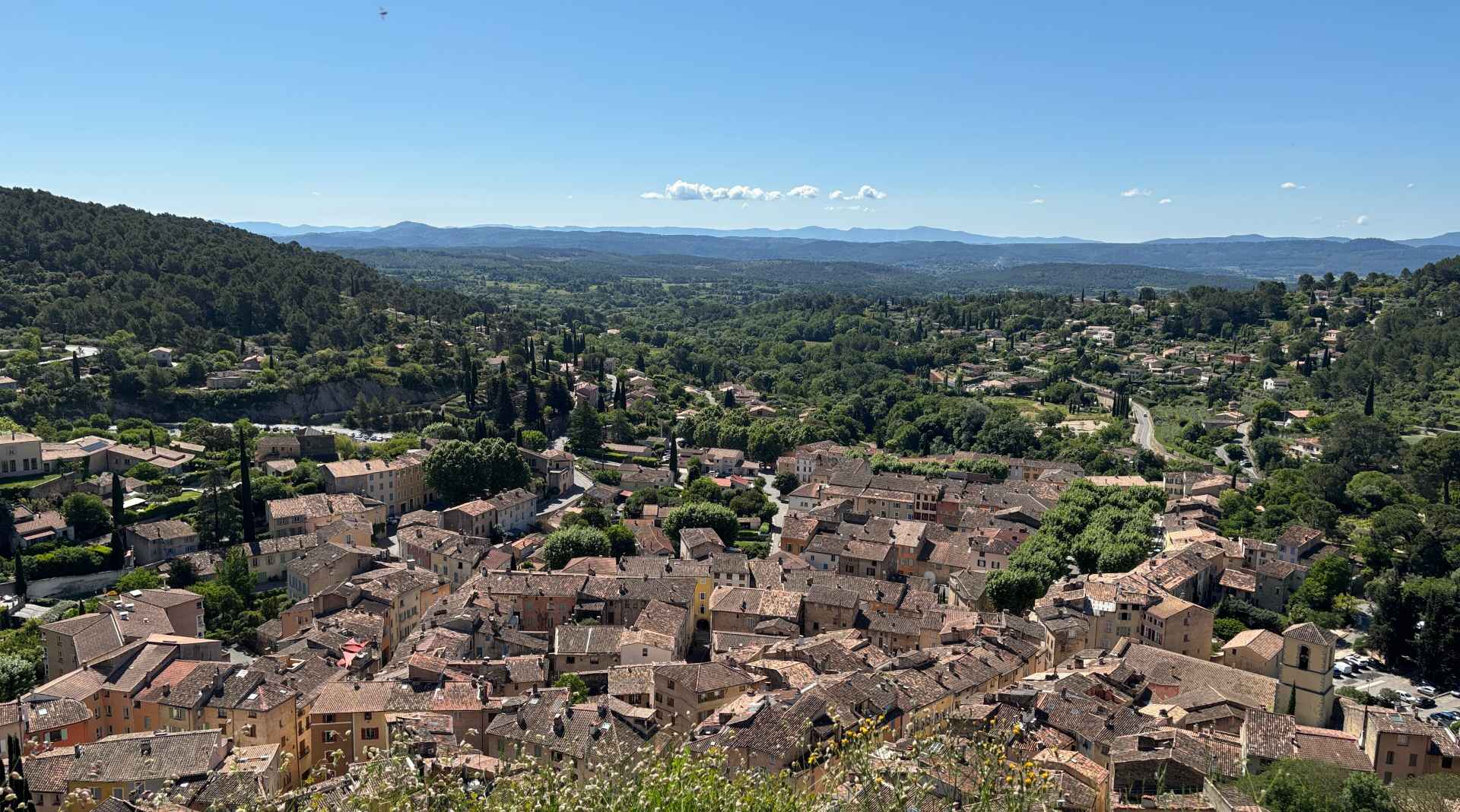
Cotignac, a village with medieval roots in the “Provence Verte” between Draguignan and Brignoles, was a sleepy and rather unattractive place in the 1970s. Today it is a lively village that stays open for residents and visitors all year round.
Cotignac holds the title “Ville de Caractère”, has been nominated as one of France’s most beautiful villages, and puts ecological sustainability at the centre of its branding. Michael Persson Gripkow, Head of Mpege Branding AB, nominated it for the Place Brand Leaders Yearbook 2025.
Fewer cars, more life
The revitalisation began with reducing car traffic and creating pedestrian-friendly spaces. Pedestrian zones opened up the village to foot traffic and made its streets and outdoor restaurants more inviting. The change improved Cotignac’s appeal and contributed to a healthier, more sustainable living environment.
The main street as a market
The village administration, La Mairie, plays a central role in building community. By dedicating the main street to different types of local markets, Cotignac has become a hub of local commerce and social life. Every Tuesday it hosts one of the most popular food markets in Provence, with locally grown produce that supports farmers and draws visitors from near and far.
A year-round destination
Many picturesque villages in Provence “close” after the high season. Cotignac does not. The careful integration of the large hotel complex Lou Calen has brought life to the village throughout the year, and restaurants, bakeries and grocery stores stay open twelve months a year.
Heritage and events
Cotignac is a classic Provençal village of colourful houses, fountains, narrow streets and large plane trees. Its heritage includes the Sanctuary of Our Lady of Graces and ancient dwellings in the high cliffs. Events such as the “Les Toiles du Sud” open-air cinema in July and August celebrate its character.
What other places can take from it
Cotignac shows how small communities can reinvent themselves, so that people can live and work locally. Its tools are modest and practical: pedestrian space, markets on the main street, a hotel that keeps the village busy off-season, and a local administration that takes community seriously.
“Cotignac’s transformation into a vibrant, sustainable community highlights the power of visionary leadership and strategic place branding. Its journey shows how small communities can reinvent themselves, enabling residents to live and work locally while thriving in the modern world.”
Michael Persson Gripkow, Head, Mpege Branding AB
This case study is based on the Cotignac nomination in the Place Brand Leaders Yearbook 2025. Photo: Mathieu BROSSAIS, CC BY 4.0, via Wikimedia Commons.
More from TPBO
- Place Brand Leaders Yearbook 2025: the places and people featured
- France: TPBO Observatory profile
- Rural development: more examples and interviews