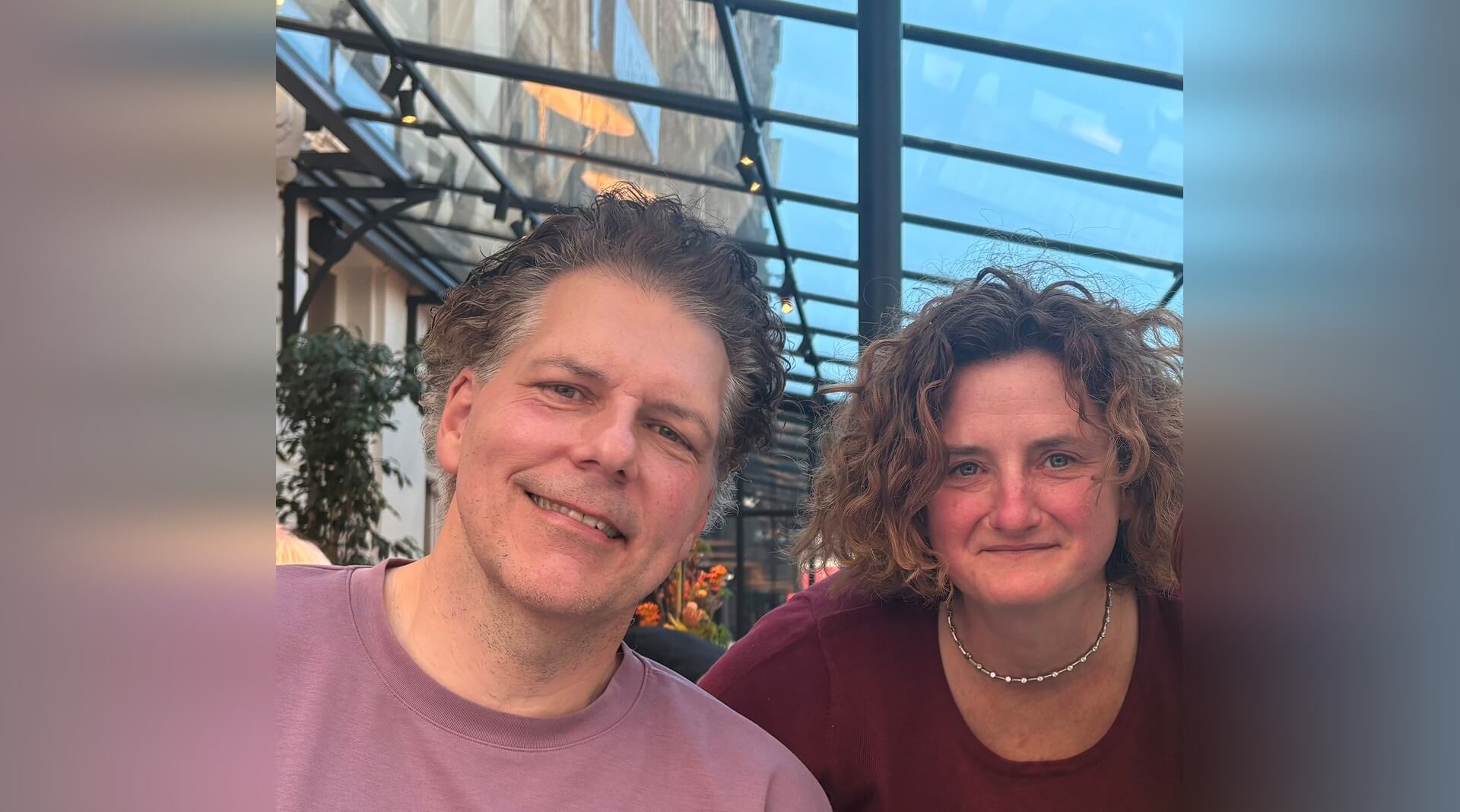
Place branding has long been defined by differentiation. Elke Dens and Frank Cuypers think that’s part of the problem. Working at the intersection of strategy, regenerative development, and community co-creation, the founders of Place Generation have spent decades helping cities and regions move beyond the mousetrap fallacy: the belief that being unique enough is a strategy. Their work, from Visit Flanders to Destination Canada and Hawaii, points toward something more durable: places that grow better, not just bigger.
We spoke with Elke Dens and Frank Cuypers about the shifts redefining the field, what makes implementation actually work, and which places are quietly setting the pace.
Elke, Frank, how did your collaboration come about and what shared perspective underpins your work today?
(Elke) We first met sixteen years ago, when Frank was a consultant during the restructuring of Visit Flanders and I was leading the marketing department. After that, our paths diverged for quite some time. Frank moved to Canada and developed high-impact strategies across five continents. I focused on Visit Flanders’ vision Travel to Tomorrow, looking at tourism as an instrument to help communities flourish together with Anna Pollock (who’s now an associated partner of ours), and became chair of The European Travel Commission’s marketing group, aligning national tourism boards around the unified brand Europe and its rejuvenation.
(Frank) From the very beginning, we shared a core belief: whatever you do with places — marketing, branding, or strategy — true ownership belongs to the people who live there. The days of creating plans where growth is defined as a win-win situation are over. It must become a win-win-win. Take tourism, for example: when the industry and visitors are satisfied, it should never come at the expense of a third party — the local community, heritage, or the living environment.
You’ve both helped shape forward-thinking destination strategies. What do you see as the most important shift in how places approach development today?
(Frank) We think we’ve moved into a time where people finally recognise that the classical models are broken. More and more, you see an awareness growing that even your research and strategies need to start from within the community itself. As a consultant, that means you don’t come in with a ready-made model, but you join a long, intensive process of co-creation, where every place finds its own version of what sustainability means for them or which audience they can attract.
In your experience, what distinguishes places that successfully move from strategy to implementation from those that don’t?
(Elke) We see two elements that are decisive here. The first is leadership. People who choose purpose and impact for their place over their own position are still rare, but you encounter these courageous figures more and more, in the most unexpected places. The second is necessity: pressure from residents, stakeholders, political tensions, or shrinking budgets can push some back into business as usual, but just as often it opens space for alternatives and new directions. That’s when successful implementation happens — or when we are asked to coach and even train teams to ensure the success of the strategy. Thanks to our own hands-on experience in DMOs, that’s very rewarding for us too.
How do you approach stakeholder alignment in complex place ecosystems, where interests often compete?
(Frank) The quality of your process determines the quality of your output. We are strong believers in Bruno Latour’s Actor–Network model. We will always push the client out of their comfort zone and make sure that not only the usual suspects are invited to the table, but voices from all sectors and layers of the community. Experience shows that people will always start talking about their place — it is something deeply precious to everyone. For some projects, it is even desirable to give non-human actors a voice as well. It is no coincidence that Latour’s thinking lies at the foundation of the Embassy of the North Sea.
(Elke) For Destination Canada, we’ve just completed, together with CBRE, the first cross-border strategy, implementation, and investment plan for the Juan de Fuca Strait between Washington State (USA) and Vancouver Island (CAN). Initially, we expected a conflict of interest between the two countries but we soon found that the voices of six Indigenous communities from both countries carry real weight, especially on climate and nature protection, and that, ultimately, everyone shares the same deep care for the strait, the salmon, and the region’s future. The question increasingly became whether we can ensure that tourism itself does not become a source of conflict. Fortunately, it led to an investment plan full of green and blue infrastructure serving visitors and locals alike.
What does regenerative or future-fit place development look like in practice today?
(Elke) Regenerative or future-fit place development starts from the potential of a living place and its community, using tourism as one of several tools to help it flourish over time. It means deeply understanding the identity of a place; putting the host community in the lead; and using concrete projects as living labs to test and learn rather than rolling out top-down plans. This asks us to act as stewards and conveners, ensuring tourism strengthens the wider social, cultural, and ecological system through ongoing cycles of experimentation, reflection, and adaptation.
(Frank) In Helsinki, we are currently training about ten companies in how they can take up these new roles. In Hawaii we were asked to advise on the governance and collaboration model between the state and the islands in order to facilitate regenerative place development. It can mean different things for different places.
How should places think about their brand and narrative today? Is place branding still about differentiation, or increasingly about alignment?
(Frank) Mmm, don’t get us started. The emphasis on differentiation has, paradoxically, led to what marketers call the sea of sameness. Because everyone wants to stand out, everyone ends up doing exactly the same thing — trying to stand out. All those branding and rebranding exercises often fall into what Ralph Waldo Emerson described as the mousetrap fallacy: “If a man can make a better mousetrap (…) the world will make a beaten path to his door.” People are so convinced that their place is unique that they no longer allow an outside perspective, and as a result they differentiate themselves with what is actually considered generic.
(Elke) Alignment, definitely. About the past, the present and the future.
Which cities or regions do you consider places to watch right now for their brand development?
(Elke) We’ve worked in Torino for many years, and exciting things are happening there right now. They’ve launched a new brand and several major urban development projects. It’s a great example of what the Nielsen Group already predicted in 2017 as the rise of the tier-two cities. Italians know what hospitality means, but they are becoming very aware that they cannot sell out their place. We believe there is still a lot of work to be done in Italian cities.
In Luxembourg City there is a lot of beautiful energy bubbling up.
We have a soft spot for consistent, long-term brands, like Slovenia, which has stayed true to its direction for years, or cities like Cleveland.
(Frank) Canada is a fascinating place to look at. It is now one of the strongest brands on the planet, but with its growing appeal I predict that many regional areas and smaller cities will need to strengthen their own brand identities in order to distribute that value more evenly. Canada needs to move beyond its clichés. More concretely, I’m thinking of the East Coast, Nova Scotia, Manitoba and Winnipeg, and Saskatchewan as well.
Thank you, Elke and Frank.
To explore further, connect with Elke Dens and Frank Cuypers on LinkedIn, or visit Place Generation.