On 27 September, voters in the canton of Lucerne clearly approved a major location development package, with 65 per cent in favour. The core of it is a new innovation contribution, the Luzerner Innovationsbeitrag, which provides research, development and innovation subsidies with an annual budget of up to CHF 160 million. The public debate focused on the money and on who would benefit from it.
For us, the vote raises another question: when a region invests this much in what it offers, who is responsible for how it is perceived by the companies, talent and visitors it wants to attract? A good reason to take a closer look at what is happening at TPBO’s doorsteps.
At federal level, the Swiss Federal Council opened its consultation on location promotion for 2028 to 2031 earlier this year, proposing CHF 392 million compared with CHF 429 million for the current period. And promoting Switzerland to foreign companies, long taken for granted, has itself become contested: the Social Democrats argue that Switzerland is attractive enough without state-supported efforts to recruit companies from abroad. If the federal role in promoting Switzerland abroad becomes smaller, more of that work could fall to cantons, regions and cities.
At the same time, around 70 per cent of executives questioned for a recent study by McKinsey and the Swiss-American Chamber of Commerce say Switzerland has fallen behind other international business hubs on at least three key location factors, particularly regulation, taxes and infrastructure.
With all this in mind, international place positioning might become much more relevant in the near future, for Swiss regions and cities. But who is to be in charge?
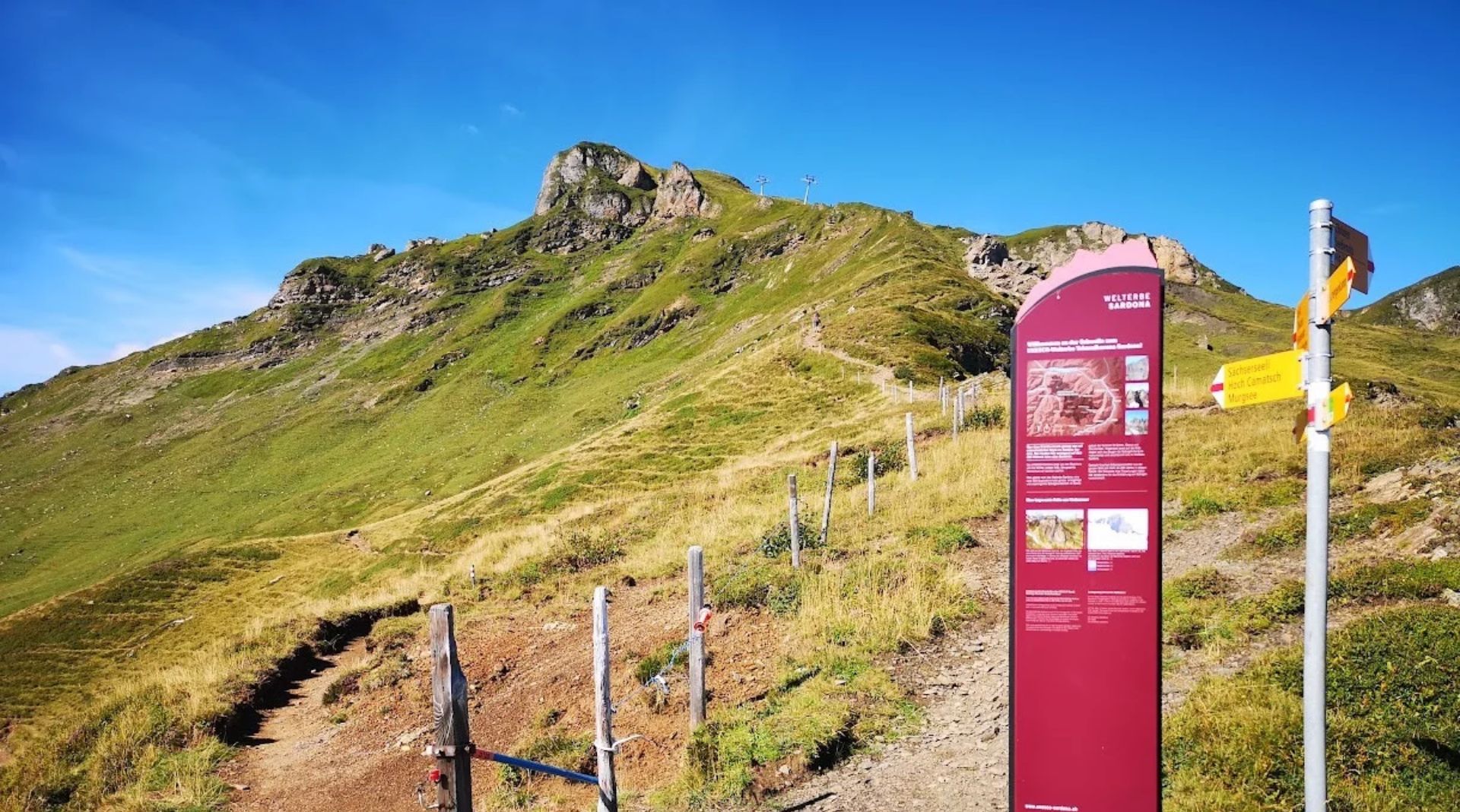
Featured image: Pizol, one place with many positionings. The Swiss hiking network, the UNESCO World Heritage site Sardona, the holiday region Heidiland, Sarganserland, St. Gallen and Eastern Switzerland each position it for their own audiences.
Brand stewardship – an old question, yet so timely
We recently looked at brand stewardship from different sides. Malcolm Allan argued that place brands need a stronger culture of shared stewardship. And our review of ten years of conversations with destination leaders showed that destination organisations have taken on more responsibility for their places than their mandate sometimes actually gives them.
Further, we asked our expert panel some years ago who owns a city or country brand, and the answers are still relevant today. Efe Sevin distinguished between three kinds of ownership: the mandate and money to run campaigns, which usually sit with economic development offices; the authority to define what a place stands for, which lies with its residents; and the final say on how the place is seen, which belongs to its audiences.
Martin Boisen preferred not to speak of ownership at all. For him, a place brand is a commons that needs stewardship, and government remains responsible even when it hands day-to-day management to a public-private organisation.
On the question of structure, Ed Burghard described three models that most places choose between: one strong brand under which everyone works, separate brands for separate organisations, or a mix of both, which in his experience is the hardest to manage. Marta Herezniak added that a cross-sector structure without real authority tends to stay decorative.
Practitioners we interviewed see it similarly. Stefan Nöthen of Hamburg Marketing, which sits in one holding with Hamburg Tourism and Hamburg Invest, told us that Hamburg needs one overarching brand but many stories, and that aligning all the organisations who own the touchpoints of a place is the most exhausting and at the same time most rewarding part of his job.
Dariel Curren of DCI suggested a simple test for any place brand: does it survive a change in political or organisational leadership? And Gieri Spescha, who has managed the graubünden brand for many years, described a main challenge as bringing many facets together under one roof, so that particular interests take a back seat.
Switzerland has tried almost every model
Within a few hours by train, Switzerland offers almost every variant of how this can be organised.
Winterthur merged its tourism office and its regional location promotion into House of Winterthur in 2017, after a popular vote, and now markets culture, education, business and tourism from one organisation, similar to Hamburg’s holding.
Lucerne keeps economic promotion and tourism in separate organisations. Lucerne Tourism positions the destination towards visitors, while the cantonal economic promotion works with companies, which can now benefit from tax credits or cash contributions linked to their research and innovation activities in the canton. It is one of several measures intended to strengthen Lucerne’s competitiveness for innovative companies.
In Basel, several organisations speak for the city, from the canton’s location marketing to Basel Tourism and Basel Area, which is supported by the cantons of Basel-Stadt, Basel-Landschaft and Jura. As early as 2015, the government tried to bring their activities together on a joint portal, basel.swiss, which is no longer active. At the end of 2026, Basel will launch a new umbrella brand, together with a new entry portal at basel.com intended to position the city consistently for audiences from outside. For now, the brand will be used by the canton’s location marketing and by Basel Tourism, but not by Basel Area.
Graubünden chose a different model. Its regional brand was launched in 2003 to reach beyond tourism, and from 2007 it was managed by the tourism organisation Graubünden Ferien. The canton took responsibility back in 2017, since when the brand office has been run by an external provider under mandate.
In Bern, the cantonal economic development agency supports businesses and company relocations, the Greater Geneva Bern area promotes Bern and four other Swiss cantons internationally to potential investors, and Bern Welcome promotes Bern as a destination for visitors and events.
Each of these models reflects local politics and history, and each has good reasons behind it. But they give very different answers to the question of who positions the place.
Some places that compete with Switzerland for companies and talent have brought tourism, investment and talent attraction closer together. London did so as early as 2011, when Visit London, Think London and Study London were merged into London & Partners.
Hamburg and South Tyrol follow different versions of the same logic, with IDM’s (South Tyrol marketing) mandate just recently having been expanded to cover talent attraction alongside region branding and tourism.
Switzerland continues to use a variety of models. In a federal country that variety is understandable. It does, however, make the question of who connects the different pieces more important.
The awards of Netzwerk Standort Schweiz show that positioning work also happens above and below the level of cantons. This year’s nominees include Baden’s initiative to establish itself as an international business location. In 2024, the Greater Geneva Bern area won with its campaign featuring Jimmy Jackson, a fictional US chief executive looking for a European headquarters, and showed that location marketing can also work with humour.
Over the years, we have interviewed many of the people behind this work, from the Greater Zurich Area and the Greater Geneva Bern area to Fribourg and Schwyz. Each offering a glimpse into the local realities and priorities.
Moving forward: three questions
In our view, every city and region should be able to answer three questions, and in Switzerland this is particularly timely:
- Who holds the mandate for how the place is perceived beyond its borders, and does that body have the authority and the budget to go with it?
- Are economy, talent and tourism telling different parts of one story, or separate stories that happen to share a name?
- And: would the answer still hold after the next change in leadership?
Answering them usually means looking at a place from the outside, and comparing how it is seen alongside the places it competes with.
For a long time, Swiss cities and regions could rely heavily on the strength of their established location advantages. Lucerne’s vote shows how much cantons are willing to invest in keeping them. With the federal framework potentially changing and companies reporting growing pressure on several of these advantages, we believe it is worth giving the same attention to who tells the story, and how.
This article draws on public sources and on TPBO’s archive of expert panel contributions and interviews. Explore more on Switzerland and our Place Branding Expert Panel.