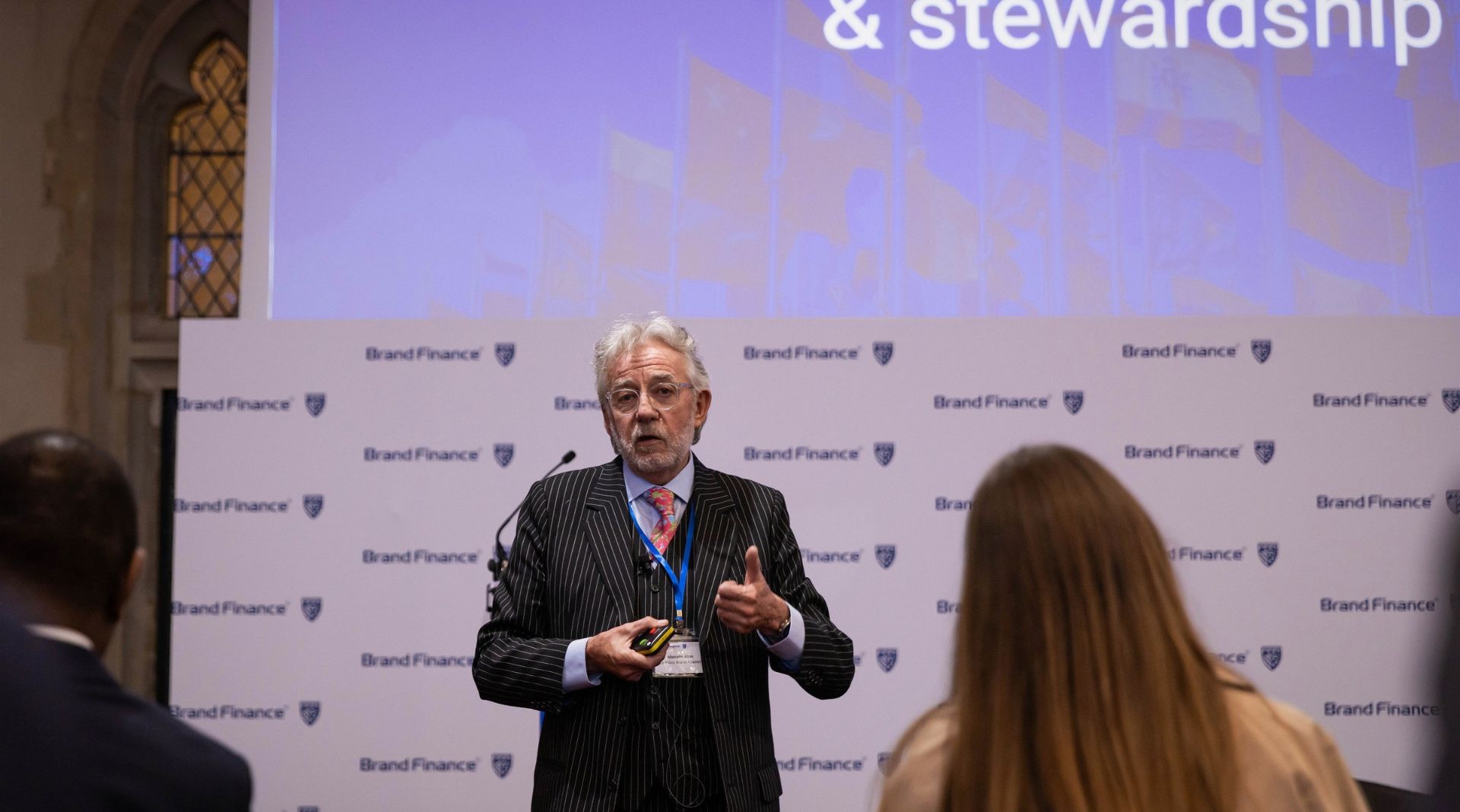
Place branding has become more sophisticated. But who is responsible for making the brand real, protecting what it stands for and ensuring that today’s decisions do not undermine tomorrow’s place? Malcolm Allan believes the answer lies in taking stewardship much more seriously.
There is a question sitting behind much of the conversation about place branding that is rarely addressed directly: who actually takes responsibility for the place?
Not just for its positioning, identity and communications, but for ensuring that the place develops in ways that support its identity, reputation, promise and long-term wellbeing.
Malcolm Allan, co-founder of the Place Brand Academy and a long-time place brand strategist, describes this as the “elephant in the room” for the profession.
The idea emerged from a workshop on brand stewardship that Malcolm presented at the Brand Finance Place Brand Forum in London’s Guildhall in May 2026. Reactions from participants afterwards encouraged him to develop the thinking further.
His proposition is worth taking seriously: place branding needs to move beyond managing a brand towards a model of shared stewardship.
What does stewardship change?
Stewardship has long been used in land management and agriculture to describe responsibility for something that may not belong to the person looking after it. More recently, the idea has entered conversations around environmental management, destination development, regeneration and place governance.
The common thread is responsibility over time.
That is particularly relevant to places. Political leaders, chief executives, destination organisations and brand managers are temporary custodians of something that belongs to a much larger community and will outlive them.
For Malcolm, an effective steward therefore has a longer horizon. The job is to protect what matters, create value for the wider community and leave the place in good condition for those who come next.
It is a shift from asking who manages the brand to asking who takes shared responsibility for the place’s identity, reputation and future.
A wider place conversation
Stewardship is already being discussed across several parts of the place sector.
Destination stewardship tends to focus on tourism, residents, visitor experience, environment and governance. Place development stewardship brings in planning, economic development, assets and infrastructure. Environmental and cultural stewardship focus on the long-term care of natural and cultural resources.
Place branding has its own vocabulary: identity, positioning, perception, reputation, communications and stakeholder alignment.
These conversations often run in parallel. Malcolm’s argument is that they could be connected. He sees place stewardship as a broader framework capable of bringing together place-making, place management, destination management, community development, environmental and cultural stewardship, identity, reputation and brand implementation.
There are already examples pointing in this direction. The Town and Country Planning Association in the UK, for instance, treats stewardship as a governance issue running through the life of a place development, from planning and procurement to development, promotion, branding and long-term management. The World Travel & Tourism Council has also been developing destination stewardship around collaboration between public authorities, businesses and communities.
For place branding, the opportunity is to become part of that wider conversation rather than remaining a specialist activity sitting alongside it.
The brand as a shared asset
This matters because of how place brands are actually delivered.
A place’s reputation is shaped by hundreds of decisions made by organisations that have nothing to do with the brand team. A developer changes a neighbourhood. A university attracts international students. A cultural organisation creates an experience. A business interacts with visitors and residents. A transport provider affects how people experience the city.
The brand team can influence these things, but it cannot control them.
Malcolm therefore argues that the place brand should be treated as a shared organisational asset, with responsibility distributed across communities of stewards rather than concentrated in one small team.
His proposed stewardship community includes civic, development, community, cultural and environmental, experience, and brand and reputation stewards. Each has a different responsibility, but they need to work towards a shared long-term purpose.
That is where stewardship becomes more than another name for stakeholder engagement. It implies that people who shape the place accept some responsibility for the collective asset they are helping to create.
What makes someone a good steward?
Malcolm’s thinking is interesting here because the qualities he identifies are not primarily about branding expertise.
Good stewards need to bridge professional disciplines, build trust and create coalitions. They need to align different interests around a shared vision and work across organisational boundaries. They also need the patience to think beyond political and funding cycles while accepting that places and their brands will evolve.
There is a strong behavioural dimension too: curiosity, listening, compromise, collaboration and a willingness to contribute time, knowledge and resources.
One of Malcolm’s most useful tests is whether someone asks:
“What can I do for the brand?” rather than “What can the brand do for me?”
A stakeholder may have influence, money or seniority and still make a poor steward. Warning signs include domination, demands for prominence, unwillingness to compromise, dismissiveness towards community representatives, weak partnership skills and little curiosity about other people’s ideas.
What would stewardship change?
The implications for brand governance are significant.
Most place brand structures still rely on some combination of a stakeholder board and a relatively small brand management team. Yet implementation is carried out by many independent actors whose behaviour cannot simply be controlled by that team.
As Malcolm puts it, brands are ultimately governed through people, behaviours and decisions, not through rules and procedures.
That suggests a different role for governance. Rather than becoming a system of approvals and restrictions, it should provide the purpose, principles and guardrails that allow people across the place to make better decisions.
Malcolm’s distinction between Strategic Brand Stewards and Operational Brand Stewards takes this further.
Strategic stewards would protect the integrity of the brand over time, facilitate stakeholder alignment and prevent short-term political or commercial interests from diluting its purpose.
Operational stewards would be closer to delivery. They would develop proposals, manage implementation, monitor performance and help organisations build the capacity to deliver experiences and offers that support the brand.
The distinction is useful because it connects the people responsible for governance with those actually shaping the experience of the place.
From concept to capability
If stewardship requires particular skills and behaviours, places cannot simply declare that their stakeholders should become stewards. They need to develop that capability.
Malcolm suggests that places taking stewardship seriously should establish clear expectations, roles, responsibilities, resources, recruitment processes and assessment, alongside appropriate training. He also sees a role for universities and other education providers in developing these competencies.
This is where the idea becomes more than an attractive concept.
The practical test is whether stewardship changes who is involved, how decisions are made, what behaviours are expected and how people are equipped to take responsibility.
Forethought, not afterthought
Perhaps the simplest way to capture Malcolm’s argument is his phrase that stewardship should be “forethought” rather than “afterthought”.
Too often, responsibility for the quality, identity and reputation of a place is considered after plans, investments, developments or branding programmes are already underway.
What if it came first?
Alongside asking what a place wants to become, its leaders could ask who will take responsibility for making that future possible. Who needs to be involved? What needs to be protected? Where is experimentation possible? What should not be compromised?
These are governance questions, but they are also branding questions. A brand promise ultimately depends on the reality of the place.
The question for place branding
There is a useful provocation here for the profession.
Perhaps the next stage of place branding is not simply about becoming better at managing brands. It is about becoming better at sharing responsibility for the places those brands represent.
That would change the role of the brand team, but also the expectations placed on developers, politicians, businesses, community organisations, cultural institutions and others whose decisions collectively shape a place.
There is still much to work out. What should a place steward be accountable for? How should stewardship communities be organised? Who appoints them? How are their skills assessed? What happens when interests genuinely conflict?
Those questions remain open. But that may be precisely why the conversation matters.
If governance establishes who has authority and accountability, stewardship asks something different: who is prepared to take responsibility for what happens next?
For place brands, that may be the missing link between strategy and reality.
Read Malcolm’s extended view on brand stewardship here.
Malcolm Allan is a member of the Who’s Who of Place Branding Impact Makers and the TPBO Hall of Fame. More on his thinking, background and experience here.
Malcolm works with cities, regions, countries and developers on place brand strategy, stewardship and capability building, and speaks regularly at conferences and in-house sessions. Reach out via email or connect with him on LinkedIn.