Destination stewardship is becoming harder to separate from destination marketing. Recently, TPBO has looked at the question from two angles: Malcolm Allan has argued that place brands themselves need a stronger culture of shared stewardship, while our interview with Destination Canada’s marketing leadership examines what it means to measure tourism by its contribution to the places people call home.
The question is not entirely new. For more than ten years, Sustainability Leaders United, a project that ran alongside TPBO and is now part of it, put versions of it to destination leaders around the world: can a destination organisation move beyond promotion to take greater responsibility for the place itself?
Here, we return to those earlier conversations and read them against what destination leaders are saying and doing today. What has changed, and what remains unresolved?
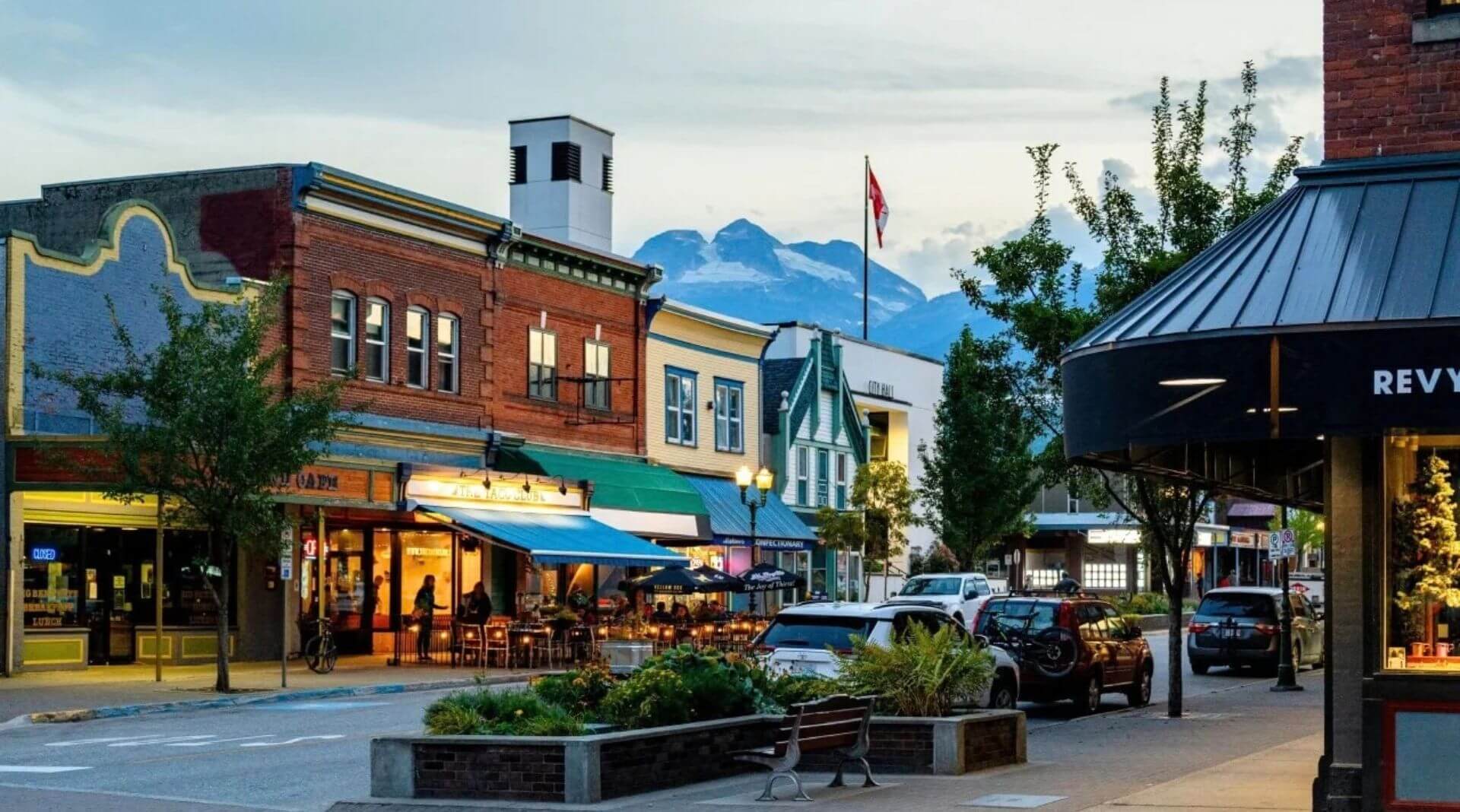
Featured image: Revelstoke, Canada
In March 2015, Megan Epler Wood, founder of the International Ecotourism Society and by then leading a sustainable tourism research programme at Harvard, argued that the field had spent years defining what sustainability meant. The next step was to deliver on it: independent measurement and benchmarking over time, regulation rather than intentions, and funding to cover the cost of managing a sustainable destination.
Two years later, Jonathan Tourtellot, founder of the Destination Stewardship Center and for many years an editor at National Geographic Traveler, put it more simply. Aside from theme parks, he said, the ultimate tourism product is the place itself. Too many destination organisations measured success by heads in beds rather than by the benefit to the place. His advice was to count benefits per tourist, not arrivals, and to form destination stewardship councils of public, private and civil-society members.
Over the following years, the leaders we interviewed largely agreed with the diagnosis. What they disagreed about, often without saying so, was who had the authority to act on it.
Ready, but not mandated
The clearest answer came from Switzerland. Urs Wohler, who had run the destination Scuol Samnaun Val Müstair for more than eleven years, told us in 2018 that sustainability had arrived at the DMOs but not yet at the regional administrations. Those who fund destination organisations want quick results: more overnight stays, more bookings. “The DMOs would be ready, but the regions are not.”
Others described the same gap from different angles. Michael Dodds found tourist office directors in France ready to become destination managers in a role not yet accepted. Rachel Vaughan, after 17 years embedding sustainability in Kaikoura’s council planning, named politics as the hardest hurdle. Karmen Mentil of Alpine Pearls blamed the habit of treating destinations as tourism spaces rather than living spaces.
Not everyone accepted the premise. Martin Nydegger of Switzerland Tourism argued that a national marketer funded by its own regions and partners had never been only a promoter. Janko Humar of the Soča Valley (Slovenia), where rafting agencies had gone from five to around seventy, argued that a destination at the very beginning of its life cycle legitimately puts promotion first, and that management comes once scale has been reached.
The organisations that restructured
Some national organisations went further. Slovenia’s tourist board, under Maja Pak, was shifting from marketing to management through its Green Scheme by 2018. In 2020, Jos Vranken explained how NBTC Holland Marketing had reorganised around four domains, cutting marketing resources to build destination development as a new discipline. “If we ask other stakeholders to make their contribution to Perspective 2030, we may as well start by practising what we preach ourselves,” he said.
A few months later, Peter De Wilde of VISITFLANDERS described a paradigm shift from “more” to “better”, backed by a change in measurement: resident surveys from 2016 onwards, alongside economic and environmental indicators. Flanders’ approach to hosting today shows how far that thinking has travelled.
Jens Thraenhart, then running the Mekong Tourism Coordinating Office for six governments, had no formal authority over anyone. He built an inclusive crowd-marketing model in which small businesses, travellers and residents together carried the regional brand, and he was clear about the objective: “Growth should not be the objective. If it is, it leads to imbalance.”
Ten years on
Put the question to destination leaders today (and for this article we reached out to a few that we know are working on this right now), and the language is familiar. The difference is that more organisations now have ways to put these ideas into practice.
In Revelstoke, British Columbia (Canada), Kyla Egan of Tourism Revelstoke describes the town as something that “isn’t simply a tourism product. It is a community, a landscape, a culture and a place that people call home.” Its Destination Management Plan tracks resident quality of life, housing and carbon emissions alongside visitor sentiment.
Egan does not argue for abandoning marketing, but for recognising “that marketing sits within a much larger destination system”. Her conclusion could have been Tourtellot’s:
“If the destination itself is the product, then protecting the health of the place and the people who live there has to be part of the job.”
At national level, Destination Canada has taken measurement furthest. Its Wealth & Wellbeing Index assesses tourism across six dimensions, from economy to engagement. The organisation, Gloria Lorée told us, now asks “what kind of tourism are we generating, who benefits from it, and how does it contribute to the places people call home?” It is, in effect, the benchmarking Epler Wood called for in 2015.
Cities have moved too. Gothenburg has topped the Global Destination Sustainability Index for seven consecutive years, as Katarina Thorstensson reflects in her interview. In Cleveland, David Gilbert, CEO of Destination Cleveland, told us this summer that success in destination marketing is too often “defined too narrowly”, by hotel room nights, views and clicks, and needs to be tied to what matters to the community.
Thraenhart believes the argument he made from the Mekong has largely been won, at least in principle. “Balance was never about slowing everything down,” he says.
“Balance was about proving that growth and health don’t have to trade off against each other, and I think that argument has largely landed, even though most DMOs are still measured on arrivals.”
He sees high-yield tourism as the financial case for balanced tourism. His own next step, passion tourism, builds around the communities who already care enough to travel for what a place offers, so that resilience and yield follow “rather than from chasing numbers”.
Responsibility moved, mandate did not
Read side by side, the two sets of answers suggest that the destination organisation has changed more in what it measures and says than in what it controls. Among the frontrunners, the metrics now include residents, housing, carbon and culture. Yet most DMOs are still judged by arrivals, which is exactly the pressure Wohler described from the regions that fund them.
The authority has not necessarily followed. Egan is explicit that “housing, infrastructure and environmental protection require broader partnerships.” Gilbert makes the same point from Cleveland: “no major community issue can be resolved by any one organization.” Lorée sees national coordination sometimes stalling at implementation, as jurisdictions work to different timelines and funding realities. Destination organisations took on responsibility for the health of the place without the mandate, or the funding model, to match it.
Frank Cuypers, who co-founded Place Generation with Elke Dens after she helped move VISITFLANDERS towards regenerative destination development, sees two ways this can play out. “The era of the traditional DMO has passed,” he says.
“Some DMOs fade away as their strategic role is absorbed into policy and their promotional tasks outsourced. But a far more promising evolution is underway: DMOs that reimagine themselves as stewards of their place, grounded in strong stakeholder management and a new definition of tourism – one that starts with serving the community and the local environment, and only then welcomes visitors who align with that purpose.” – Frank Cuypers
For those taking the second path, stewardship becomes a way of working within the gap. “A DMO doesn’t need to control an issue to play a role in it,” Egan says. “A lot of stewardship is about convening people, sharing information and creating partnerships.”
In Stockholm, Royal Djurgården shows what that can look like: more than 60 attractions, from national museums to hot dog stands, working to shared goals and reporting their progress openly, all without formal authority over one another. It is close to what Tourtellot proposed with his stewardship councils, and to what Thraenhart built across six countries.
Malcolm Allan, writing on TPBO this month, takes the argument beyond the DMO: stewardship should be shared by everyone whose decisions shape a place, and treated as “forethought” rather than “afterthought”. The DMO as place steward, it seems, is less an organisation that governs the place than one that holds the conversation about it, and measures honestly what tourism does to it.
Whether that is enough is the question for the next ten years.
This article draws on interviews first published by Sustainability Leaders United, which ran alongside The Place Brand Observer for more than ten years and is now part of it, and on TPBO’s own recent interviews and showcases.
Explore more perspectives on destination stewardship and our interviews with Destination Brand Champions.