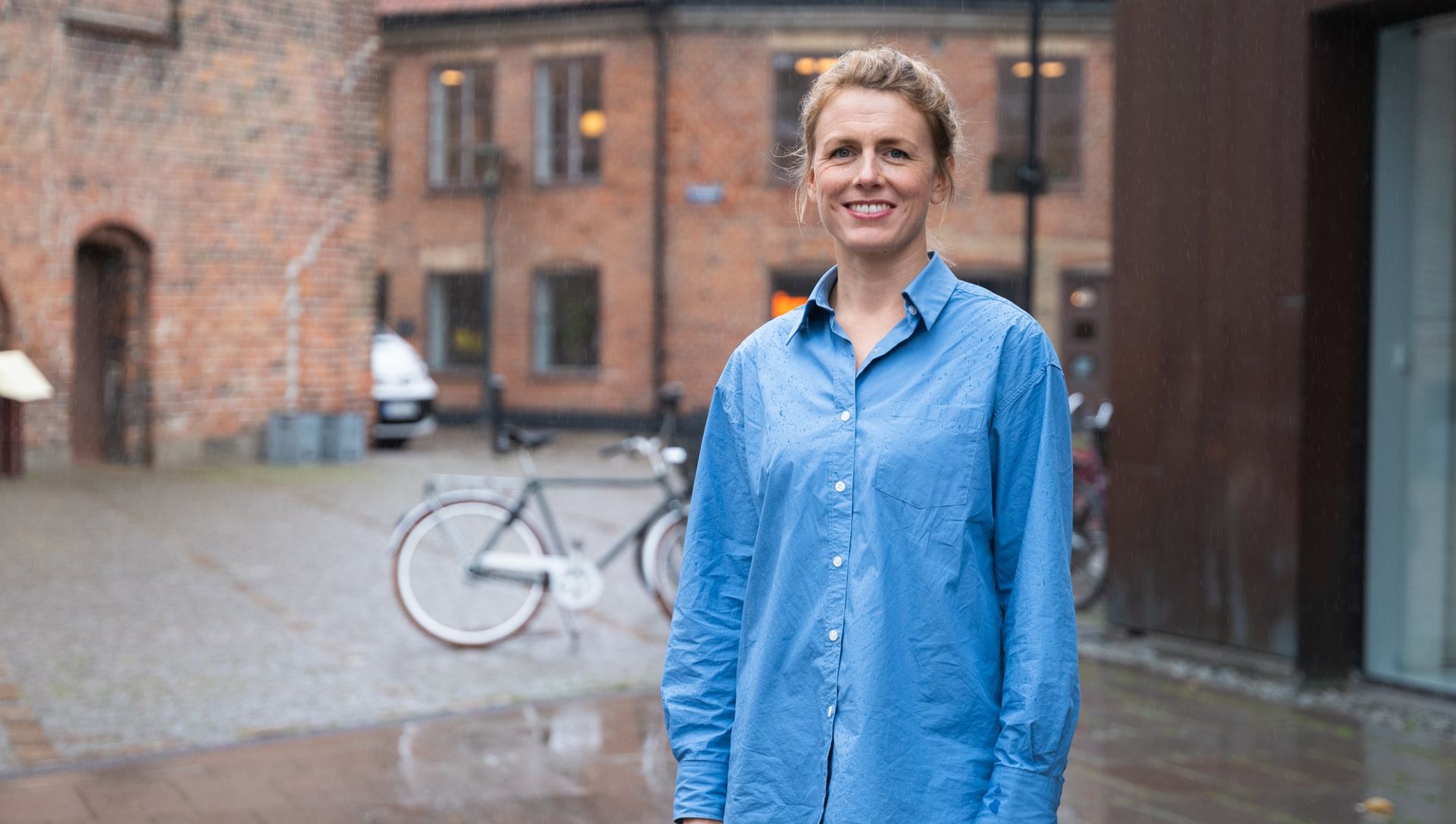
Moa Ageberg is Head of External Relations at the City of Lund, within the Department of Sustainable Growth. Her work covers international partnerships, EU affairs, strategic cooperation and city diplomacy, as well as promoting Lund as a place to invest, innovate, work and collaborate.
Lund is Sweden’s twelfth-largest city, yet home to Lund University, the research facilities MAX IV and the European Spallation Source (ESS), around 190 nationalities, and part of the cross-border Greater Copenhagen region. In this conversation, Moa reflects on how these identities come together, why Lund started by helping international talent stay rather than only attracting it, where collaboration across the Öresund still meets friction, and what other mid-sized cities can learn from Lund.
Moa, how would you describe Lund’s international position today, and what would you like the city to be known for in ten years?
Lund is a relatively small city, the twelfth-largest in Sweden, but it has a surprisingly big international presence. Our university, research facilities, innovative global companies and location in Greater Copenhagen connect us to the world in ways that go far beyond our size. And with 190 nationalities represented here, that international character is part of everyday life.
Lund has been an international meeting place for a thousand years, and you can still see and feel that history throughout the city. But we are also very much looking ahead. We have a strong tradition of turning research into practical solutions, and today we are at the forefront of innovation, not least when it comes to tackling climate change. I think that combination of history and new ideas is a big part of what makes Lund special.
In ten years, I would like Lund to be more widely known for what it already is: one of Europe’s leading places for innovation, sustainable development and international collaboration, where world-class research, business, public institutions and people come together to address global challenges.
I also want Lund to be a place where international talent can build a life, not just a career. It’s a great city to live in, with so much to offer outside of work. Through initiatives like International Citizen Hub Lund, we help international residents and their families settle into life in Sweden, build social and professional networks and feel at home. The city’s growth depends not just on attracting people and investment, but on making them want to stay.
Lund is a university city, a science and innovation hub with ESS and MAX IV, and part of Greater Copenhagen. How do these identities come together in how you present the city abroad?
For us, these are strengths that really belong together. Lund University, MAX IV and ESS bring world-class knowledge and research, alongside established companies, startups and the public sector. What makes Lund special is how naturally they work together. We have a uniquely informal and effective culture of collaboration between researchers, businesses, the municipality and the university. The distances are short, both literally and figuratively: people are nearby, easy to reach and used to working together. That makes it easier to turn research and ideas into practical solutions.
Being part of Greater Copenhagen adds another important dimension. Copenhagen and the rest of Europe are close, and those connections give us a natural European outlook. Often it is more logical to cooperate with Denmark or Germany than with northern Sweden. We are also part of a much larger cross-border labour market, with access to international transport links, universities and business networks. For people and companies considering Lund, the opportunities extend well beyond the city itself. That is a major selling point we need to communicate more clearly.
It is this combination that makes Lund unique: a small city with so much within easy reach, where knowledge meets business and international collaboration is part of everyday life. Lund is a regional engine for growth, full of opportunities, while offering the quality of life and accessibility of a smaller city. That is the story we try to make central when we present Lund internationally.
What does external relations cover at the City of Lund, and how do you work with partners such as Lund University, Region Skåne and Copenhagen?
Our work in external relations is about building relationships beyond Lund and strengthening the city’s position. That includes international partnerships, EU affairs, strategic cooperation and city diplomacy, as well as promoting Lund as a place to invest, innovate, work and collaborate.
We work closely with Lund University, Region Skåne, businesses, innovation hubs and other public institutions in several different areas. By bringing our strengths together, we can create opportunities that none of us could create on our own.
International Citizen Hub Lund is a good example. The municipality set it up in 2015 in response to a local need when ESS was established in Lund, with a growing inflow of international talent and accompanying family members who needed help settling in. The hub is supported by Region Skåne and now also by Lund University. It helps international professionals and their families feel at home in Lund and the wider region. It also brings employers and institutions together to attract international talent and help people stay.
Copenhagen and Greater Copenhagen are also important partners. We want to build stronger connections across the Öresund and make the most of the opportunities we have as a cross-border region.
Through EU Days Lund and Europe Direct, Lund has built a strong European profile. What role does this play in the city’s wider positioning?
Europe is an important part of Lund’s identity, not just geographically but also in terms of our values, ambitions and international outlook.
Through EU Days Lund, we bring together European and Swedish decision-makers, researchers, businesses, students and citizens to discuss major European challenges and opportunities. It’s Sweden’s largest meeting place for discussions about the EU, and we hope it will keep growing.
Hosting a Europe Direct office complements this by making the EU more accessible to citizens all year round, providing information and encouraging dialogue about European cooperation and its impact on everyday life.
We can see that these initiatives strengthen Lund’s role as an internationally engaged city and help us build valuable connections. We hope it also shows that cities don’t just put European decisions into practice, but can help shape Europe’s future too. For us, it’s a way to have a say in what happens and show what Lund can bring to the conversation.
How does Lund attract and keep international residents, researchers and companies, and what have initiatives like the Cross-border Talent Bridge taught you?
After more than ten years with International Citizen Hub Lund, we can say with certainty that attracting international talent is only half the challenge. The real question is how to make people stay. While most places start by attracting talent, we started by helping them stay, and that has worked really well. The hub offers international professionals and their families practical guidance, social activities and opportunities to build personal and professional networks, and one of its aims is to help accompanying partners find a job. Having this kind of support in place makes Lund more attractive, both to international talent and to the employers who play the biggest part in bringing people here. As a municipality, we also need to make sure international residents can enjoy a good quality of life. That’s something we work hard on.
While most places start by attracting talent, we started by helping them stay, and that has worked really well.
The Cross-border Talent Bridge project builds on that idea across the wider region. It brings together partners on both sides of the Öresund, including Lund, Copenhagen and organisations working in life science and tech. Together, we’re exploring how to attract international talent to Greater Copenhagen and help people stay. The project has given us the chance to try out new ideas for helping talent find jobs in both Sweden and Denmark, and it has strengthened our ties with Danish and local partners, which will be very valuable for the future.
Where does cross-border collaboration with Denmark work well in practice, and where are the frictions?
The Öresund region has great potential. We have complementary strengths, strong universities, internationally competitive businesses and a shared interest in attracting talent and investment. Collaboration works particularly well in research, innovation and business development, where organisations and individuals already operate across the border every day.
But there are practical obstacles, which mostly come down to national legislation, even though both countries have the ambition to deepen the collaboration. Differences in tax systems, social security, employment regulations and administrative procedures can make cross-border commuting and recruitment more complicated than they should be. Transport connections and the ability to move seamlessly between the two labour markets are also essential.
There is sometimes a gap between the ambition of creating one integrated region and people’s everyday experience of living and working across the border.
And finally, what advice would you give peers in other mid-sized cities competing for international attention?
Don’t try to compete by pretending to be bigger than you are. Instead, identify what makes your city genuinely distinctive and build your international positioning around that. But always start with the people you want to reach and think about how they see the world. Sometimes it makes sense to promote Lund as a city in its own right; sometimes the stronger story is the wider region, whether southern Sweden, Skåne or Greater Copenhagen, and sometimes it is Sweden as a country. For someone living abroad and considering an international move, the first question is often which country they would like to live in, rather than which small city.
Don’t try to compete by pretending to be bigger than you are.
Work with the strengths of your surrounding region rather than competing with neighbouring cities. Build strong partnerships between the municipality, universities, businesses and other public institutions. And remember that international talent needs more than a job: people need networks, opportunities and a sense of belonging.
And think long-term. Make sure the city lives up to its promise as a great place to live and work. When international professionals and companies choose to stay and thrive, they become some of your most credible ambassadors.
Finally, be consistent. International reputation takes time to build, and it requires a long-term commitment rather than occasional promotional campaigns. Lund has been working on its reputation as an international knowledge city for a thousand years.
Thank you, Moa.
Visit the City of Lund, International Citizen Hub Lund and the Cross-border Talent Bridge to learn more.
Related: our earlier interview on how International Citizen Hub Lund attracts talent to southern Sweden, and Maria Hardenberger Sverka on branding the Greater Copenhagen region.
For more perspectives from practitioners and thinkers shaping the future of place branding, explore our Place Brand Leaders interviews.