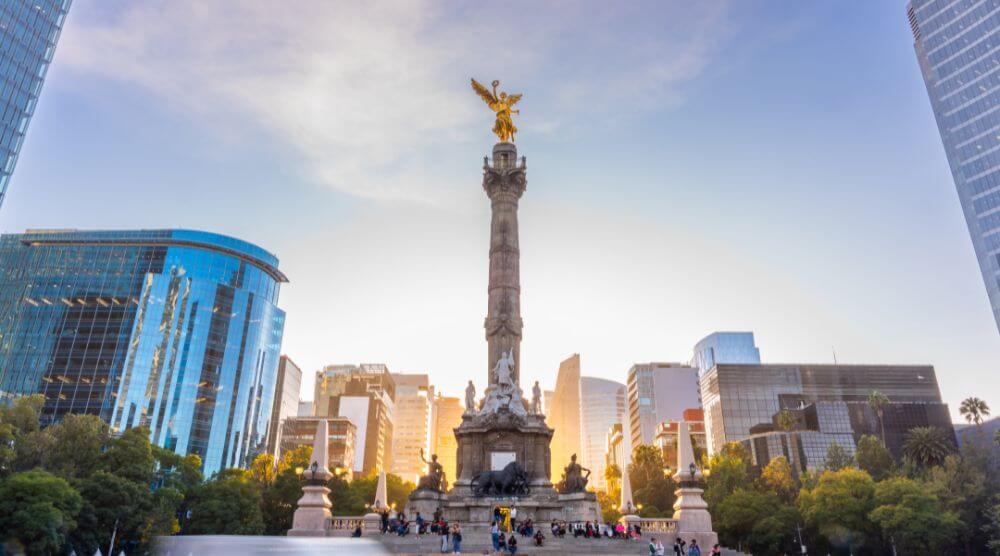
Mexico City, the capital of Mexico and one of Latin America’s business and cultural hubs, is a city full of contradictions, judging by international rankings and research. The high levels of inequality and corruption, as well as enduring and harmful stereotypes, also permeate the city’s image abroad. At the same time, its urban development appeals to many digital nomads.
But what do international rankings and indices have to say about Mexico City in terms of its economic performance, sustainability, city brand strength, and reputation?
Overview of Mexico City’s Performance & Potential
The following table offers an overview of Mexico City’s overall performance across various international rankings. For a reading of how a place is perceived, organisations responsible for its brand, investment or talent attraction can request a free Positioning Check.
| Ranking | 2019 | 2020 | 2021 | 2022 | 2023 | 2024 | 2025 |
| Brand Finance Global City Index | – | – | – | – | 59 | 58 | – |
| Resonance World’s Best Cities | – | 96 | 97 | 71 | 76 | – | – |
| Global Financial Center Index | – | 78 | 69 | 60 | 97 | 109 | 110 |
| 2Thinknow Innovation Cities Index | 87 | – | – | – | 61 | – | – |
| Kearney Global Cities Index | 40 | 38 | 31 | 31 | 28 | 36 | – |
| Mercer Quality of Living Ranking | 129 | – | – | – | 130 | 116 | – |
| Mercer Cost of Living Ranking | 144 | 120 | 152 | 149 | 79 | 33 | – |
| Numbeo Cost of Living Index | – | 317 | 423 | 443 | 367 | 206 | 201 |
| Numbeo Quality of Life Index | – | 203 | 226 | 231 | 220 | 182 | 251 |
| IESE Cities in Motion Index | 133 | 130 | – | 115 | – | 120 | 118 |
| Arcadis Sustainable Cities Index | – | – | – | 79 | – | 82 | – |
City Brand Strength
Mexico City is strengthening its position as a leading Latin American metropolis with growing global visibility and influence, ranking 58th in Brand Finance’s Global City Index 2024. Resonance’s 2023 World’s Best Cities Report ranks Mexico City 76th, scoring the following in the Place Power Highlights sub-factors: 13th in Museums and 19th in Facebook Check-ins.
It ranks 36th in Kearney’s 2024 Global Cities Report, recognised for its cultural depth, economic diversity, and strategic role in regional connectivity.
Appeal to Investors and Business
Mexico City’s economy is marked by its growing innovation capacity, regional influence, and diversified economic base. Ranked 61st in 2Thinknow’s Innovation Cities 2023 Index, the city is building momentum in areas such as creative industries, digital entrepreneurship, and urban innovation, supported by a large talent pool and expanding tech scene. Its 110th position in the GFCI 37 Rank reflects its emerging status as a financial centre, with ongoing efforts to strengthen its professional services sector and attract foreign investment.
Appeal to Talent
Mexico City is becoming an increasingly attractive destination for global talent, driven by improvements in quality of life and a still-accessible cost of living. It climbed from 130th to 116th in Mercer’s Quality of Living Ranking 2024 reflecting progress in areas such as public services, healthcare access, and urban amenities. However, its position at 251st in Numbeo’s Quality of Life Index 2025 indicates ongoing challenges related to congestion, pollution, and safety. The cost of living has risen significantly—Mexico City jumped from 79th to 33rd in Mercer’s Cost of Living Index 2024, though it still ranks 201st in Numbeo’s Cost of Living Index 2025, highlighting a more affordable lifestyle relative to many global cities.
Urban Sustainability
Mexico City is making gradual progress toward greater sustainability and urban resilience, though challenges remain. Ranked 82nd in the Arcadis Sustainable City Index 2024, the city shows growing efforts in areas such as public transport, green space expansion, and waste management. Its position at 118th in the IESE Cities in Motion Index 2025—up slightly from 120th the previous year—reflects incremental improvements in governance, urban mobility, and technological integration. While still facing obstacles related to air quality, congestion, and resource management, Mexico City is taking important steps to balance rapid urban growth with long-term sustainability goals.
Our Key Takeaways
Mexico City continues to assert itself as one of Latin America’s most influential global cities, known for its cultural depth, economic diversity, and emerging innovation ecosystem. With ongoing improvements in quality of life, sustainability, and urban infrastructure, the city is poised to strengthen its regional leadership and global visibility.
- Strengths: Rich cultural heritage, large and diversified economy.
- Weaknesses: Traffic congestion, air pollution, and urban inequality.
- Opportunities: Increased foreign investment, leadership in Latin American innovation.
- Threats: Rising cost of living, socioeconomic disparities.
Last updated in July 2025. Explore more city profiles here.
Want to see how your place is read? Organisations responsible for a place’s brand, investment or talent attraction can request a free Positioning Check on one topic of their choice. Learn more →
Disclaimer: The information in this article is intended to provide a general overview of Mexico City’s economic and cultural landscape and facilitate comparison over time. While we strive for accuracy and completeness, the data is provided “as is” without warranty of any kind. Please verify any information before relying on it for decision-making purposes.