
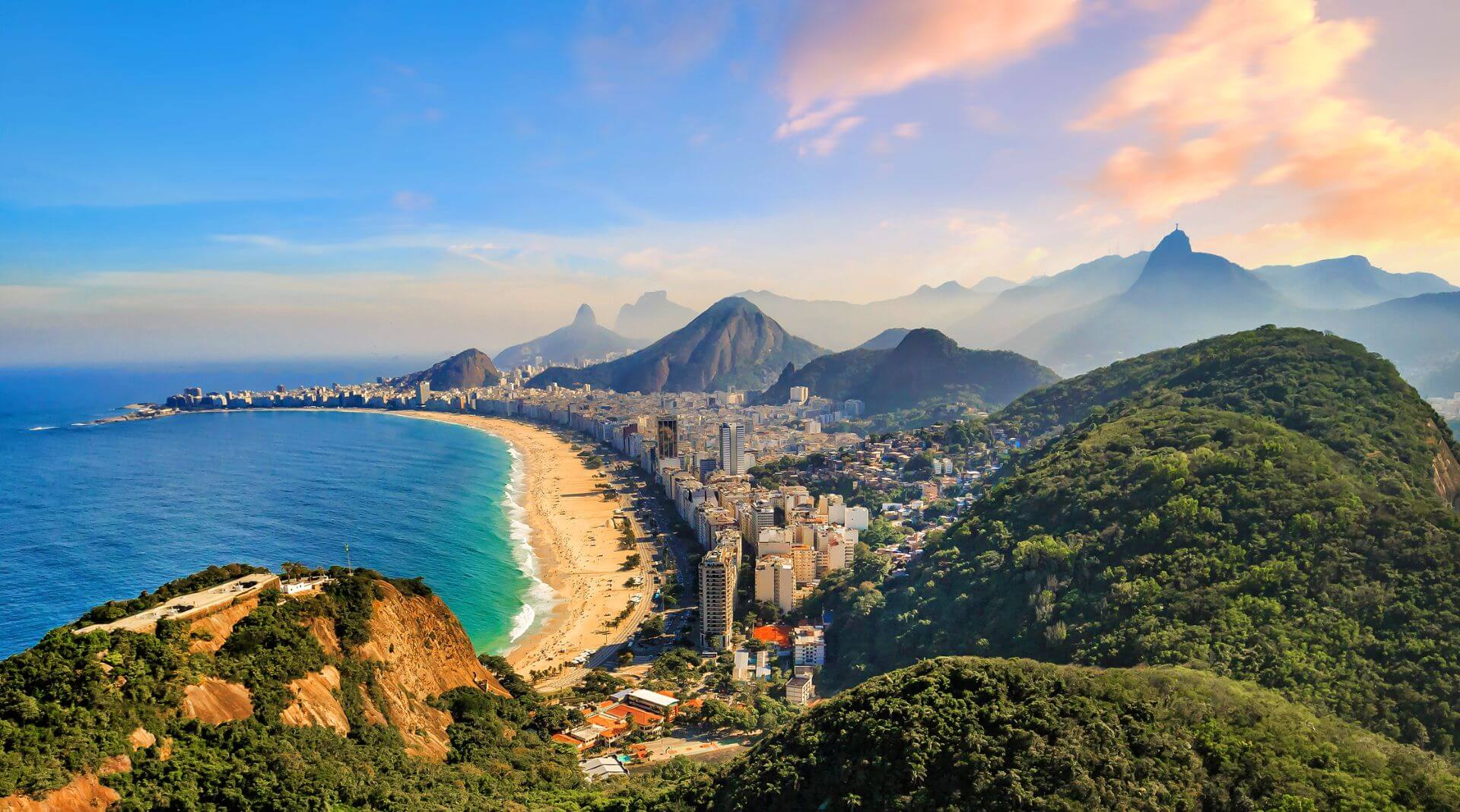
Rio de Janeiro has one of the most recognisable images of any city in the world: the beaches, the mountains, carnival and its music. It is also Brazil‘s second economic centre, with long-standing challenges in safety, governance and inequality.
This profile looks at how Rio is positioned, how it is read from outside, and where the two pull apart, drawing on the major rankings alongside our own coverage.
City Brand Strength
Rio’s fame does not translate into strong rankings. Brand Finance‘s Global City Index placed it in the mid-sixties in 2024. In Resonance’s World’s Best Cities 2025, it fell sharply to the bottom of the top 100.
Its music is one of its strongest assets. A 2024 study we covered in our article on music and place reputation found that Rio’s musical identity was shaped mainly by grassroots activity, in contrast to Montreal, where public support played the larger role.
Economic Position
Rio sits in the sixties of the Kearney Global Cities Index and around 90th in the Global Financial Centres Index. Oxford Economics’ Global Cities Index 2024 placed it in the mid-300s, with governance and quality of life its weakest areas.
Appeal to Talent
The Federal University of Rio de Janeiro and PUC-Rio are among Brazil’s leading universities, both in the 601 to 800 range of the Times Higher Education ranking. Mercer’s Quality of Living Ranking placed Rio around 115th in 2024, with safety and infrastructure the main concerns.
Urban Sustainability
The Arcadis Sustainable Cities Index 2024 placed Rio near the bottom of its top 100, though it did better on environment and on progress than on people and profit. IESE’s Cities in Motion Index placed it in the 130s, strong on international profile and weak on social cohesion and mobility.
What Stands Out
Rio is a city the world feels it knows. Its landscape, music and culture are real and its own, and few places have an image as vivid.
The rankings tell the other side. Governance, safety and quality of life weigh on how Rio is rated, and its fall in the 2025 perception rankings suggests that fame alone no longer carries it. Its strongest assets come from the city itself rather than from institutions, which is both a strength and a limit.
Rio is read through its landscape, carnival and music, and through its problems. Its economy barely registers.
Few cities have a setting and a musical culture as clearly their own.
Culture and setting back the brand. Governance, safety and quality of life weaken it.
Positions are relative to the places in TPBO’s editorial record and based on public material only.
Want the same reading for your own place? Request a free Outside View →
From Our Archive
- 2026Can music change the reputation of a place?
- 2024The world’s best cities by Resonance: benchmarking urban success in 2025
- 2024Brand Finance Global City Index 2024: reputation leaders and key trends
- CountryBrazil: country profile
About this profile. We combine the main international rankings, including Brand Finance‘s Global City Index, Resonance’s World’s Best Cities, the Kearney Global Cities Index and the Arcadis Sustainable Cities Index, with our own reporting. Rankings change every year, so positions are described in broad terms. See the rankings and indices we follow, or explore our other city profiles.