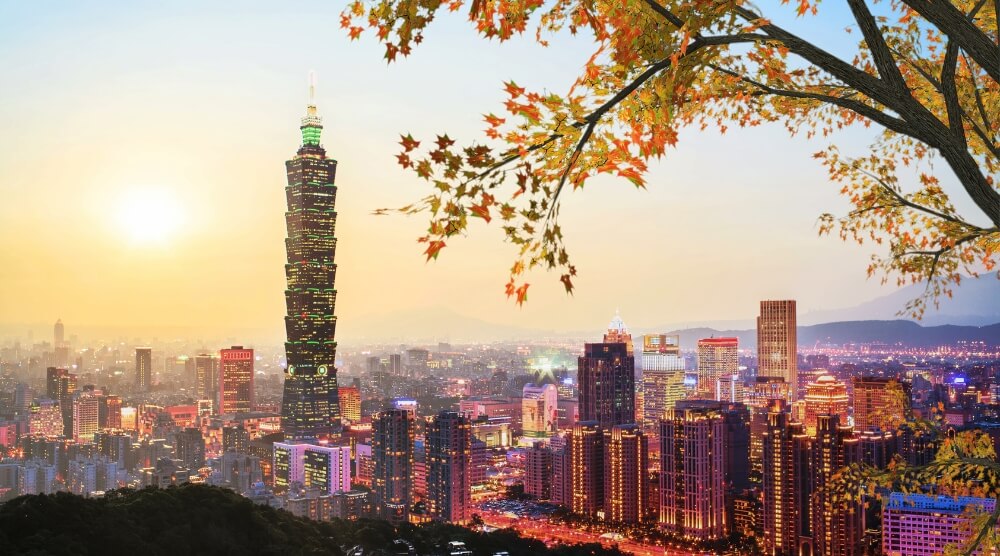
Taipei is the capital and largest city of Taiwan. Known for its night markets, its food and the Taipei 101 tower, it sits at the centre of one of the world’s most important technology economies, with strengths in electronics and semiconductors.
This profile looks at how Taipei is positioned, how it is read from outside, and where the two pull apart, drawing on the major rankings alongside our own coverage.
City Brand Strength
Resonance’s World’s Best Cities placed Taipei in the low forties in 2024 and in the mid-seventies in 2025. It is not covered by Brand Finance’s Global City Index. Abroad, the city is better known for its food culture and safety than for its role in technology.
Economic Position
The Innovation Cities Index placed Taipei in the low fifties in 2023, down from the low twenties in 2021. The Kearney Global Cities Index placed it in the high fifties in 2024, and it sits around 70th in the Global Financial Centres Index, a mainly regional role.
Appeal to Talent
Taipei offers reliable public services, safety and good healthcare at moderate cost. Mercer placed it in the mid-eighties for quality of living in 2024, and Numbeo in the high 120s in 2025, with density and congestion among the pressures. Its costs have eased in international comparison, to around 70th in Mercer’s cost of living ranking in 2024.
Urban Sustainability
IESE’s Cities in Motion Index has placed Taipei between the high twenties and mid-thirties in recent years, one of its stronger results. The Arcadis Sustainable Cities Index placed it in the low sixties in 2024, down from the mid-forties in 2022.
What Stands Out
Taipei combines things few cities manage together: global relevance in technology, a strong street and food culture, and a reputation for safety and reliable services.
Its international brand is smaller than that role. The city’s own story as a place to live, work and invest is less visible than the industries it hosts, and outside attention often focuses on the wider regional context rather than the city itself.
Taipei is read through food and safety. Its role in global technology is less tied to the city’s own name.
Its night markets and street culture are its own. Its tech-hub claims are shared with other Asian cities.
City management results back the brand. Innovation and sustainability rankings have slipped.
Positions are relative to the places in TPBO’s editorial record and based on public material only.
Want the same reading for your own place? Request a free Outside View →
From Our Archive
- 2024The World’s Best Cities by Resonance: benchmarking urban success in 2025
- 2024Smart City Index 2024: how cities are shaping the future of urban life
- CitySeoul: city profile
- CountryTaiwan: country profile
About this profile. We combine the main international rankings, including Resonance’s World’s Best Cities, the Innovation Cities Index, the Kearney Global Cities Index, IESE’s Cities in Motion Index and the Arcadis Sustainable Cities Index, with our own reporting. Rankings change every year, so positions are described in broad terms. See the rankings and indices we follow, or explore our other city profiles.