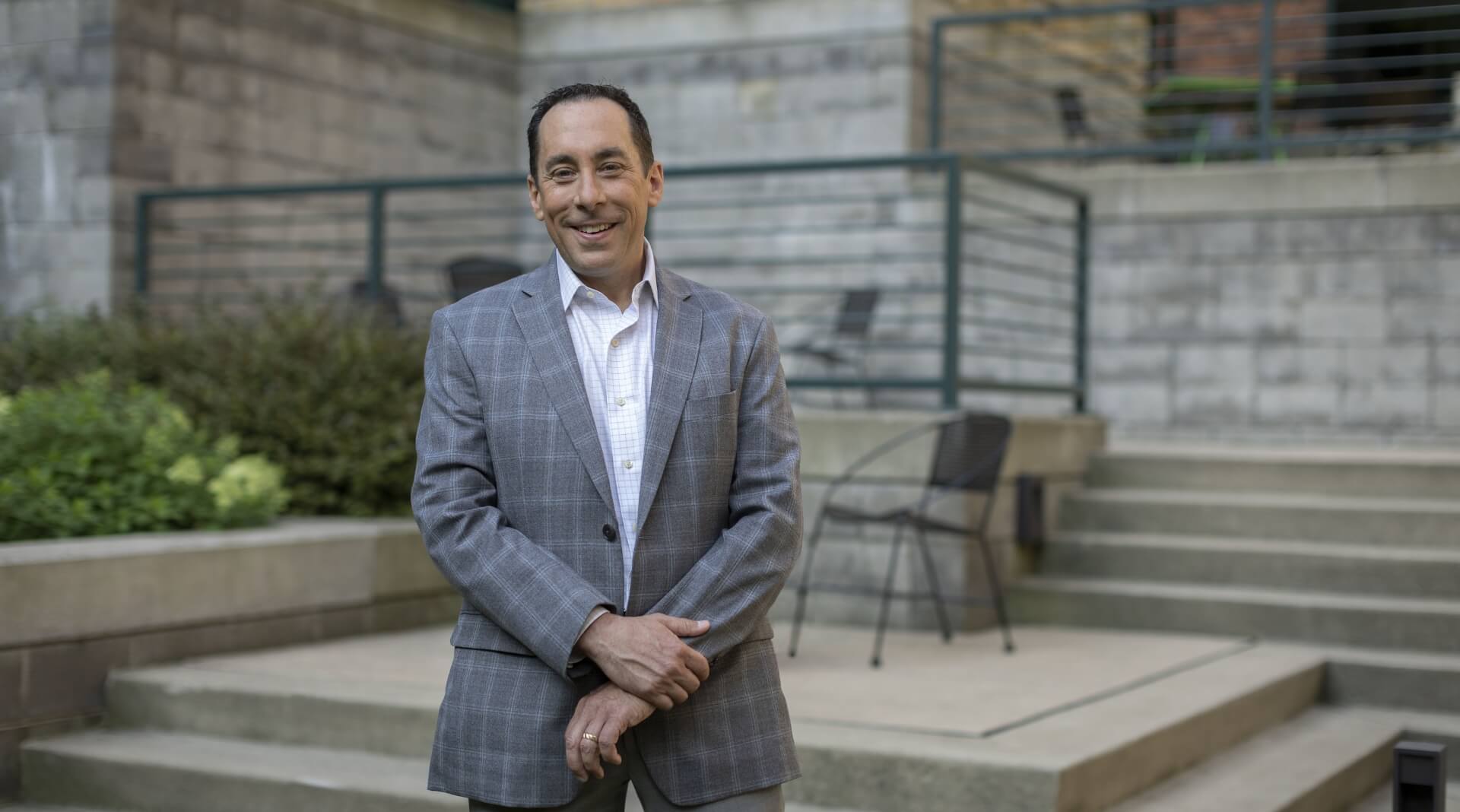
David Gilbert is President and CEO of Destination Cleveland and one of North America’s most influential voices in destination leadership, community engagement, and place development. Over the past decade, he has played a central role in Cleveland’s emergence as a widely cited example of successful urban repositioning, coalition-building, and civic storytelling.
Recognised internationally for his contribution to place leadership, David has consistently championed the idea that successful destination development starts from within – building resident confidence, fostering partnerships, and creating a shared narrative that supports long-term competitiveness and growth.
In this conversation, he reflects on Cleveland’s evolution, the importance of civic pride, and the changing role of destination organisations in shaping the future of places.
David, your career has spanned destination development, economic competitiveness, civic leadership, and community building. Looking back, what experiences most shaped your thinking about places and their ability to evolve?
Having a strong core belief in your community is critically important. Changing perception of a place is hard and made harder if it is viewed as just an academic exercise. It is so important to truly understand the DNA of a community and have acceptance and pride in the good and not-so-good. Our jobs are to make people love who we are at our core, not to present a narrative of what we want people to believe about us, true or not.
Throughout your work, you have often challenged traditional definitions of destination marketing. What motivated that broader view of destination leadership?
Success in destination marketing is many times defined too narrowly – hotel room nights, views and clicks, etc. While these can be important measurement tools, they are often relevant to smaller groups of constituents or short-term in nature. I believe strong destination marketing needs to be tied to relevance for a community – which is different from place to place. If this is successfully done and communicated, it significantly elevates the importance of destination marketing to a community’s health and future.
When you look at places that successfully reinvent themselves, what separates meaningful transformation from short-term campaigns or rebranding efforts?
Three things are critical.
One is to truly understand what makes a place special and unique. This goes beyond features. It is about DNA – people, history, geography, energy, personality – both good and challenging. It needs to be true, believed, and celebrated. This helps capture the essence of a great place brand.
Second is to be constant and steady in execution. Reinvention or gaining appreciation of a place is not a short-term endeavor. The best executions involve many public, civic and private partners and do not arbitrarily change due to leadership changes at any one entity.
Finally, look to other places for inspiration. Constantly seek out great ideas that can be adapted to your place building strategy.
One theme that appears consistently in your work is the importance of resident belief and civic confidence. Why do you see internal perception as such a critical factor in shaping external reputation?
The notion of the importance of perception by locals may seem counter-intuitive for an organization whose role is ultimately about changing hearts and minds of outsiders. However, this inside-out approach is critical to our work for several reasons.
Particularly with the regularly increasing reliance on AI-driven travel information sources, positive posting by locals adds a great deal to the positive digital footprint of a place.
Additionally, the work we do to change perceptions of a place is deep and long-term. It cannot be accomplished with veneer. It needs to be true and authentic, and locals express that best. You cannot fake being genuine.
Most importantly, it is hard to sell something you don’t believe in.
Cleveland’s transformation is frequently discussed as a success story in urban revitalisation and reputation change. What do you believe people misunderstand about how meaningful place transformation actually happens?
Most importantly, place transformation takes time. Reputations and perceptions ebb and flow slowly – but absolutely can change. Add to this that changes in places also take time. What is most important is to be relentless in messaging and have it be authentic to your place’s DNA.
“The Land” has become a widely recognised expression of Cleveland’s identity. Beyond the slogan itself, what did that experience (the process of creating, adopting, and popularizing the identity) teach you about the role of shared narratives in place development?
The Land was part of a brand refresh we implemented several years back but importantly built on our existing brand, which was widely adopted. New research showed changes in our community and its perception externally and internally. It was important to us that this resonated with locals and they were part of telling the story. That authenticity has helped this identity work well for us.
Many places continue to treat place branding, economic development, talent attraction, and destination marketing as separate disciplines. To what extent do you see these fields converging, and what opportunities does this create for cities and regions?
I am a big believer that no major community issue can be resolved by any one organization – public, civic or private. It takes cooperation and coordination of an ecosystem. This certainly holds true for advancing a city’s brand and reputation – which is integral for attraction of residents, capital and visitors alike. The cities, regions or countries that understand this and put it into practice will have the best chance for measurable and lasting advancement.
Talent attraction and retention have become increasingly important topics across North America. How does Cleveland position itself to current and future talent, and what role does quality of place play in that conversation?
Our positioning around talent attraction mirrors our visitor attraction focus – we lead with the personality, energy, and atmosphere that our residents experience every day. That’s what differentiates us from other places. We then lean into the ability to live more for less, which focuses on our affordability and world-class experiences – which many don’t expect in a city our size.
Research shows that how someone perceives a place is critical in relocation decision making – so much so that even if a job and salary match a person’s needs, if they don’t perceive the city to meet their quality standard, it won’t even be considered. So quality of place is an essential element of our talent attraction messaging.
What misconceptions about Cleveland continue to persist and which aspects of the city’s story do you feel remain most underappreciated by external audiences?
Cleveland is sometimes still portrayed as an older industrial and dirty city. That is a narrative based on issues that plagued the city fifty-plus years ago. It is still a city defined by resilience, innovation, grit, and incredible community pride. In terms of features, Cleveland punches way above its weight in parks, arts, sports, and neighborhoods, has a historically significant and growing business community, and is investing billions of dollars in current projects transforming us into an enviable waterfront city.
Importantly, when outsiders put forward an old narrative, we do not get defensive. Instead, we presume they have never been to Cleveland – or at least not in the past 20 years – and invite them for a visit. We know that changes hearts and minds.
Looking ahead, what opportunities are you most excited about for Cleveland over the next five to ten years?
I believe the investment of billions of dollars in lake and riverfront development will transform the narrative of Cleveland as a great waterfront city. This will continue to allow us to further change perception and continue our growth in the attraction of visitors and new residents.
If you could offer one piece of advice to city, region, and destination leaders seeking to strengthen their place’s reputation and competitiveness, what would it be?
Find a brand and narrative that is true to your place’s DNA and feels right and authentic with locals. Utilize this brand narrative through your public, civic, and private economic development ecosystem and engage locals.
Most important, resist changing strategies simply as a result of changes in organizational leadership. Consistency and long-term resolve are so important to success.
Thank you, David.
To explore further, connect with David Gilbert on LinkedIn, or visit our Destination Cleveland showcase. Visit ThisIsCleveland.com to connect with the team.