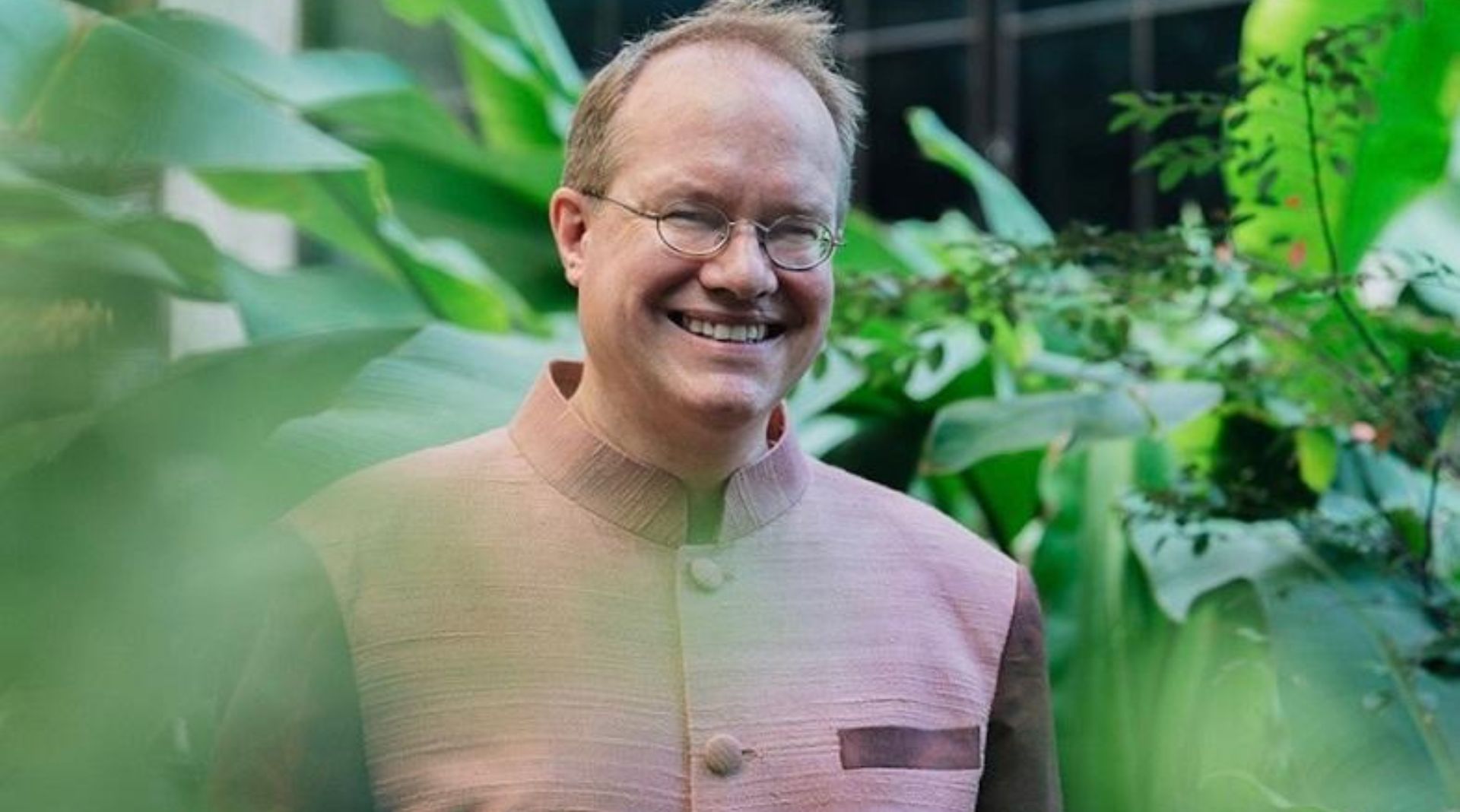
How to develop tourism in a way that creates livelihoods, fosters economic growth and alleviates poverty? Jens Thraenhart, then CEO of the Mekong Tourism Coordinating Office (MTCO), tells us in this interview.
Jens illustrates how he works with the tourism ministries of countries included in the Greater Mekong Subregion: Thailand, Vietnam, Cambodia, Laos, Myanmar, and China. He shares how his team works towards developing a tourism model that supports small, responsible travel businesses, which challenges they have had to overcome, and how the MekongStories concept has helped showcase those going the extra mile in sustainable tourism.
This interview first appeared on Sustainability Leaders United in February 2020. SLU ran as an independent platform from 2014 until 2025 and is now part of The Place Brand Observer.
Jens, you founded the award-winning digital marketing firms Chameleon Strategies and Dragon Trail and created the much applauded Mekong Tourism initiative. What motivated you to take up the Executive Director role at the Mekong Tourism Coordinating Office?
I was actually the Special Advisor to the previous Executive Director of the Mekong Tourism Coordinating Office since 2010, while I was Co-Founder and President of Dragon Trail and Chair of PATA (Pacific Asia Travel Association) China, living in Beijing.
The countries of the Greater Mekong Subregion (Cambodia, Lao PDR, Myanmar, Thailand, Viet Nam, and the provinces of Guangxi and Yunnan in PR China) have always fascinated me. It is such a beautiful and stunning region, rich in culture, heritage, and environmental assets. To be able to assist in promoting and developing tourism in these countries was a tremendous honour, to get the trust from the six governments. On the other hand, it was an exciting challenge to create a platform for stakeholder engagement and collaboration.
I also saw this role as a unique opportunity to build a new model when it comes to sustainable destination management.
Being a dual citizen of Germany and Canada, what excites you about Asia that you moved to the other side of the world?
When I was around 16 years old, growing up in Germany, my father told me that the future will be in Asia and that Chinese will become the most important language. This was in the mid to late ’80s, during a time when China was still closed, and the world viewed China very differently than today. My father’s words always stuck in my head.
When I was invited to a conference in Singapore in the early 2000s, right afterward I booked myself a ticket to Shanghai, not knowing anybody or anything. After that, I had occasional trips to Asia, especially China, while working for Fairmont Hotels & Resorts and for the Canadian Tourism Commission.
Then in 2008 I moved to Beijing, originally as President of a small boutique hotel company, but stayed for over 5 years, co-founding and developing Dragon Trail and China Travel Trends.
As Chair of PATA China, we launched the China Sustainable Travel Forum & Awards in 2010. It was a fascinating time to be in China during the 2008 Olympic Games in Beijing and the 2010 World Expo in Shanghai; a time that truly was influenced by growth, change, and confidence.
In 2014, I decided it was time to leave Beijing for Bangkok, as I believed that Southeast Asia was to be the next frontier for economic growth. In 2014, the six-member countries of the Greater Mekong Subregion appointed me to head the Mekong Tourism Coordinating Office. Now China is the number one tourist source market for all of the GMS countries.
Your objective is to promote the Mekong region as a single tourism destination and to foster responsible tourism development. What challenges do you face with respect to coordination and implementation while dealing with the various tourism ministries?
The member countries of the Greater Mekong Subregion have been incredibly committed to driving regional tourism collaboration. This year, we will celebrate our 23rd Mekong Tourism Forum in the UNESCO World Heritage site of Bagan in Myanmar.
Obviously a lot has changed in the region, as well as in global tourism, in the past 20 years. While some countries were closed to tourism, others were in early development phases. Today all countries focus on tourism as a key economic pillar.
The rising Asian middle class has shifted key source markets from the west to the east, resulting in more regional tourists, demanding different products and communication channels. But despite all that, the key challenge that we have faced, and are trying to overcome, is to drive engagement.
In order to overcome this obstacle, the Mekong Tourism Coordinating Office has created various innovative initiatives to encourage public and private sector engagement, such as:
- the social commerce marketing and capacity building platform “Mekong Moments”,
- the regional social media campaign “Mekong Mini Movie Festival”,
- the responsible travel guide “Experience Mekong Collection”,
- the “Mekong Trends”, delivering tourism insights,
- the “Mekong Innovative Startups in Tourism” (MIST) program, mentoring startups in the travel tech and social impact categories,
- the institutional website MekongTourism.org, housing an e-library,
- the Mekong Tourism Contributor Program,
- the annual industry conference “Mekong Tourism Forum”.
Regional tourism collaborations between multiple countries can be a real challenge. How do you create value for the travel and tourism industry in the Mekong region?
The strategy of the Mekong Tourism Coordinating Office over the past five years has been built entirely around contribution, collaboration, and stakeholder engagement. If engagement can be achieved, the collaborative nature of marketing the destination is immensely powerful, so long as it’s facilitated in a way that each stakeholder in the visitor economy contributes, benefiting their own business and ultimately collaboratively driving value to the overall exposure of the destination.
This collaborative model could, in theory, enable any low-budget destination to effectively compete with any cash-rich destination, building virtual consortia of travel businesses in the destination.
We have developed a collaborative marketing and capacity building ecosystem to drive sustainable tourism and inclusive growth in the region. This strategy has also transformed the traditional destination management model to an inclusive crowd-marketing model. The result: a sustainable brand powered by authentic experiences which are created and delivered by small, responsible travel businesses.
The Experience Mekong Collection brings together small, medium and social enterprises committed to responsible tourism. What are the criteria a business has to fulfil to be part of this group?
Consumer trends have fuelled the desire of travellers to engage in authentically local and sustainable experiences. This is positive for inclusive tourism, and the economic value that tourism brings spreads out to secondary destinations and into communities where micro, small, and medium businesses have the opportunity to benefit.
These small responsible travel businesses are curated to make up the Experience Mekong Collection, serving as a trusted consumer label for social enterprises in the travel sector. The collection is aligned to the 17 United Nations Sustainable Development Goals and functions as a capacity-building platform for other businesses to learn and share best practices.
The Experience Mekong Collection now comprises close to 350 small, responsible travel businesses. Those offer sustainable travel experiences in the categories of stay, taste, do, shop, cruise, and tour.
Anybody is able to nominate businesses to be added to the Experience Mekong Collection and the Mekong Tourism Advisory Group makes sure these businesses, in fact, do create a social impact on their communities and provide an authentically local experience.
Place “consumers”, including travellers and residents, share their experiences with these businesses on social media, building a content cloud of responsible travel experiences in the Mekong Region.
This sustainable model has these “promoters” organically building a stakeholder-driven destination brand around authentic and sustainable experiences, preserving the heritage and culture of the destination, supported by the local community.
Have you seen any results that these programs have been successful?
It is always challenging to truly measure the impact of such initiatives. However, we do have some encouraging indicators which suggest that we are on the right track. Regarding the Experience Mekong Collection, we were able to measure that an increasing number of travellers are using it to plan their itineraries when traveling in the region.
We strongly believe that the more successful small, responsible travel businesses and social enterprises thrive in the destination, the more inclusive and sustainable travel and tourism in the region will become.
When it comes to our Mekong Innovative Startups in Tourism program, quite a few of our startups have received investments and found partners through the program. In addition to the Travel Technology category, we have now also launched a dedicated category for Travel Social Enterprises. Helping these innovative and passionate entrepreneurs to get exposure and mentorship is especially important for ventures in countries in the Mekong Region that normally don’t get as much attention.
Data collected and analysed by research firm Forward Keys shows that, between May 2016 to 2017 and May 2018 to 2019, multi-country trips in the Mekong Region from source markets USA, Germany, UK, and Singapore grew by 14%. For source markets located in the rest of the world, growth was slower, at 10%.
In addition, we have seen strong brand exposure through the Mekong Mini Movie Festival Campaign, which reached over 22 million people last year and where we can see a large number of return participants from all over the world.
You believe in the power of visual storytelling to inspire people to visit new destinations and promote responsible travel.
I believe that visual storytelling and film can play an important role in promoting destinations and responsible travel. Travelers now have access to low-cost local SIM cards and Wi-Fi and can share their experiences “in the moment.”
Visual content from photos and videos shared on social media about travel experiences is a powerful way to inspire and influence potential future travellers.
Our social commerce platform MekongMoments.com is powered by an innovative destination engagement system. The initial idea was to aggregate experiences in the form of visual content shared on social media and tagged with #MekongMoments and connect the content to the actual businesses, to increase exposure and sales. Once the businesses see the value created, they would encourage their guests to share their experiences by creating mini social media contests. The content cloud that is created is inspiring prospective travellers all over the world.
As the content shared has a focus on responsible travel businesses, the perception of the Greater Mekong Subregion as an experiential and responsible travel destination is strengthened due to the influence of social media networks as travel decision-making channels.
Powered by the same technology, we launched the Mekong Mini Movie Festival campaign, where people share their experiences on social media in video format of 60 seconds or less. In the first year alone, we aggregated over 500 tagged videos, which generated over 1.2 million video views and reached 22.6 million people worldwide. The second year was even more successful, with a significant increase in the quality of videos shared.
Via a partnership with WWF, the mascot of the Mekong Mini Movie Festival is the Mekong (or Irrawaddy) Dolphin, to raise awareness of endangered wildlife and the importance of sustainable tourism in the region.
The reason we called it “festival” is the opportunity for the tourism ministries, as well as other travel companies active in the region, to screen the mini videos at travel trade shows, events, and conferences. They even embrace the initiative by developing their own branded campaign as part of the bigger regional initiative.
How do local communities benefit from your work?
While all our programs are highly integrated, the Experience Mekong Collection is probably the most obvious initiative indirectly benefiting local populations.
Due to the fact that many of these small responsible businesses are in secondary destinations, and creating a social impact, however having limited marketing resources, the Experience Mekong Collection can not only disperse tourists to secondary destinations, but can also do good as these businesses give back to the local communities.
Another innovative practice for which we were recognized by the UNWTO is how we engage local tourism businesses when organizing our annual conference, the Mekong Tourism Forum, which rotates around secondary destinations among our six member countries.
While normally tourism conferences are hosted in a big hotel or conference center, we focus to make the Mekong Tourism Forum as inclusive as possible, to engage stakeholders in the destination.
At the 2017 Mekong Tourism Forum in Luang Prabang, Lao PDR, we made the destination the venue and hosted 16 sessions at 16 relevant small businesses. For example, a session on river tourism was hosted on a river cruise, a session on food tourism at a local restaurant, on nature-based tourism in the botanical garden, and on community-based tourism on a rice field which was part of a local village.
Lunches were catered by various small local restaurants all over town, spreading the economic benefit of the event to almost 50 small businesses, taking delegates out of the normal conference into the destination to engage and connect with local residents.
This MICE concept could help smaller destinations to compete for events by developing a consortium of businesses to collaborate and host delegates.
Which of your sustainability initiatives could be easily replicated in other destinations?
All our programs can easily be replicated and adapted to other destinations. We are always happy to share our programs and to help implement strategies.
We have been approached by quite a few destinations, from cities, countries, as well as regions. One good example is the Greater Tumen Region of the four-member countries of Mongolia, Russia, South Korea, and China.
We have started working with the Ministry of Environment and Tourism of Mongolia to develop their digital tourism platform, containing a travel inspiration website, an integrated in-destination mobile app, and the #FeelMongolia campaign, all powered by the same Destination Engagement System technology, as well as a curation of responsible travel experiences.
A well-integrated tourism app is a very strong tool for destinations to involve businesses, local communities, travellers, and other stakeholders.
What challenges should DMOs in Asia and elsewhere foresee and prepare for over the next few years, as the number of tourists continues to rise?
Tourism has done a lot of good for the planet. And still does. We need more tourism in the future to help address the challenges we face. Travel is a right and is also important, not only for economic reasons but also for mutual understanding and peace.
But tourism also creates challenges. Tourism numbers will continue to rise, and destinations will continue to struggle to manage the growth and leverage tourism for economic benefits.
Growth should not be the objective. If it is, it leads to imbalance. We have seen too many instances where a few benefit and many more are stuck with the burden of increased visitor numbers.
The benefit of tourism is typically defined as economic, with the assumption that more tourists create more benefits. But this is not always true, as tourism has a hidden cost. More important than growth is to find the right visitor, at the right time, in the right numbers. Only this way can we protect the heritage, the people and the environment that give a destination its unique vibe and character.
In order to achieve sustainability, there needs to be a balance between the various stakeholder groups as well as the environment, and heritage of the destination.
While we are witnessing over-crowding in many destinations, I don’t believe in the underlying rhetoric of “over-tourism”. Imbalance in many instances is a result of greed, which can then create over-crowding, unhappy residents, pollution, danger to lose intangible heritage and endangered species, and many other issues that appear as a snowball effect.
A trip should leave a positive impact on visitors and residents while contributing to a sustainable planet. Achieving balanced tourism requires the collaboration of all stakeholder groups, to ultimately heal the diseases deep inside of the destination or the place.
Just like a healthy person is a happy person, a healthy destination is a happy destination in the long term if it generates economic benefits for all.
I hope that destinations in the future will shift their mindset from “over-tourism” to “balanced tourism”. Short-term fixes and gains will not drive sustainability in the long-term.
Thank you, Jens.
Connect with Jens Thraenhart on LinkedIn.