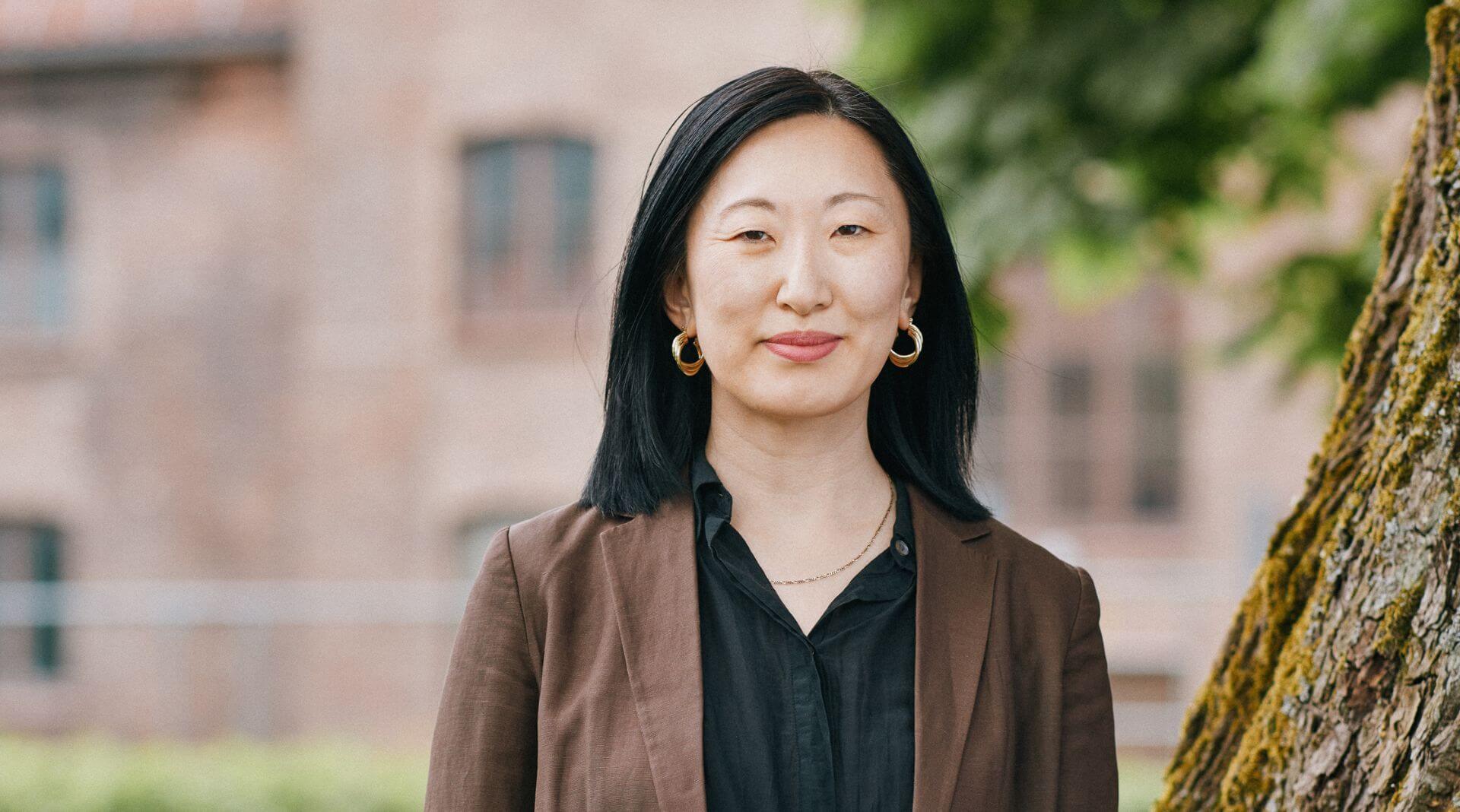
Siw Andersen is CEO of Oslo&Co, the organisation responsible for positioning Oslo internationally on behalf of the City of Oslo, uniting the city’s efforts on investment, talent and global visibility. Relaunched in 2026 from the former Oslo Business Region with a broader remit, Oslo&Co works through partnerships across business, culture and civic life to strengthen the city’s international standing.
With a background spanning design, fashion, media and the startup ecosystem, Siw brings an unusually broad perspective to place branding. In this conversation, she reflects on how Oslo has changed, what makes the city distinctive, and what it takes to take ownership of how a place is seen from the outside.
Siw, you grew up a couple of hours north of Oslo and have seen the city change substantially over the past decade. When you look at Oslo today, what feels most different to you personally?
Moving to Oslo as a twenty-something, it felt like I’d discovered a secret. It was 2002, so there was no social media to speak of; my friends and I would go out to bars and parties, art galleries and concerts, and it felt like we were stumbling on something new every day. It’s easy to forget because so much has changed, but people didn’t really like Oslo back then. I would get asked, why did you move there? Why not Bergen or Copenhagen? People don’t ask me that anymore.
The food scene is totally different, there are amazing museums and things to do. The city has become more liveable and easier to navigate. That said, I’m happy to say that I can still be surprised. Oslo is compact, but even after all this time, I’m still discovering new things.
Your early career was in design and fashion before you moved into the corporate world, and you have also worked as a DJ and mentored female entrepreneurs. How have those different experiences shaped the way you think about cities, people and what makes a place attractive?
A good DJ doesn’t just line up songs for a playlist, they read the room, they respond to their audience, they create a shared experience. Living in a city is also a shared experience, whether you are on the dance floor or out buying groceries. I think about that a lot when I speak to Oslo&Co’s stakeholders; there are so many different needs and requirements, but there are also a lot of synergies. And then with my fashion background, I have spent a lot of time thinking about what makes a brand successful, how things should be presented and perhaps most importantly, attention to detail.
If you had five minutes to explain today’s Oslo to someone who had never been there, what would you want them to understand about the city?
The population of Oslo has grown by 36% over the last twenty years and a third of people living here have an international background. My impression is that outsiders see Oslo as very homogenous. In some ways it is, but you actually have more diversity than people realise.
That shift has influenced how the city has developed; everything from the kinds of food you see in the stores, to style and ambition of signature buildings, to English being the working language. And that feeds into the kinds of businesses and investors you see here too; they’re not just focused on Norway’s traditional strengths of oil and fisheries. We now have rocket startups and robotics companies, entrepreneurs at the cutting edge of AI and funds looking to invest in cool climate and healthcare tech.
Oslo has undergone a significant transformation in recent years. Which of those changes do you think have had the greatest impact on how the city is experienced — and perhaps on how it is perceived internationally?
Simply put, the fjord. A few decades back, the decision was made to open up industrial areas along the waterfront and to make them accessible to the public. There used to be a highway between city hall and the water; that’s been replaced by bike lanes and a pedestrian-friendly plaza. Where the opera house stands today was a maze of roads, parking lots and warehouses. You would never have gone for a walk there.
Now it’s one of Oslo’s key business districts and also a favourite with tourists due to the Munch museum, the many restaurants and saunas, the small beaches and playgrounds. And then tying it all together, you have a boardwalk that follows almost the entire shoreline from east to west, ending at Aker Brygge, which was an industrial shipyard as recently as the 1980s. All of this is great for visitors, but it also makes Oslo a much more enjoyable place to live and work.
Oslo&Co brings together the ambition to attract investment, talent and business to the city. What do you think these different audiences are actually looking for in Oslo, and where do their expectations overlap?
When we sat down to build Oslo&Co, we spoke a lot about what sets the city apart and we came up with this catch phrase of “refreshingly different.” For talent, that means you can have an interesting and challenging career, while also enjoying a fulfilling personal life.
For investors and businesses, there is no hierarchy here. It’s easy to get meetings. You are a phone call away from almost any CEO and most events are open to attend. You might see a cabinet minister selling hot dogs at their children’s school or a key business leader out skiing in the woods. And then I think all these groups appreciate the transparency and stability of our institutions, as well as the educational and research opportunities here.
When we sat down to build Oslo&Co, we spoke a lot about what sets the city apart and we came up with this catch phrase of “refreshingly different.”
What do you think Oslo is particularly good at communicating internationally today? And where do you think the city still has work to do?
We are well known for our efforts on sustainability and climate, for the transformation of the waterfront, and for the new generation of museums that have opened over the past decade. What we haven’t communicated as well, is what everyday life is like. What do people in Oslo enjoy doing? What makes life good here? How do we make the most of every season, including our notoriously long, dark winters?
I like cosying up with a hot chocolate or going to one of the thousands of concerts the city hosts every year. Oslo’s music scene is fantastic; there is jazz, electronica or black metal. And then we have institutions that attract global attention, the Norwegian sovereign wealth fund is a good example, but we also have innovation clusters that are at the forefront of cancer research. The opportunities here are far broader than many people realise.
Oslo has a strong set of associations around sustainability, quality of life, nature and innovation. How do you make sure those associations remain distinctive rather than becoming generic attributes that many cities now claim?
What’s distinct is that these experiences are ingrained in our daily life. We’re not fibbing when we say we go to the sauna before work or for an evening swim at a lake within the city limits. We get out and enjoy the nature that defines Oslo, whether that means island hopping or berry picking in the forest. A walk in the woods is restorative, but it’s also energising and often the best way to generate fresh ideas.
We spend Sunday afternoons lounging around our amazing libraries. When a ship to install offshore wind turbines is docked in town, the entire city knows and many come to check it out. This also speaks to the size of the city and the fact that it’s easy to get around. You can do all these things in a day. Events here are much closer and often they’re right in the middle of the city. Everyone goes, so the question is not, ‘are you going?’ but rather ‘what day are you going?’
When you think about Oslo’s international competition, which cities do you find most interesting — either because they are genuine competitors or because there is something you think Oslo could learn from them?
It’s natural, I think, to compare yourself to cities within the same region. We invited our counterparts from Stockholm to an event earlier this month and the conversation touched on what makes each of our cities unique, but also about how we complement each other. Shared values make it easier to collaborate.
I also have a South Korean background, so Seoul is a city that I have followed over the years. They have built a place brand, through art and culture, that is truly unique and worth studying.
And lastly, I think Bilbao is interesting for us to examine because of how the Guggenheim changed the city.
People here in Oslo can get very focused on their sector, but forget that their employees want to live in a place with amazing food, culture, museums and sports. Those quality of life metrics go hand-in-hand with attracting and retaining talent, which then drives long term success for businesses.
Which international audiences or markets matter most to Oslo&Co at the moment, and what makes those markets strategically important?
Oslo and Norway have historical links with the US, the UK and with western Europe, as well as places like Japan. These are our biggest export markets already, so we are leaning into those relationships and looking to grow them.
Looking ahead three to five years, what would make you feel that Oslo has strengthened its international position in a meaningful way? What would you actually see happening?
The impression of Oslo is broadly positive and that in itself is an opportunity. People know it’s up north, that it’s very green and maybe that we host the Nobel Peace Prize or that it’s where The Scream was painted. They don’t know any companies or brands. They may not even have seen any pictures. What Oslo&Co is trying to do, is to take ownership and shape how outsiders see the city.
Looking ahead five years, I want people to think of Oslo as a place they want to start a business, invest and come to work. And I want those companies and people to stay here. In a dream scenario, I want networks and friendships to be less siloed, for there to be more crossover between Norwegians who grew up here and expats.
People often move here with young families, which is great, but it can also be a hard time of your life to build new friendships. I hope that the city starts attracting more people in their twenties because I think they will find building a life here much easier.
And finally, what has working on Oslo’s international positioning taught you personally that you think other cities could learn from?
A city has a lot of stakeholders and often they are all pulling in different directions. Part of my job is to remind people to think about the city holistically and find the points where our interests intersect.
Take Oslo’s climate budget as an example. Oslo was the first city in the world to adopt a climate budget as a way to track and reduce carbon emissions. That drove a lot of innovation and investment locally, in everything from electrification to carbon capture. It also improved day-to-day life for people living here.
This is all good news for the city, but on top of that, it was an initiative that garnered global attention, with other cities like London and New York using our model. That is a lot of positive spillover from what started as a public policy tool to help us meet our own climate goals.
Thank you, Siw.
Connect with Siw Andersen on LinkedIn, or visit Oslo&Co to learn more about the city’s international positioning.
For more perspectives from practitioners and thinkers shaping the future of place branding, explore our Place Brand Leaders interviews.