“The field of place branding is largely concerned with where places stand in rankings, with image and reputation, and very little with the future they are being prepared for.”
That’s how Caio Esteves opened the tenth conference of the International Place Branding Association (IPBA) in Lisbon. Quite a way to start a place branding conference. (And yes, we publish our fair share of ranking articles too.)
We weren’t in Lisbon this year. So we asked people who were there what stayed with them. Both keynote speakers replied, as did IPBA’s founding chairman, board members, the conference chair and several practitioners. Here is what they told us.
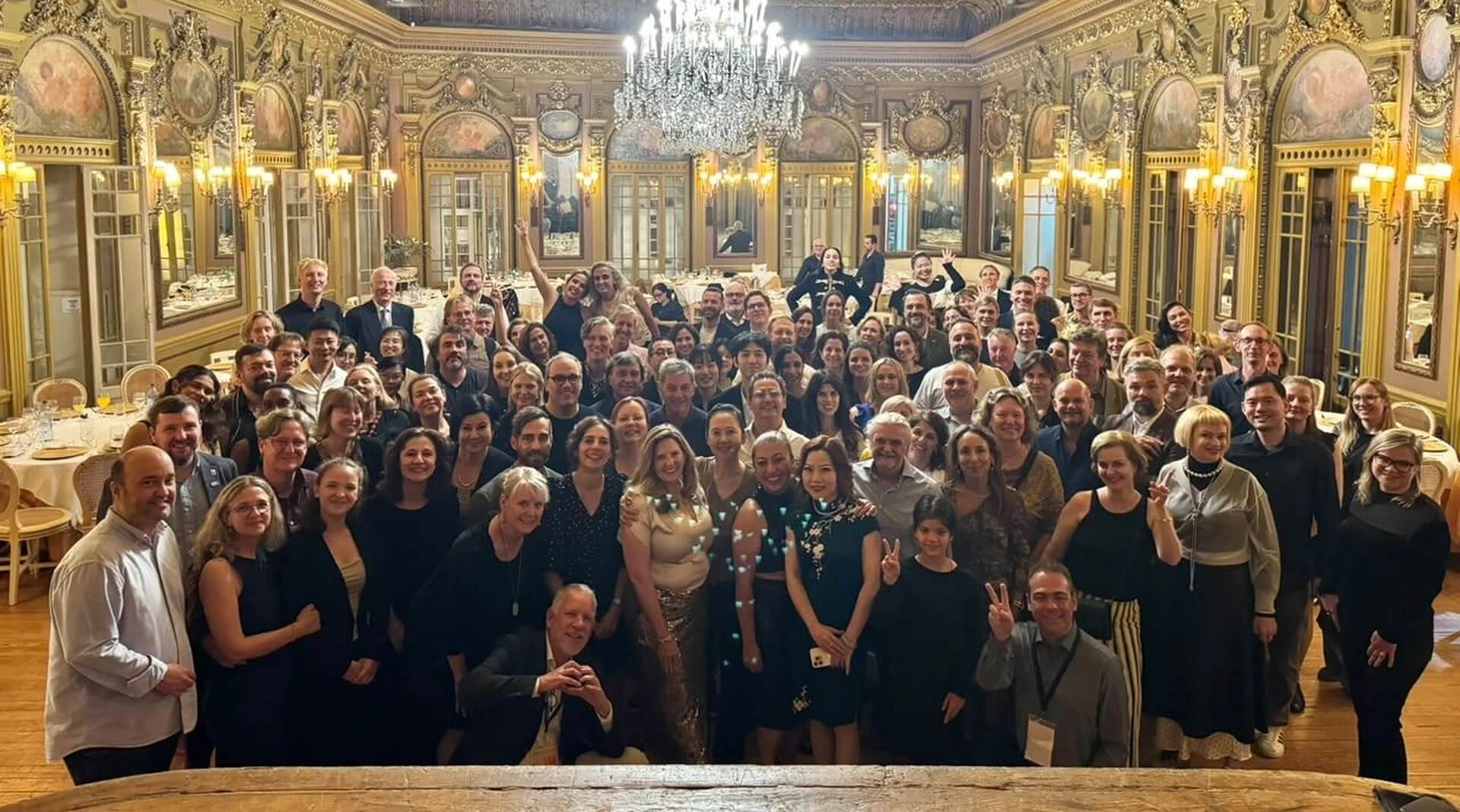
First, the basics. The conference ran from 28 to 30 October 2026, hosted by Universidade Europeia and IPAM at their Quinta do Bom Nome campus. According to IPBA, 140 delegates from 26 countries took part, and 104 contributions were presented, including eight artworks. It was also IPBA’s tenth birthday, which meant a big cake at the gala dinner and dancing afterwards.
The opening keynote
Caio Esteves is Partner Director at n/ Lugares Futuros in Brazil. Here is the core of what he told the audience:
The present takes so much attention that the absence goes unnoticed. That absence hides an assumption: that all places are heading toward the same future, on a single track, where the most rational strategy for whoever is behind is to copy whoever is ahead. The city that looks like all the others would be the finish line of that race. I call this the illusory comfort of predictability, the belief in one unchanging future.
Admitting plural futures raises a political question: who decides which ones are preferable? My hypothesis is the community, as author of its own place’s futures. Identity informs which futures make sense, imagined futures alter what identity judges possible, and lived experience transforms it again. It is a circuit with no finish line, in which the overlap between place branding and placemaking stops being a static intersection.
But who writes these futures? The images we use to illustrate backwardness, the market or the popular festival, are not behind anyone. They are somewhere else, with futures of other accents. They only look backward when measured against the single track, which orders all places along one axis. When we take the same idea of the future to very different places, what we call backwardness or progress tends to be only the limit of our imagination.
His talk came up in several of the reflections we received. Michael Persson Gripkow, Senior Place Branding Advisor and founder of Place Branding Executives network in Sweden, summed it up like this:
Caio Esteves left me with an image I’ll remember. A microscope helps us look closely at a place’s identity. A telescope lets us explore the different futures it might face. As a practitioner, I came away wondering whose everyday experiences we need to understand better before we make decisions about a place’s future.
What the research says
João Freire of IPAM Lisboa chaired the conference and read all the submissions. He then went through the book of abstracts, with some help from AI, and sent us the numbers:
We received 94 abstracts and 11 full papers from 31 countries and 98 institutions, five of them consultancies. China led in first authors (9), followed by the UK (8), then the USA, Greece and Spain (7 each). Europe accounted for 60% of abstracts.
The largest theme was heritage, culture and place narratives, with 20% of abstracts. It was followed by governance, stakeholders and participation (16%) and nation branding, diplomacy and geopolitics (15%). Strategy and management, urban development, tourism, place identity and digital technology made up the rest.
Almost half of the contributions (47%) used qualitative methods. Purely conceptual work accounted for 14%, a sign of a young field that keeps questioning itself and opening new areas.
(His count of 31 countries includes all authors, also those who didn’t travel to Lisbon.)
So the field is broad. But is it connected? Magdalena Florek, Poland-based independent advisor and member of the IPBA board, isn’t so sure yet:
What interests me most is how interdisciplinary these conversations have become. Scholars now draw on sociology, geography, psychology, urban studies, architecture, political science and computer science, among others.
But having many disciplines represented does not mean we fully embrace interdisciplinarity yet. There is a difference between bringing diverse perspectives into the same conversation and genuinely connecting them. Moving from disciplinary diversity to meaningful integration is, I believe, one of the next important steps for our field.
We also need stronger collaboration between academia and practitioners. Researchers need opportunities to do meaningful research, and places benefit from turning findings into practice. Both sides have much to learn from each other.
Martin Boisen goes a step further. He is Vice Chairman of IPBA, lecturer at the University of Groningen and independent advisor at For the Love of Place, and he was there when the idea for the association took shape in Poznań in 2014. He loves the community, but he is not easy on the field:
It makes me incredibly happy to see the community that we envisioned in Poznan back in 2014 alive and kicking! Our annual conference feels like a free harbour where scholars who often find that their expertise is considered a marginal topic in their ‘own’ established disciplines find their academic family. This year was no exception, as João and his team delivered a laid-back, yet serious experience in the beautiful and friendly city of Lisbon.
With that said, I remain critical of the progress we’ve made over the first decade. Although the number of presentations that view place brands as merely visual identities has gone down drastically over the last ten years, the hard academic questions still remain. Much of what’s going on feels like we’re reinventing the wheel over and over again, using slightly different words, whilst thinking that we agree on what we’re talking about. We also fail to correctly identify the giants on whose shoulders we’re supposed to stand. As a practitioner, I am also growing increasingly aware that a vast majority of our scientific community have very little idea of the quality of work that goes on in practice.
For me, these critical points are the main issues that I aim to have addressed in the coming decade, whilst treasuring our community and easy-going approach. Oh yeah, and by the way: this is all geography, my friends.
Olga Rauhut Kompaniets, Associate Professor at Halmstad University in Sweden and TPBO’s Associate Editor for Research, has been to eight of the ten IPBA conferences. For her, one debate in Lisbon hit home:
The conference reflected a maturing field, moving beyond attractiveness and promotion towards governance, well-being, authenticity and meaningful place development. The conversations about place-washing were particularly relevant: are we helping places become better, or simply helping them look better?
I was also encouraged by the growing attention to smaller cities, rural regions and the lived experience of residents. Places have different ambitions and challenges, and there is no one-size-fits-all strategy.
The best paper award, by the way, went to Biljana Arandelovic for her work on Belgrade’s Hotel Yugoslavia, “the brand that outlived the country”.
The view from practice
Michael went to Lisbon as a practitioner, and the talks that stayed with him were the ones about residents:
Sara Pourmorshed’s talk made me think about Halland’s ambition to be the best place to live. How does that promise hold up when you’re trying to get around, find somewhere to meet people, or have a say in a local decision? Sierdjan Koster looked at how newcomers build a connection with a place through everyday experience. It made me wonder how much attention we pay to what happens after people move in.
César Jiménez-Martínez asked who gets to speak for a nation. I kept thinking about what happens when people see their country differently and only some of those views make it into the official story. Xingyi Cao added another dimension: the same act of co-creation can help one group feel more at home while leaving another feeling less so.
Chris Wade, Director of People & Places Partnership in the UK, presented in Lisbon together with Mark Mobbs of the South Yorkshire Mayoral Combined Authority. Their topic: a new narrative for South Yorkshire, built with local communities. The question Chris took home:
How can place branding keep evolving as part of a joined-up approach that captures and communicates the needs and potential of a place and its people?
Magdalena Florek summed up the task ahead: we need to explore the connections between disciplines, understand how they influence each other, and see how they can strengthen one another. That matters for place branding as a field of research, and even more as a practice with real impact on places.
The closing keynote
Juan Carlos Belloso, founder of Future Places in Barcelona, gave the last talk. Chris quotes one line from it that we keep coming back to: “what creates value for a visitor, an investor, a business, or an institution does not necessarily create the same value for residents, or for the place itself.” Here is Juan Carlos in his own words:
After more than forty years working with cities, regions, destinations and urban developments around the world, one conviction has become increasingly clear to me: place branding remains essential, but it is not always sufficient on its own to address the challenges places face today.
Identity, positioning, image, reputation and attraction continue to matter. Yet different places face very different challenges, from managing the consequences of success to rebuilding trust after crises. Addressing them requires a broader, more systemic view that connects place branding with place strategy, public diplomacy, policy, governance, planning, experience design and placemaking.
At the heart of my proposal is Value-Based Place Strategy. It starts not with the services we can offer, but with a more fundamental question: what value should this place create, for whom, and how sustainably? This means looking beyond the value created for visitors, businesses and investors to consider territorial value: residents’ wellbeing, identity, resilience and long-term prosperity.
For academics and practitioners, the opportunity is not to claim ownership of other disciplines, but to connect perspectives and contribute more meaningfully to the future of places. The future of place branding is not only about making places more attractive. It is about helping them create the value they need, and shape the future they deserve.
How it all started
Ten years is a good moment to look back. So we asked Robert Govers, IPBA’s Founding Chairman and Senior Partner at Anholt & Co., how it all began. Here is his story:
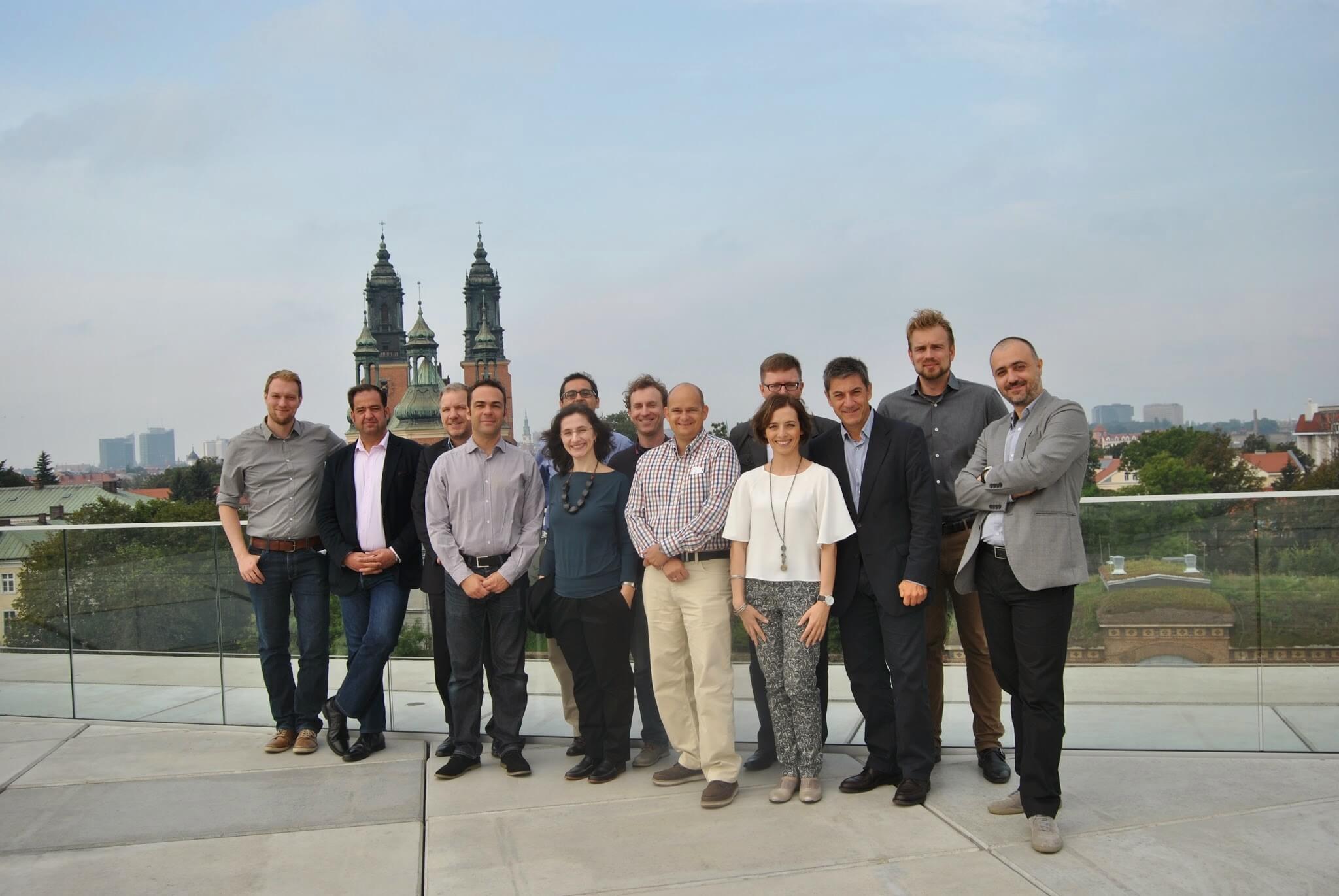
The history of IPBA goes back to 2014. That year, Magdalena Florek, Adam Mikołajczyk and Jarosław Górski of the Best Place Institute had an idea. In September 2014 they invited an international group of place branding and marketing experts to Poznań, Poland, to discuss setting up an association that would be a point of reference for academics and professionals, and an organisation advocating for the professionalisation of the field. Present in Poznań were, as the picture shows from left to right (with their current positions):
- Sebastian Zenker, Professor at Copenhagen Business School
- Gildo Seisdedos, Professor at IE Business School, Madrid
- Robert Govers, Senior Partner at Anholt & Co., London, and IPBA Founding Chairman
- Mihalis Kavaratzis, Professor at Manchester Metropolitan University and IPBA board member
- João Freire, Professor at IPAM/Universidade Europeia, Lisbon, former IPBA board member and 2026 conference chair
- Raquel Sztejnberg, Executive Strategy Director at Design Bridge and Partners, São Paulo
- Stefan Roesch, Film Commissioner (AFCI), Film Tourism Specialist and Director at FilmQuest, Dunedin, New Zealand
- Nigel Morgan, Professor at Manchester Metropolitan University and IPBA board member
- Jarosław Górski, Board Member at Best Place European Place Marketing Institute, Warsaw
- Magdalena Florek, Board Member and Education Director at IPBA
- Juan Carlos Belloso, Founder of Future Places and former IPBA board member
- Martin Boisen, Founder of For the Love of Place and Vice Chairman of IPBA
- Manolis Psarros, CEO and Founder of Toposophy
- Adam Mikołajczyk, Co-founder and President of Best Place European Place Marketing Institute (presumably taking the picture)
The same year saw the 5th International Conference on Destination Branding and Marketing in Macao SAR, China, where some of the same people met again with some others, and the action to establish the IPBA commenced. After several meetings, draft business plans, location assessments and statutes, the paperwork to establish the IPBA in the Netherlands was signed in Horsens, Denmark, in June 2016, on invitation by Ole Have Jørgensen, a long-time contributor to the IPBA conferences. December 2016 saw the inaugural annual IPBA conference in London. It built on earlier International Colloquia on Place Brand Management (London and Aosta), International Conferences on Destination Branding and Marketing (Macau and Cardiff), City Branding Symposia (Stockholm and Beijing), the Corfu Symposia on Managing and Marketing Places and the Poznań Best Place Summit.
An idea that germinated in Poland in 2014 has now turned into a community, to paraphrase Magdalena Florek as she addressed delegates at the closing session in Lisbon. And the world has certainly changed in these twelve years. According to the Anholt Nation Brands Index, the US dropped from 2nd to 17th in the overall ranking. China did the reverse among BRICS audiences, climbing from 17th to 2nd. South Korea gained more than 10 index points, the strongest growth of any country, and Japan is taking a serious lead as the No. 1 nation brand.
A very different world has emerged, yet IPBA has managed to co-organise ten conferences:
- London 2016, hosted by Middlesex University, with Professor T.C. Melewar as conference chair
- Swansea 2017, hosted by Swansea University, with Professor Nigel Morgan
- Macau 2018, hosted by the Destination Branding & Marketing Group (DBM-VI) at the Institute for Tourism Studies, Macao SAR, China, with Professor Don Dioko
- Volos 2019, hosted by the University of Thessaly Department of Planning and Regional Development, with Professor Alex Deffner
- Barcelona 2021, hosted by Pompeu Fabra University, with Professor José Fernández Cavia
- Aix-en-Provence 2022, hosted by the Institut de Management Public et Gouvernance Territoriale (IMPGT), Aix-Marseille University, with Professor Christophe Alaux
- Helsingborg 2023, hosted by Lund University (Helsingborg Campus), with Professor Cecilia Cassinger
- Bangkok 2024, hosted by the Marketing Department of Chulalongkorn Business School, with Professor Viriya Taecharungroj
- Manchester 2025, hosted by the Department of Marketing, International Business and Tourism at Manchester Metropolitan University Business School, with Mihalis Kavaratzis
- Lisbon 2026, hosted by Universidade Europeia and IPAM, with Professor João Freire
In 2027, the annual IPBA conference will take place in Shenzhen, China, from 20 to 22 October, hosted by the Southern University of Science and Technology, with Professor Bowen Zhang as conference chair.
The work will continue as the world continues to change.
Our take
Going through all these replies, one thing is clear: the people in this field are asking harder questions about their own work. Who is it for? Does it make places better, or just make them look better? None of this is new, but it came up in almost every reflection we received.
The field has also become much broader. Magdalena’s point is that broad doesn’t mean connected, not yet. Martin is blunter: much of the field still reinvents the wheel, and many researchers know too little about what happens in practice. Bringing research and practice together has been TPBO’s job for more than ten years, and judging by what came out of Lisbon, there’s still plenty to do.
Or, as João puts it: at ten years old, IPBA is not even a teenager. Olga gets the last word:
The strength of IPBA lies in bringing together people who not only study and promote places, but genuinely care about their future. Happy birthday, IPBA. Here’s to the next ten years of helping places not only tell better stories, but create realities worth telling stories about.
More about the association at placebranding.org, and about its new free guide in our article on Teaching Place Branding. Were you in Lisbon? Tell us what stayed with you on LinkedIn.
This article draws on written reflections shared with TPBO by people who attended the 10th IPBA conference in Lisbon, 28 to 30 October 2026. Some have been shortened. Conference facts were provided by the International Place Branding Association. The conference was co-chaired by João Freire (IPAM Lisboa), Ana Passos (Iscte and Universidade Europeia), Mafalda Nogueira (IPAM Porto), Sofia Almeida (Universidade Europeia), Ricardo Abreu (IPAM Lisboa) and David Monteiro (ISEG, Universidade de Lisboa).