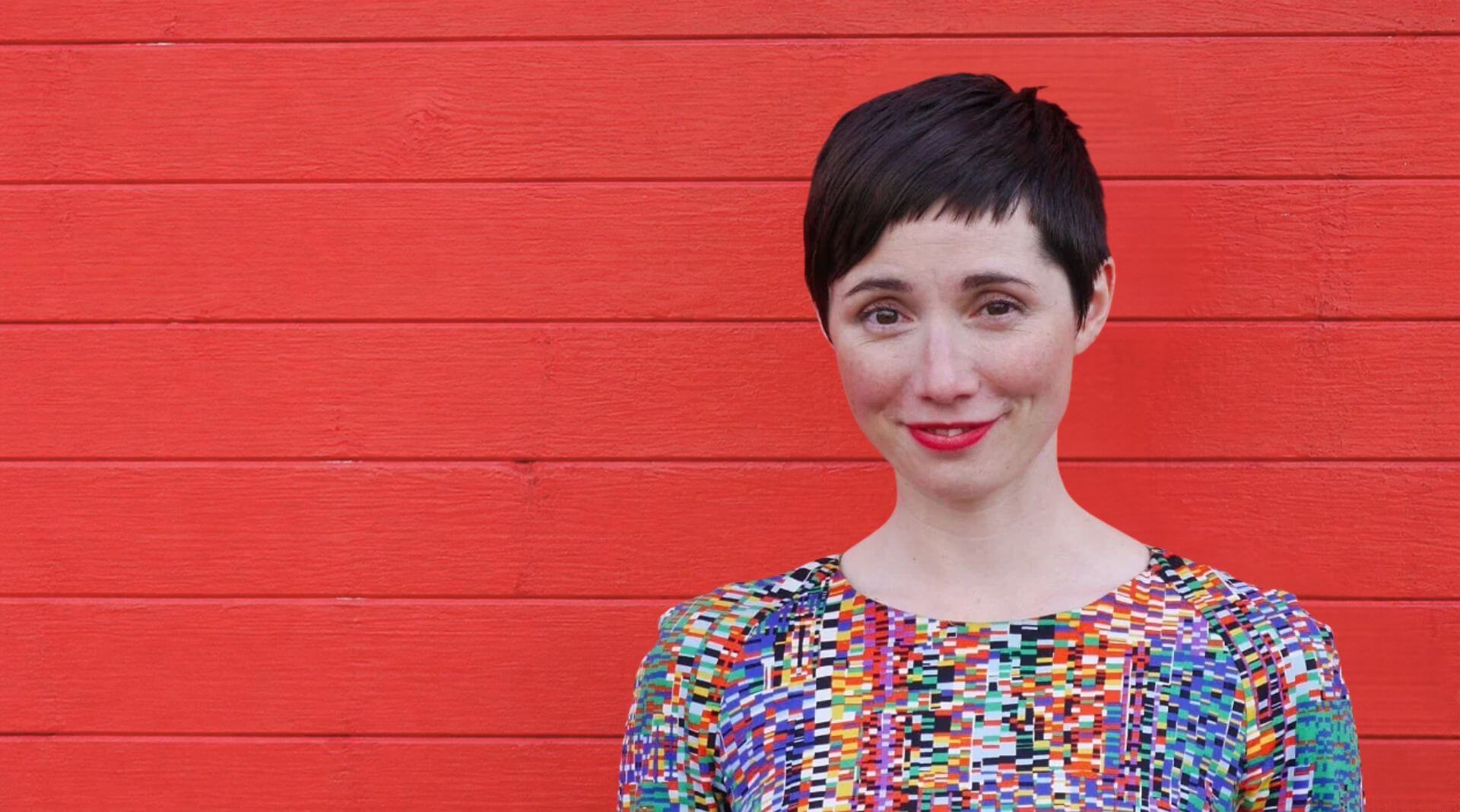
Rosanna Vitiello is founder of The Place Bureau, a London-based studio bringing together cultural research, community voices, spatial design and narrative to help places around the world discover what makes them distinctive. Her work spans emerging urban districts, waterfronts, cultural destinations and rural communities, and she has spent more than two decades researching how people experience and make sense of place.
In this conversation, Rosanna reflects on the gap between the identity a place projects and the one people actually experience, how emotional and cultural insight can reshape positioning, and what the next generation of place-making needs to do differently.
You have spent more than two decades researching how people experience and make sense of places. What have you learned about the difference between the identity that a place is trying to project and the identity that people actually experience?
Identity is always a negotiation between ourselves and others. The reality lives somewhere in the middle.
I’ve come to realise that getting to know a place is like getting to know a person. There’s an initial impression, sometimes a flirtation, a seduction, in the way a place presents itself before we’ve even arrived. That’s where destination branding often does its work: it offers a glimpse, enough to make the voyeur curious.
Then comes the first real meeting. Touching down, arriving in a place. And after that, the slow work of getting to know a place properly, the way you’d get to know a new friend, where you piece together fragments to build an identity, sometimes surprised by what you find. The more time you spend, the more their way of being either deepens into something true, or starts to unravel.
A place that’s confident in its own skin (one that represents its true self) sustains, because the story matches the experience on the ground. It doesn’t need to keep performing. A place that’s still selling you the flirtation once you’ve moved in but lacks any genuine depth and character will always, eventually, be found out.
Identity is always a negotiation between ourselves and others. The reality lives somewhere in the middle.
The Place Bureau describes its work as looking for the “why here?”, “why now?” and “what next?” of places. How do you go about uncovering the qualities that can give a place a distinctive and credible position, particularly when those qualities are not immediately obvious?
We bring creative practice directly into the research process, and we spend a lot of time on the streets, in cities, in landscapes, with the people living the place, not just studying it from above. It’s a kind of ethnography for place: translating lived experience into symbolism.
In Bristol, we worked with photographers, illustrators, even the city poet, to understand Western Harbour, a part of the city that the council knew was meaningful to people but couldn’t quite name why. That cohort of creative ambassadors brought the meaning to the surface: portraits of the people who loved the place, from boat builders to skaters, the cultures they carried, the words and dreams they had for its future.
We also work collaboratively to surface what people love and what they’re willing to let go of, then test that out on the street to find visual and experiential evidence. That gives us a read on what people are likely to care about as things change, which sends us out horizon-scanning for the local shifts that might inspire or challenge them next.
We’re doing something similar now in central London, building what we call an Urban Lexicon (an experiential vocabulary of place) for Holborn, a district at the heart of London that many people simply pass through. We’re working with local people alongside historians, landscape architects and lighting designers to piece together past histories, present-day feelings and future ideas in a city that is shifting due to climate change.
In Bristol again, in Temple Quarter, the gateway to the city, people felt the existing vision was competent but placeless. It could have been anywhere. And that wasn’t OK for a city with a proud character. So we ran a simple online survey: what makes Bristol, Bristol? Give us three words, and tell us why. The answers were eye-opening, and became the spark that kicked off the big collaborative workshops that followed to define a collective identity.
Much of your work brings together cultural research, community voices, spatial design and narrative. How important is it that a place’s positioning is reflected in the physical and lived experience of the place, rather than existing primarily as a brand or communications exercise?
Fundamental. That’s the only way the promise a place makes to the world actually comes true. Otherwise you’re just setting people up for disappointment, when you want to do just the opposite.
The challenge is that this work is usually commissioned in silos: one department doing branding, another doing streetscapes, another doing culture. So we deliberately work across the divide. We work with urbanism and transport teams to help them build storytelling into the streetscape itself, and with culture and hospitality teams to help them see that what happens on the ground matters more than what happens in the campaign. The same goes for public and private sector. Someone has to be the thread that connects them.
Right now we’re working with Fáilte Ireland, alongside the team at Group Nao, on a destination experience plan for the coastal towns and villages stretching out of Dublin. We’ve been cycling, walking, taking the train up and down that coast: visiting, eating, feeling the rain, wind and sun (and all the glorious rainbow of variations Irish weather can throw at you), talking to everyone we can.
We’re analysing the full experience, not just to shape how this coastal capital is communicated, but to make sure that story ladders all the way down to what you actually feel the moment you step onto the train in central Dublin, or step off it in Dún Laoghaire. Then we work with local councils and people in hospitality and tourism to connect the dots.
You have worked with very different places, from emerging urban districts and waterfronts to cultural destinations and rural communities. What have you found distinguishes places that successfully develop a compelling sense of identity from those that struggle to move beyond a new narrative or visual identity?
Places in crisis have nothing to lose and everything to gain from moving on. Not every crisis is obvious, however.
At The Place Bureau, we’ve been working with extraordinary organisations and communities in Sandown Bay, on the Isle of Wight, for a number of years. On the surface, a bucolic island off England’s south coast. Underneath, a very visible story of post-tourism dereliction, and among the highest youth mental health rates in the country.
And yet people there are actively rallying, through action-based projects that mark a real, visible identity shift, weaving together culture, ecology and economy to build a more sustainable Bay for the future. Amazing projects are emerging, from the Sea Pool, set to be the first tidal pool built in the UK in a hundred years, to the town applying to be UK Town of Culture, and new collaborations with universities on the mainland exploring the concept of the island as a living laboratory for the green transition. Being an island, though, they also have to project that story beyond their own shores, which is its own particular challenge.
The most important step successful places make is investing in collaboration before you even touch the identity, or at the very least, genuinely understanding the different agendas and starting points at play. Identity is collective after all. Places that have already worked through their politics, their infighting, their social dynamics, move forward far faster.
In St Louis, Missouri, I worked with the team at Bruce Mau Design on the destination brand for the Brickline Greenway, connecting a city long marked by socio-economic division. The Greenway team built an 80-person working group spanning organisations across the entire city, complemented by an Artists of Colour Council advising on the creative process. They became essential to workshopping the identity together, where we’d come from and where we were going, and, crucially, they built a movement before they built the place. It shows in the positioning: “N, S, E, W. It takes all of us.”
Your recent thinking around the emotional relationships people have with places suggests that understanding what people love about a place can reveal something important about its future. How might this kind of emotional and cultural insight change the way we think about place positioning?
This is the foundation of my latest research project, The Love Language of Place. I’m exploring how people build relationships with places over time. Positioning is just the opening line, the eros if you will, that draws us to a place. But it goes way beyond that, to positioning a place you might want to spend the rest of your life with.
We need a richer vocabulary for love too. And I haven’t found that in English, so I’ve turned to the ancient Greeks, who had a more nuanced understanding and often connected love with places through their epic journeys. So beyond the initial attraction, I’m also exploring practical love (pragma) when the going gets tough, or agape, the unconditional love that makes you feel like you are part of a place, and it is part of you.
We see that most clearly in natural landscapes, and we felt it when we were working in Snæfellsnes, Iceland, helping this amazing regional park to define its positioning and destination brand. Local people there told us that the first thing they did when they woke up in the morning was to greet the glaciers, that those mountains and seas charged them with energy in the way that a great conversation with a loved one can.
You can follow the research as it emerges here, and I would love to gather love stories from around the world to dive into this question more.
Looking across the places you have worked with or observed internationally, which places do you think are particularly interesting right now in the way they are redefining or repositioning themselves? What are they doing that others could learn from?
Parma, Italy. During Covid-19 it was City of Culture, but the restrictions meant that people here invested in building a new story and new relationships rather than in physical buildings. Now that has given amazingly fertile soil for the future. 2027 is going to be big here. The city is refreshing its DMO, opening a five-star hotel, Palazzo Parma, with Martin Kuczmarski, ex-Soho House, and will be European Youth Capital.
We’re working with the city and an association of entrepreneurs, “Parma Io Ci Sto”, to guide them in establishing the first contemporary cultural institute for the city, called ParCo, as a space of creative experimentation for the future. It’s literally a space to grow a contemporary culture for this traditional city, and I’m so excited to see what emerges. They also have the benefit of seeing how other Italian cities have navigated tourism, and are finding a much longer-term view on investing in their region’s future.
Budapest. It’s a fascinating moment for Hungary as a nation: a shifting political landscape alongside new foreign investment, in a city that has had to rewrite its story many times over. It has an inbuilt creativity due to that.
We’re about to start working there, looking at what this moment means for the shifting cityscape: finding new modes of tourism that support a stronger local identity, connect public space to a new story, and attract people in ways that feel more reciprocal rather than extractive. A new, confident and hopeful era sometimes benefits from physical transformations to mark that change.
As places face increasingly rapid changes in climate, technology, demographics and patterns of work and travel, what do you think the next generation of place positioning needs to do differently?
Reciprocity. A genuine relationship with a place has to offer give and take, not extraction. So a positioning should not just ask what a place can do for you, but what you can do for a place.
Destinations also have a remarkable, underused ability to prototype: to try out new ideas for a season on the beach and get immediate feedback, and to test new ways of living before committing to them permanently. That kind of experimentation should be a core part of the next generation, not a side effect of it, and could extend to other cities or regions.
I find the work emerging on islands around the world very interesting, for instance the Isle of Wight as a living laboratory to transition us to the future. I’m in fact writing this from the beach in Spetses, Greece. It’s already a car-free island very close to Athens, a city full of cars, and a small, working proof of what that future could look like.
Thank you, Rosanna.
Connect with Rosanna Vitiello on LinkedIn, visit The Place Bureau, or follow her research at The Love Language of Place.
For more perspectives from practitioners and thinkers shaping the future of place branding, explore our Place Brand Leaders interviews.