Sustaining a global leadership position in destination sustainability is harder than reaching it. For seven consecutive years, Gothenburg has topped the Global Destination Sustainability Index, a record built not on marketing ambition but on long-term stakeholder alignment, honest measurement, and a willingness to keep evolving.
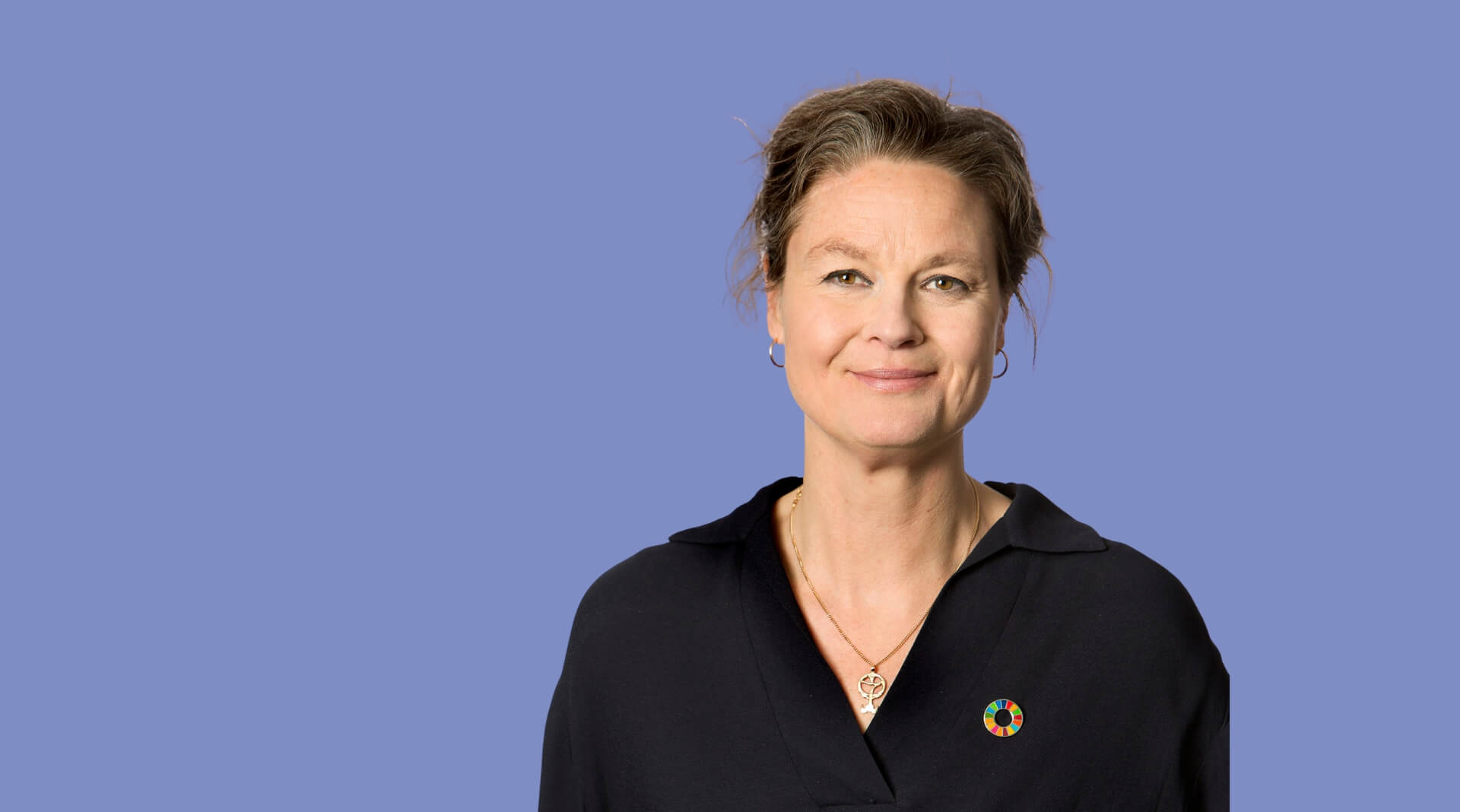
We spoke with Katarina Thorstensson, Head of Sustainability at Göteborg & Co, about the drivers behind Gothenburg’s consistency, how sustainability has become embedded in the city’s brand, and why she believes the most important question destinations should be asking is not how to grow more, but how to grow better.
Katarina, what first drew you into sustainable destination development, and how has your personal journey shaped Gothenburg’s approach?
I started my career at Göteborg & Co working mainly with our International Science Festival, where sustainability, viewed from many different perspectives, kept coming up. I found it intriguing, complex, necessary, and deeply meaningful, and quite early on realized this was my way forward, and more broadly, the future for any modern organization.
Connecting those insights to our role as a destination organization, having the ability to influence a wide range of stakeholders while being accountable for our own decisions, felt like the perfect combination. That intersection felt both challenging and motivating.
At the time, “sustainable destination development” was still a relatively unfamiliar concept, both to me and the organization. Looking back, I’d say Gothenburg and I have shaped each other along the way. It’s been a reciprocal journey.
Gothenburg has been ranked the world’s most sustainable destination for seven years in a row. What are the key drivers behind that consistency, and what does it take to stay at the top?
Early on, we set a shared ambition together with our stakeholders, a common vision: to become a leading destination for sustainable meetings and events. We didn’t have all the answers, but we had strong alignment and a willingness from everyone to contribute. In some cases, that even meant setting aside competition for the greater good of the destination.
That foundation, trust, long-term collaboration, and a shared vision, is still what carries us. And over time, we’ve seen that the work delivers: attracting business, gaining international recognition, and embedding sustainability as a natural part of how we operate.
But staying at the top is a different challenge than getting there. It requires consistency, patience, and a willingness to keep evolving. I say destinations don’t compete on sustainability; they collaborate on it. At the same time, benchmarking and a bit of friendly competition never hurts.
As Head of Sustainability and advisor to major events, how do you integrate sustainability in practice, especially when working across sectors and stakeholder groups?
One of the most important lessons I’ve learned is that alignment on why comes before everything else. If that’s not in place, the rest will be so much harder.
From there, it’s about being clear on the key issues we need to address, agreeing on direction, and then distributing ownership. Vision, goals, and frameworks are set together, but implementation is decentralized. Each organization and each function need to translate that into action in their own context, the right responsibility in the right place.
It’s important to inspire and empower people in this process. It doesn’t have to be complicated. It’s better to do something than do nothing. At its best, my role is to gently lead, inspire, challenge, and support, and create enough confidence and trust for people to try, fail, and improve. Because progress rarely comes from getting everything right the first time.
How has Gothenburg’s brand evolved through its sustainability work? Is there a conscious narrative you aim to project to international visitors, investors, or partners?
Our sustainability work has gradually become an integral part of our brand, not as a layer on top, but as something embedded in how we operate. One of our core narratives is that we have high ambitions and strong commitment, even if we don’t always have all the answers from the start. But we’re not afraid to test, learn, and improve, and we back up our claims with real action and results. We want to position ourselves as being in constant progress.
Another important perspective is that sustainability is not an elite project to us. We need to be many. We need both leaders and followers, both cutting-edge solutions and broad participation. My saying is that it’s better that many do good things than a few do everything perfectly. That’s how real transformation happens.
I think our way is best reflected through this feedback we got from a peer: “What stayed with me the most was the openness and humility in Gothenburg’s approach. You didn’t claim to have all the answers or to get it right every time; instead, you leaned into collaboration, transparency, and learning in real time. That honesty is rare.”
Leading Gothenburg’s bid for European Capital of Smart Tourism 2020 was a milestone. What did that experience teach you about aligning innovation, sustainability, and storytelling?
One of my strongest drivers has always been seeing sustainability as a catalyst for innovation. Solving sustainability challenges often requires entirely new ways of thinking and working. What that process reinforced is how powerful it becomes when innovation is paired with storytelling. When you can turn solutions into narratives that people understand and connect with, you create momentum.
There are so many good things happening, so many solutions already out there. We just don’t tell those stories enough. And without stories, even the best ideas struggle to scale.
What are the main challenges for destinations trying to combine sustainability with tourism growth, and how is Gothenburg addressing those tensions?
A fundamental, but still surprisingly difficult, shift is realizing that sustainability and tourism growth are not opposites. On the contrary, long-term success depends on combining them.
The real risk isn’t growth; it’s unbalanced growth. Destinations that focus only on volume often run into the same issues: overtourism, community resistance, pressure on infrastructure and natural resources. That’s a short-term path with long-term consequences.
Sustainable growth is about balance, between visitors and residents, short-term business and long-term urban planning, economic value and environmental limits. In Gothenburg, we try to reflect that by measuring and monitoring more than just guest nights. We track things like resident sentiment and tourism intensity, and we’re increasingly involved in hyper-local place development where involving local community is standard. Ultimately, it’s about shifting the question from “how do we grow more?” to “how do we grow better?”
Looking ahead, what are your priorities for Gothenburg’s sustainability strategy and tourism governance? Any upcoming projects or shifts to watch?
In uncertain and turbulent times, staying grounded in your values becomes even more important. For us, that means continuing along our path of sustainable destination development, with consistency and long-term commitment.
Questions of democracy, trust, and inclusion are fundamental. They are the foundations of a well-functioning society, and I strongly believe that tourism and destination organizations have a role to play, not only in safeguarding these values, but in helping to move them forward. With that in mind, we will continue to deepen our work with local place development, further increasing the involvement of residents and local communities in shaping the destination.
We’re also very proud to have been appointed a UN Sustainable Lifestyle Hub, the only active hub globally and a pilot initiative. The purpose of the hub is to showcase local solutions to global challenges, a platform for collaboration locally, nationally, and globally, and an opportunity to share stories, exchange knowledge, and learn from each other.
Which cities or initiatives inspire you in the space of smart, sustainable destination development, and why?
I’m particularly inspired by initiatives that combine innovation, sustainability, and storytelling in a meaningful way. A great example are the Closed for Maintenance and Sheep View campaigns by the Faroe Islands. Both addressed real challenges through creative solutions while also building a strong and distinctive brand.
I’m also inspired by cities where urban development and destination development are clearly aligned.
Vienna is a strong example, with a strategy that defines what aspects of tourism to actively grow and what needs to be carefully managed.
Copenhagen inspires for their communication skills and how they take pride in their architectural heritage and actively use it in both urban and destination development.
Helsinki for their low-key, consistent, and humorous execution of their sustainability strategy.
More broadly, I’m drawn to cities, initiatives, and people that are bold, curious, and spirited, those that challenge the status quo, take a stand, and are willing to test new approaches even without having all the answers. Because in the end, that combination of courage, collaboration, and consistency is what really drives change.
Thank you, Katarina!
To explore further, connect with Katarina Thorstensson on LinkedIn, or visit Göteborg & Co. You’ll find a printed version of the interview in the 2026 Place Brand Leaders Yearbook, together with a full showcase on Gothenburg – a short version of which is also available here.