
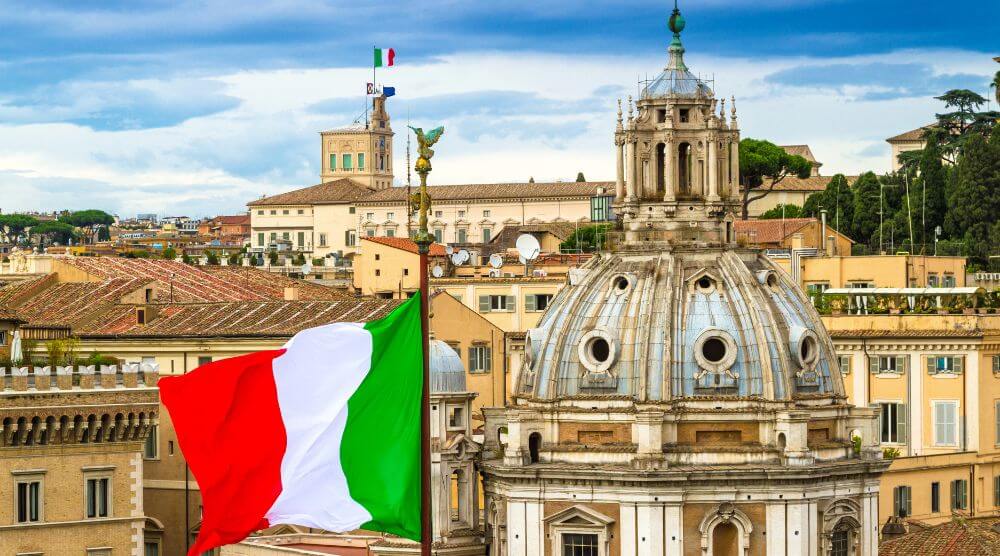
Italy is one of the most admired countries in the world, known for its art, food, design, landscapes and cities such as Rome and Milan. Its products carry the name of the country around the world.
This profile looks at how Italy is positioned, how it is read from outside, and where the two pull apart, drawing on the major rankings alongside our interviews with Italian place branding experts and practitioners since 2016.
Country Brand Strength
Italy rose two places to second in the 2026 Anholt Nation Brands Index, ending the run of Japan and Germany at the top. It is also first for favourability, the simple question of how much people like a country, which makes it the best-liked nation in the index. In Reputation Lab’s RepCore Nations 2026, Italy is among the five leaders of the new Made-In Score, which measures the value of a product’s country of origin.
Brand Finance places it in the top ten of its Global Soft Power Index and eighth in its Nation Brand Value ranking for 2026, with a value 4% lower than in 2025. US News ranked Italy first in the world for cultural influence in 2024.
Massimo Giovanardi, who grew up on the Romagna coast, described in 2017 how the place of origin works as a made-in effect, giving products and people an intangible aura. He also pointed to the downside of popularity: in parts of Venice, overcrowding has become part of the place’s image.
Economic Position
Italy is much weaker as a place to do business than as a place to admire. IMD placed it in the low forties in 2024, with government efficiency as its weakest area, and US News placed it in the forties for being open for business. Bloom Consulting’s trade edition of 2024-2025 put it in the global top fifteen.
Much of the newer work happens in the regions. In 2023, Emilia-Romagna passed the first regional law in Italy on attracting and keeping highly skilled talent. Eleonora Sette of the regional agency ART-ER told us in 2026 that the biggest gap is often between promoting a place and providing the practical conditions people need to build their future there. The law brings universities, companies and a network of Talent Houses in ten municipalities together behind one mission.
Appeal to Talent
Italy ranked in the low thirties of INSEAD’s Global Talent Competitiveness Index 2023. Expat Insider placed it near the bottom of its ranking in 2024, in the high forties out of 53 countries. Its universities are respected, but none was in the global top 150 of the Times Higher Education ranking for 2024. Among the 43 talent initiatives in our State of Talent Attraction 2026 review, Emilia-Romagna is the only one set in law.
Sustainability and Quality of Life
Italy sits in the low twenties of the Sustainable Development Report 2024 and around thirtieth in the Environmental Performance Index, a little lower than before. It is in the thirties of the Global Peace Index and fell to the low forties of the World Happiness Report in 2024.
On tourism, Italy leads. Bloom Consulting ranked it first in the world for its tourism brand in 2024-2025. Giovanardi pointed to participatory events such as the Pink Night on the Romagna Riviera, where residents and visitors shape the experience together, as a model that does not depend on top-down campaigns alone.
What Stands Out
Italy has one of the strongest images in our record: it is liked more than any other country, and its name adds value to the products it makes. Culture, food and style carry this image with little need for a national campaign.
What comes through far less is Italy as a place to live, work or invest. Here the rankings are weaker, and the most interesting work is regional, as in Emilia-Romagna, where talent attraction is now set in law rather than left to campaigns.
Italy is read through culture, food, style and travel. Its case as a place to live, work and invest is much less visible.
Art, food, design and its made-in label give Italy an image few countries can match, and none can copy.
Culture, tourism and the value of Italian products back the brand. Weak competitiveness, government efficiency and expat experience undercut its business case.
Positions are relative to the places in TPBO’s editorial record and based on public material only.
Want the same reading for your own place? Request a free Outside View →
From Our Archive
- 2026Anholt Nation Brands Index 2026: Japan leads, Italy rises, the US falls further
- 2026Emilia-Romagna: putting talent attraction into law
- 2026Roberto Bruni on place marketing, technology and the future of places
- 2026Most valuable nation brands in 2026
- 2017Massimo Giovanardi on destination marketing, country-of-origin and tourism overcrowding
- 2016Cecilia Pasquinelli on urban competitiveness and culture
- 2016Branding cities through history and culture: example Verona and Cannes
About this profile. We combine the main international rankings, including the Anholt Nation Brands Index, RepCore Nations, Brand Finance’s Global Soft Power Index and Nation Brand Value, IMD’s World Competitiveness Ranking and INSEAD’s Global Talent Competitiveness Index, with our own interviews and reporting. Rankings change every year, so positions are described in broad terms. See the rankings and indices we follow, or explore our other country profiles.