
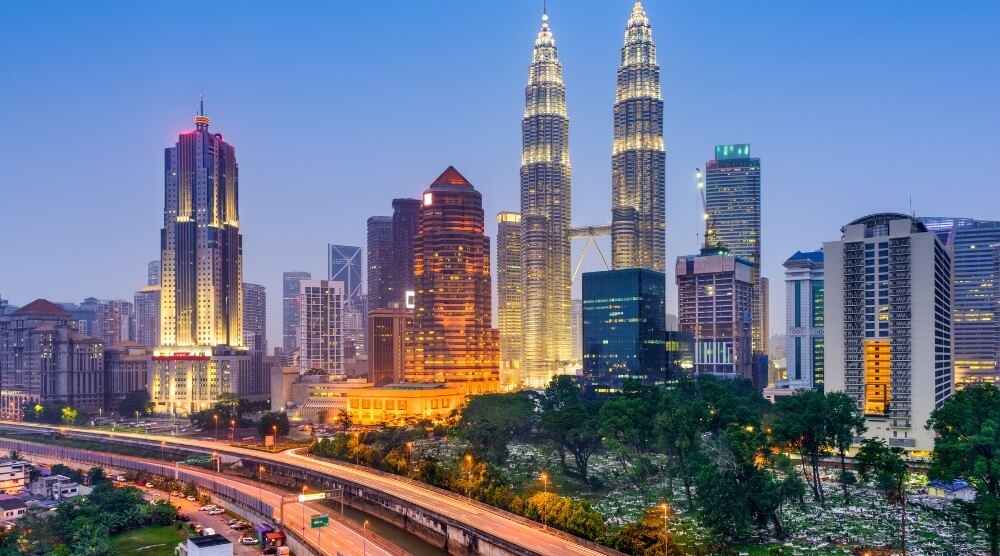
Kuala Lumpur is the capital and largest city of Malaysia. Its skyline, its mix of Malay, Chinese and Indian cultures and its growing digital economy make it one of Southeast Asia’s main business cities.
This profile looks at how Kuala Lumpur is positioned, how it is read from outside, and where the two pull apart, drawing on the major rankings alongside our own coverage.
City Brand Strength
Resonance’s World’s Best Cities placed Kuala Lumpur around 50th in 2024 and 2025, with food, shopping and cultural diversity among its draws. Brand Finance‘s Global City Index placed it around 70th in 2024, down from the low fifties.
Economic Position
Oxford Economics named Kuala Lumpur one of its Cities to Watch in 2026 and grouped it with Buenos Aires and Vancouver as a Regional Leader. It sits around 50th in the Global Financial Centres Index and in the mid-fifties of the Kearney Global Cities Index. WIPO ranked it among the world’s top 100 innovation clusters in 2026, one of only two in Southeast Asia.
The investment picture is mixed. In our 2026 analysis of investment rankings, Malaysia’s foreign investment inflows rose by more than half in 2025, the strongest rise among the region’s major recipients, while investor optimism about its outlook was the lowest of any market in Kearney’s index. In our interview with Andrew Keable of KW Group, based in Kuala Lumpur, he noted that more companies now see Malaysia as an equally viable regional base to Singapore.
Appeal to Talent
Kuala Lumpur is very affordable for an international business city, around 200th in Mercer’s cost of living ranking in 2024. Quality of life is more modest: Mercer placed it around 90th, and Numbeo in the 180s in 2025, with traffic and air quality among the concerns.
Urban Sustainability
The Arcadis Sustainable Cities Index placed Kuala Lumpur around 70th in 2024. IESE’s Cities in Motion Index placed it just beyond 100th in 2025.
What Stands Out
Kuala Lumpur offers what many regional bases cannot: low costs, good connections and a diverse, English-speaking business environment. Oxford Economics sees it as a city on the rise.
The gap is in confidence. Capital is arriving faster than investor sentiment is improving, and its brand rankings have slipped. Showing what that capital delivers is the clearest way to close the gap.
Kuala Lumpur attracts more capital than investor sentiment suggests. Its rise is not yet fully read from outside.
Its cultural mix is its own. Its case as a regional base is shared with Singapore and Bangkok.
Investment inflows and low costs back the brand. Quality of life and sustainability results are weaker.
Positions are relative to the places in TPBO’s editorial record and based on public material only.
Want the same reading for your own place? Request a free Outside View →
From Our Archive
- 2026Global Cities Index 2026: the top barely moves, but the profiles behind it tell more
- 2026Andrew Keable on ASEAN investment: why delivery builds reputation
- 2026What six investment rankings tell us about India and Southeast Asia
- CountryMalaysia: country profile
About this profile. We combine the main international rankings, including Brand Finance‘s Global City Index, Resonance’s World’s Best Cities, Oxford Economics’ Global Cities Index, the Global Financial Centres Index and Mercer’s Quality of Living Ranking, with our own interviews and reporting. Rankings change every year, so positions are described in broad terms. See the rankings and indices we follow, or explore our other city profiles.