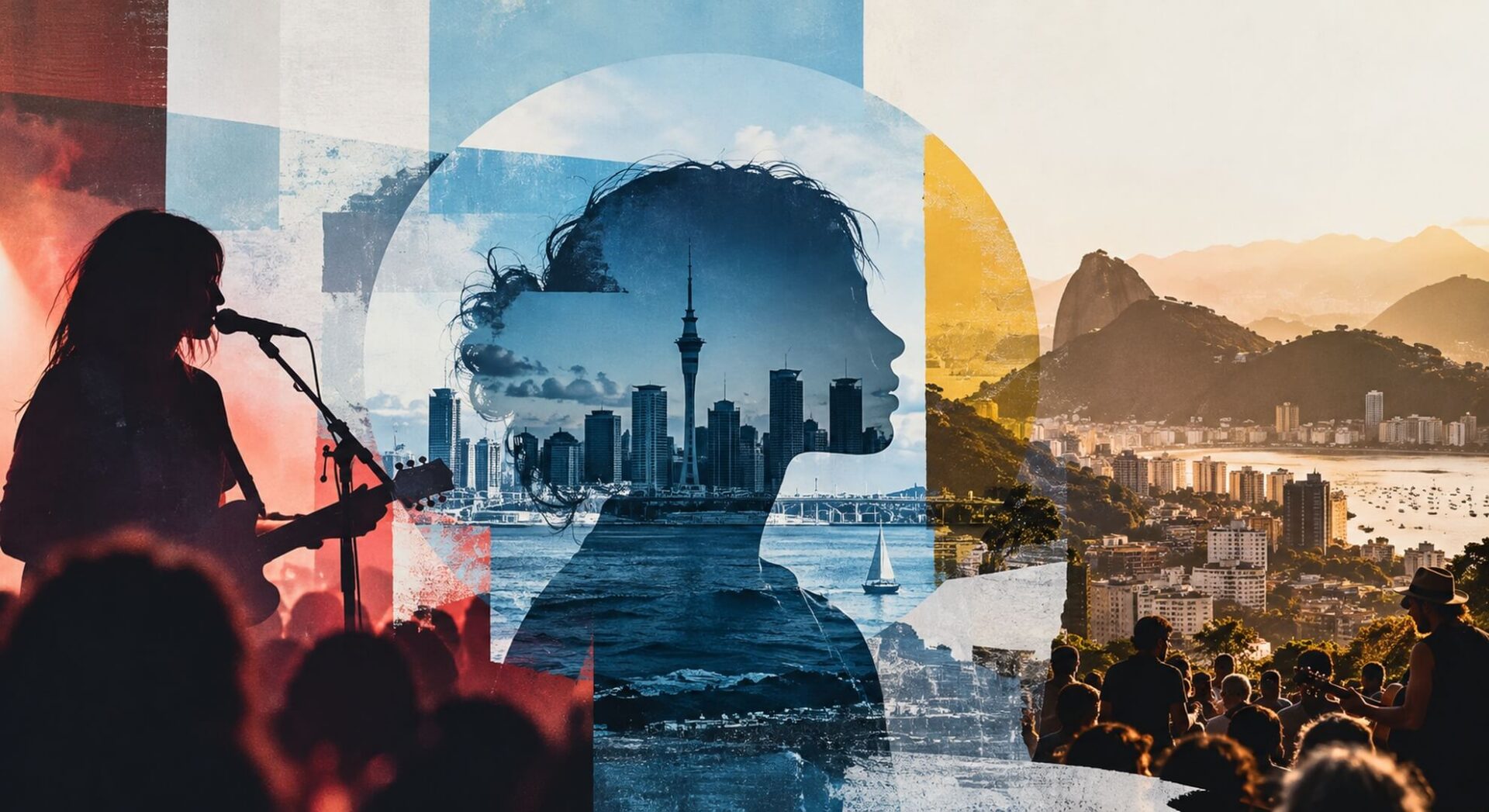
Music can shape how people see a city or country, often long before they visit. But as places turn musical culture into a reputation asset, they face a fundamental question: how far can branding go without simplifying the culture that gives it meaning?
A song can make a city feel familiar before we have ever been there. A musical genre can become inseparable from a place, while an artist can shape perceptions of a country far beyond its borders. Music creates emotional associations that conventional destination marketing often struggles to achieve.
Cities and countries have recognised this potential, investing in music festivals, cultural infrastructure and international promotion. South Korea’s global association with K-pop is perhaps the most visible example of music contributing to a country’s wider reputation.
Yet the relationship between music and place is more complicated than a successful campaign might suggest. Music can influence how a place is perceived, but what gives it meaning is often beyond the control of the institutions seeking to benefit from it.
From music scene to place brand
Research increasingly supports the idea that music can influence place reputation. A 2026 study in Current Issues in Tourism, analysing more than 34,000 YouTube comments, found that music videos can contribute to destination awareness and image, with potential implications for travel intentions. Patrick Adler’s 2024 study in Regional Studies examined another dimension: how place brands can act as signals of recognition and perceived quality in the music industry.
The relationship works in both directions. Music can make a place recognisable, while a place’s reputation can influence how its music is received.
The challenge is translating this relationship into place branding without losing sight of what produces it in the first place.
Research by Hanju Kim, Nicolas Lewis and Robin Kearns on Auckland’s City of Music initiative offers a useful perspective. Their 2024 study in New Zealand Geographer found a gap between the official brand and the complexity of Auckland’s music ecosystem.
Kim distinguishes between the two activities directly:
“Branding is rather a surface level practice of packaging selling points into a cohesive ‘image’ to be sold.”
Supporting a music ecosystem, he argues, is much more complex, requiring cooperation between public and private actors and an understanding of the relationships that sustain musical life.
Cities often simplify their music cultures into selling points. Rather than communicating how music permeates everyday urban life, they reduce it to a recognisable claim: “We are the city that birthed Lorde.”
The statement may be true, but it reveals little about the wider scene, the conditions that allowed the artist to emerge or the musicians who continue to shape Auckland’s musical identity.
What makes a music city authentic?
Comparative research on Rio de Janeiro and Montreal complicates the familiar distinction between authentic, grassroots culture and institutionally supported music scenes. A 2024 study in Cultural Trends, based on 60 interviews and observation of 35 live music events, examines how the two cities developed their musical identities through different combinations of cultural life, public policy and infrastructure.
Rio’s musical identity has been shaped substantially by grassroots activity, while Montreal’s has been more strongly influenced by government-supported initiatives. The comparison suggests that public investment and cultural infrastructure can help musical identities develop rather than necessarily undermine their credibility.
For Kim, the defining feature of a music city is the interaction between different spaces and interests: venues and studios, public policy and urban planning, independent musicians, record labels and international platforms. Drawing on Michel Foucault’s concept of heterotopia, he describes a music city as a place where these different worlds intersect.
Its identity emerges through their ongoing interaction, including the tensions and contradictions between them. Kim points to New Orleans and Medellín as examples of places where music feels closely connected to the wider life of the city.
Massimo Giovanardi, whose work has included Bologna as a UNESCO City of Music, highlights a related challenge: how to renew the connection between a city’s musical identity and the people who sustain it. Music scenes often emerge through networks of performers, venues and producers, but keeping them alive requires continued investment. Cities need to celebrate their musical heritage while creating opportunities for new artists to settle in or remain there. As Giovanardi argues, an inside-out approach is often more credible and effective.
He also raises a question for place managers: can music-related policy focus on cultural creation rather than profit generation? Supporting local artists and non-professional musicians may help sustain the culture that gives a place its musical identity, even when the immediate return in tourism or economic activity is difficult to measure.
Authenticity is therefore difficult to manufacture or declare. A city can invest in venues, support artists and create opportunities for musical production, but its reputation ultimately depends on how people experience and interpret the culture that develops there.
When culture becomes a reputation asset
At national level, the same tension appears in cultural diplomacy. South Korea’s success with K-pop has helped introduce international audiences to Korean language, entertainment and other aspects of the country’s culture. Yet artists do not necessarily set out to represent their country. Governments and tourism organisations may benefit from the associations their success creates, even when those associations were never part of the artists’ original intentions.
Cultural diplomacy can be organised deliberately through international performances, exchanges and collaborations. Reputation is less predictable: audiences form their own associations, which may differ from the image a government wishes to promote.
The commercial case for supporting music is nevertheless clear. Music can attract visitors, support nightlife and hospitality, contribute to quality of life and help places establish distinctive associations. But these benefits depend on the culture itself continuing to thrive. If venues close, musicians are priced out and creative networks weaken, the gap between a place’s promotional narrative and its lived reality will eventually become apparent.
For place leaders, the question is therefore less about how to create a recognisable music brand than how to support the conditions in which musical cultures can develop.
Music can shape reputation, but not on command
Music can influence destination image, make cultural products recognisable and contribute to a city’s or country’s international reputation. Research on music videos, place branding and music-city initiatives provides evidence of these connections.
The difficulty lies in the temptation to simplify a complex culture into a single proposition. A diverse music scene becomes the sound of a city; a successful genre becomes shorthand for a country. Such associations can help audiences understand a place, but they also risk obscuring the people, histories and tensions that give its culture meaning.
The most credible approach is to treat music as part of a place’s cultural and economic life, rather than as a branding asset that can be managed independently of it. Public institutions can provide funding, infrastructure and international platforms, while place branding can help audiences discover what is happening. The music itself, however, will continue to evolve through the people who make, perform and experience it.
That is the central challenge for places seeking to build a reputation through music: to shape the conditions in which a culture can flourish without prescribing what that culture should say.
Explore related insights on place identity, cultural diplomacy and soft power.