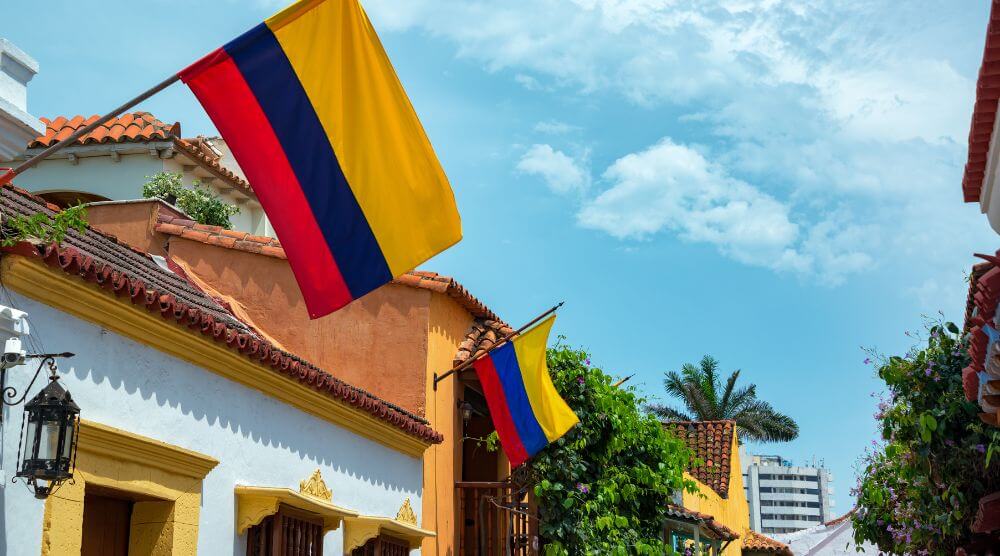
Colombia has spent more than fifteen years working on one of the hardest tasks in nation branding: replacing an image formed during decades of armed conflict. Its country brand, managed by ProColombia, has kept a consistent line through changes of government, and the country has become far more visible as a destination and an investment location.
This profile looks at how Colombia is positioned, how it is read from outside, and where the two pull apart, drawing on the major rankings alongside our own coverage of the country since 2015.
Country Brand Strength
Colombia ranks in the fifties of both the Anholt-Ipsos Nation Brands Index and Brand Finance‘s Global Soft Power Index. U.S. News places it highest for heritage and adventure, and lowest for being open for business.
José Pablo Arango Calle of ProColombia told us in 2017, the first year of peace after half a century of conflict, that more than half the world knew nothing about Colombia, and many who did confused it with other places or saw it as dangerous. His advice to other country brand managers included acknowledging both virtues and defects, and not politicising the brand. Leonardo Nieto later described how the country brand has kept tourism, investment, exports and talent under one narrative for more than fifteen years.
Economic Position
Colombia ranks in the high fifties of IMD’s World Competitiveness Ranking. Foreign direct investment has grown strongly, and it is among the leading hosts of renewable energy investment in Latin America. Bloom Consulting’s trade ranking places its country brand among the strongest in the Americas.
Nieto, who led the technical secretariat of Bogotá’s international marketing board, pointed to the city’s public-private brand governance as a model that has outlasted political change.
Appeal to Talent
Colombia sits in the seventies of INSEAD’s Global Talent Competitiveness Index, weakest on retaining talent. Expat surveys rate it much more highly, near the top for leisure options and personal finances, and well for local friendliness.
Sustainability and Quality of Life
Colombia is one of the most biodiverse countries in the world, which features prominently in its brand. In the sustainability indices it ranks in the middle of the field, and in the Global Peace Index it remains near the bottom.
Nieto points to Bogotá, Medellín and Cali as early adopters of the smart tourism destination model, with Medellín the first in the country. On San Andrés Island, Héctor Greco told us how a destination brand was built with the community.
What Stands Out
Colombia has done what few countries with a difficult image manage: it has kept its brand consistent for long enough to change how many people see it, particularly as a destination.
In TPBO’s reading, the brand is now ahead of parts of the evidence. Biodiversity, culture and the warmth that expats report are real and well communicated. The security and governance indicators that investors check have improved less, and the brand cannot close that gap on its own.
Colombia promotes biodiversity, culture and a growing economy. Many people abroad still think first of the conflict years.
Its mix of biodiversity, regions and cultures is hard to copy. So is a recovery story that people recognise.
Investment growth and expat ratings support the brand. Peace and governance indicators still lag behind it.
Positions are relative to the places in TPBO’s editorial record and based on public material only.
Want the same reading for your own place? Request a free Positioning Check →
From Our Archive
- 2025Héctor Greco on building a community-driven brand for San Andrés Island
- 2024Leonardo Nieto on Colombia’s place branding and destination management
- 2017José Pablo Arango Calle on country branding and the reputation of Colombia
- 2017Country Brand Report Latin America: reputation winners, losers and trends
- 2015Lina Maria Echeverri on country branding in Latin America
- 2015How presidents influence country brands: examples from Latin America
About this profile. We combine the main international rankings, including Brand Finance‘s Global Soft Power Index, with our own interviews and reporting. Rankings change every year, so positions are described in broad terms. See the rankings and indices we follow, or explore our other country profiles.