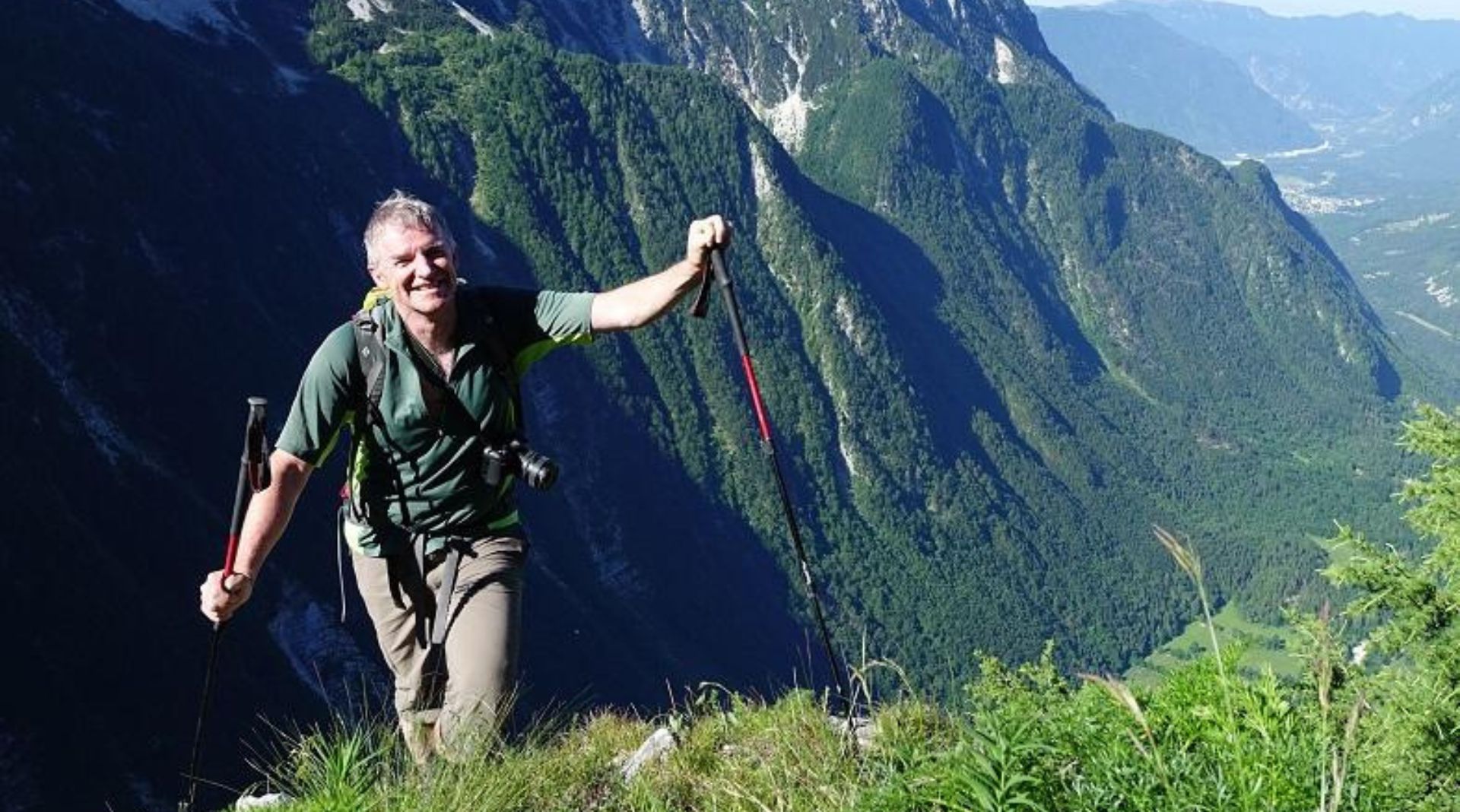
Slovenia: long known by outdoor fans and adventure seekers as the less touristic, more affordable, and perhaps more authentic part of the European Alps, is on its way to becoming a mainstream destination. For some, this is good news, whereas for others it poses a destination management challenge.
Janko Humar leads the Soča Valley Tourism Board and is in charge of the destination’s marketing and management. In this interview he discusses the valley’s growth, its four biggest sustainability challenges, and what it means to be at the very beginning of a destination life cycle.
This interview first appeared on Sustainability Leaders United in May 2019, following a visit to Slovenia. SLU ran as an independent platform from 2014 until 2025 and is now part of The Place Brand Observer.
Janko, you have been leading the newly established Soča Valley Tourism Board since 2017. Do you remember what first got you interested in tourism?
To be honest, tourism wasn’t really my intention at the very beginning. I was dreaming about being a mountain guide, but this was quite an impossible idea in the times of ex-socialist Yugoslavia. And then, when I was serving in the army in 1986, it happened that I was offered a job as a marketing manager in the hotel company Alpinum in Bohinj. The new manager was putting together a new team, and he was told that I’m an economist and a mountain climber, and he gave me an opportunity. Dealing with tourism in Bohinj seemed to be quite similar to mountaineering and living with nature at the time and I said, why not give it a try.
Would you say interest in the sustainability performance of destinations has become stronger?
Yes, for sure. Sustainability has become a great part of our everyday lives throughout society and not only in tourism. I remember decades ago when the green parties came to the political stage: they seemed quite exotic, revolutionary, and different at the time. I would say that their greatest achievement was not their own political success, but the fact that most of the mainstream parties have adopted their sustainable ideas and included them in their own programs.
In a modern Europe, today a lot of sustainability standards are already included into legislation and people are becoming more and more aware of the responsibility we have to the world we live in.
Not so long ago the protection of nature was an unnecessary extra cost. But today I would dare to say that in our society, and especially in Soča Valley, where our tourism completely depends on natural resources, we all more or less understand that sustainability should be the only way to go. And this concerns all levels: national and local authorities, tourism trade, residents, and visitors.
In our case, a great share of our land is already part of the Triglav National Park. Years ago, the park and tourism treated each other as enemies, but now we are allies and partners and we are building our strategies together.
Which are the main topics or concerns linked to tourism sustainability at the moment in Soča Valley?
Soča Valley is a new destination on the market. In recent years, tourism in our valley has grown by 20-25% per year and two-thirds of our service providers are new. So we are facing two basic problems: the first is on the public level, the growth is so big that the public infrastructure cannot keep up with it fast enough; and the second is on the level of service providers, most of whom don’t have enough experience, as they didn’t have enough time to learn about sustainable growth.
First on the list is the Soča river. The worldwide outdoor fame of our valley started with fly-fishing, kayaking, and rafting on the Soča. Today we have many other sports as well, but Soča is still the image that comes to mind when speaking about our valley.
The problem is that 25 years ago, we had five local agencies on the river, but today there are around 70 of them and a similar or even larger number of agencies coming from other parts of Slovenia and from abroad. This is far too much; it is not sustainable and the quality of the services is declining.
The second problem is mobility. We are supposed to be a green destination, but we have the poorest public transport service in the country. There are five international airports within 170 km and travelling to or from every one of them, including Ljubljana airport, is a one- or two-day adventure, where you need to change transport at least three times. Throughout the valley, there are only one or two buses per day during the main season, so at least 95% of our visitors come by car and that causes traffic jams, parking problems, and catastrophic carbon footprints.
The third challenge is seasonality. 96% of our tourism turnover is made from April to October. To be a serious destination, to assure year-round employment and permanent jobs, we need to develop winter products. Most of the facilities in the valley nowadays are private accommodations and camps, both very season oriented, and we have less than 10% of beds in hotels that are supposed to operate year-round.
The fourth priority is the overall quality of our services. Tourism has been growing very fast in recent years, but to ensure long-term sustainability, we cannot build our long-term competitiveness on the economy of scale, but rather on the quality of services. At the peak of the summer season, we are already touching the limit of our capacities. In recent years, marketing has been our main priority and we were quite successful in attracting new markets. Now, we came to the point where we need to do more on the content side, on product development, integration of local production, development of individual experiences, and the improvement of the overall quality of our services.
Soča Valley is now well known as a destination for adventure travel and outdoor tourism, but it wasn’t always like this. Who has been the driving force behind this transformation?
This is not a simple question. I would say there existed, and still does, a favourable combination of very different factors. We can start with the independence of Slovenia, economic liberalization, and joining the EU afterwards. I would even dare to believe that some unpleasant events, such as the last economic crisis, have stimulated people to search for new ways to improve their economic possibilities.
There were also two severe earthquakes in our valley not so long ago, in 1998 and 2004, and one of the development measures afterwards was a very simple incentive of 2,000 euros for offering a new tourist bed in private accommodation. This relatively small governmental contribution has stimulated the growth of new tourist accommodation which is still ongoing.
Considering that most of our offer is built on natural heritage and activities in nature, we are lucky enough to ride a growing wave of green awareness and active lifestyle in European Union markets.
If we take a look at some of our neighbouring valleys, including in nearby Italy, with a comparable tourism offer and possibilities, it is my impression that not much has happened there during the last two decades. In this sense, what distinguishes us are the locals and their initiatives, people who were able to recognize development opportunities, and were prepared to invest their own time and money.
Jana Apih referred to sustainability “think” as something which is in the DNA of many Slovenians. Do you agree?
I wouldn’t say we are anything special compared to other nations, but the fact is that there are no big cities in our country. Most of us are from the countryside and in the country people were forced to live in a kind of harmony with the nature around them, if they wanted to survive.
It might be true that there is still an echo of this experience in our minds. And I would also add that a very systematic and strategic approach of the Slovenian Tourist Board on a national level helps a lot in building green awareness at home and placing the green image on the international market.
Speaking about Soča Valley, being green and sustainable should be for us a state of mind and the only way that assures our long-term competitiveness, economic success, and social well-being.
How do you collaborate with institutions such as city and regional councils, investors, or tourism businesses?
The three municipalities of Soča Valley, Bovec, Kobarid and Tolmin, are our founders and they also provide us financial sources for the public part of our services, such as tourist information offices and destination marketing. With each municipality, we have a separate additional agreement concerning local issues, such as small infrastructure maintenance or event support. It means that we need to discuss and agree on our yearly plans and report to the mayors and town councils regularly.
We have annual meetings with tourist providers, and we meet and discuss with them on an individual or product level throughout the year. At the moment of this interview, we are preparing a new 2019-2025 tourist strategy for Soča Valley and the basic idea is to collect the crucial inputs through the active role and series of workshops with providers.
Considering investors, I’m afraid we haven’t yet found an effective way to attract the right ones. The local policies are more or less following and responding to external initiatives. We are not creating a favourable environment and we are not active enough searching for and inviting the investors we would really need. The most reliable investors are locals, but the local financial sources are low and limited to small sports agencies, camps, and apartments. Too many of the more demanding projects, such as hotels, fell victim to adventurous external investors, who didn’t have any real knowledge of the business and of course, they failed.
A lack of serious investors is one of the reasons why the hotel sector is not developing well enough in Soča Valley at the moment, despite very favourable market conditions.
In times of “overtourism”, destination marketing is more and more about brand stewardship and close links to host communities. Are DMOs in Slovenia ready to take on the role of facilitator and destination manager rather than “just” promoter?
The challenges vary a lot from destination to destination and it is quite difficult to speak about DMOs at a general level. Yes, we are facing “overtourism” at some places, but there are also places with great undeveloped potential we can label as “undertourism”. Some destinations are well-known and mature, while others are still finding their way into the tourism market, and the DMO’s priorities could not be considered the same.
Speaking about Soča Valley, we are still at the very beginning of the destination life cycle. It is understandable that our priority in previous years has been promotion, marketing activities, and encouraging locals to enter tourism. Now we believe that we have reached the basic economy of scale, and the time has come to change our priorities.
Of course, marketing will always remain important, but product development, brand development, quality of services, and destination management will be our next steps to go.
Climate change is impacting many destinations, especially in mountain areas. What impact does it have on Soča Valley?
The average temperature in my country is 2.5°C higher nowadays than it used to be in the year when I was born. When I was a kid, we all learned how to ski at home. The snow line today is at least 800 m higher up in the mountains and skiing is becoming an exotic activity for many people.
Changes are quite obvious: devastating storms are stronger and more common than years ago, the vegetation period is lengthening, summers are hotter, winter patterns are changing, and temperature fluctuations are much more frequent.
It is not a problem to adapt in the summertime: our rivers are getting warmer, the outside temperature is higher, and it is nicer to swim in our emerald waters than it used to be. The real problem is that we are definitely losing winter. Not only snow but also a way of life, traditions and customs that used to go alongside snow.
In a very serious Alpine environment with dramatic mountain peaks all around, it is very difficult to find alternatives to skiing, the most important motive that runs winter tourism in Alpine countries.
Which destinations around the world serve you as inspiration, in terms of sustainability?
In the long term, I would like to see the position of Soča Valley next to the well-known Alpine centres, such as Chamonix, Zermatt or Cortina. In our own way of course.
Speaking of Slovenia, there are quite a few destinations where we can find good examples of a sustainable approach to different destination segments. In this sense, I can point out Bohinj with their mobility policy and local product integration. But speaking of a destination as a whole, my vote goes to Podčetrtek.
I believe that a harmonized and consistent development policy among the key destination players, local community, DMO, strong tourism company and other smaller ones, is a precondition for effective sustainability. In Slovenia, Podčetrtek is the only case I know of where this idea is really working.
Which aspect of your daily work do you find the most challenging, and which the most rewarding?
Sometimes I’m tired of explaining the same stories again and again. Speaking to different people and institutions who see tourism only through a very narrow personal experience or administrative view. People who are not able to understand the development potential and the impact of our industry on the quality of life and the long-term perspectives for the valley as a whole and for its residents.
On the other hand, it is a good feeling to be an active member of a destination that is growing, to see the numbers climbing up and the international reputation of the valley rising.
At the end of the day, I see tourism as an economic activity. There are not many natural resources in our valley, the farming conditions are really difficult, and we are quite far away from the urban centres and from the main transit routes. But we do have an outstanding natural, historical and cultural heritage. Tourism could be a way to improve the quality of the local life and to encourage people to stay here, living and working in this beautiful, yet challenging, part of the world.
The fact that we tripled the number of services in the last ten years, that we have hundreds of new small tourist businesses in the valley, that we have more and more locals who believe that tourism can improve their way of living and are willing to invest their own money into this development: this is the process that I consider to be the most important achievement.
Your three bits of advice to destination marketers and managers in other alpine regions?
We have too many problems still open and I do not feel competent enough to give advice to others. However, regarding the many years of involvement in destination tourism, I would say destination marketing and destination management is about serving others: helping visitors, supporting providers, assisting communities. We need to listen to the stakeholders; we need to be open to everybody, but this does not mean that we need to fulfil everybody’s wishes and to follow all their personal priorities.
Do not waste too much time on the people who are able to find a problem in every move you make; concentrate on the positive ones, concentrate on those who are really willing to cooperate.
Thank you, Janko.
Connect with Janko Humar on LinkedIn.