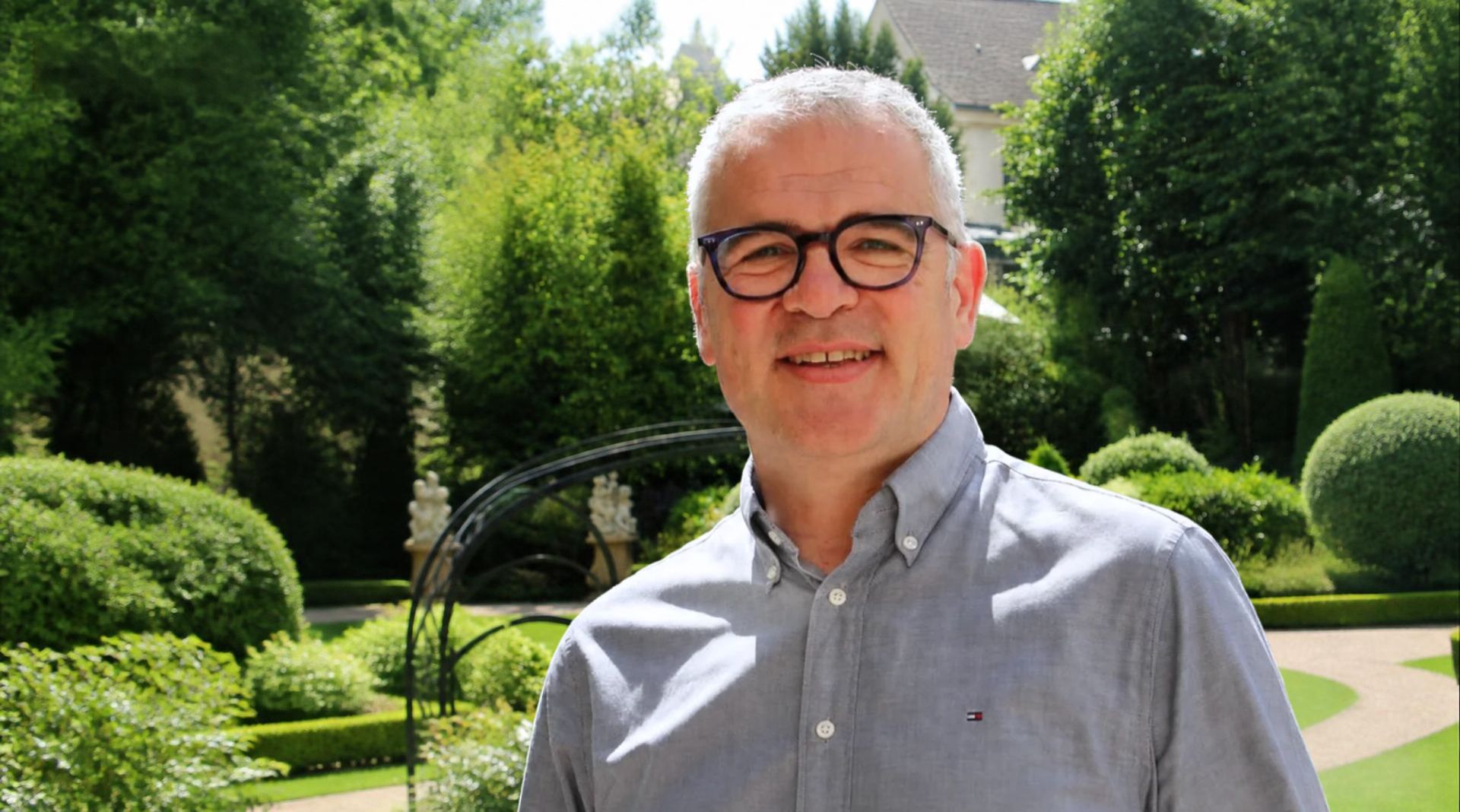
Vincent Gollain is Director of Studies and Expertise at CNER, the French national federation of economic development and attractiveness agencies. An economist by training, he has worked on territorial attractiveness and place marketing for more than twenty years, including several years at the Île-de-France regional planning and research agency. He is the author of several books on territorial marketing, among them 50 techniques pour réussir la mise en attractivité de son territoire.
In this conversation, Vincent explains why attractiveness strategies have moved from silos to collaboration, why a place needs to be “legible” and not only visible, where AI helps and where it risks making places sound the same, and why mid-sized cities and rural areas deserve more attention.
Vincent, you have worked on territorial attractiveness and marketing for more than two decades. Looking back, what has changed most fundamentally in the way territories need to think about their positioning and attractiveness?
A great deal has changed over the past twenty years. To put it simply, attractiveness strategies used to operate in silos (economic development and tourism, for example) and were often disconnected from other public policies. They were also largely driven by specialists whose approach tended to focus on promotion and advertising.
Today, the most effective strategies are more holistic. They are closely linked to broader territorial development projects, grounded in collaboration and informed by a much wider range of expertise. This may include economic development professionals, political scientists, marketers, data scientists and communications specialists, as well as urban planners and sociologists.
Territorial marketing is sometimes still reduced to promotion and communication. What do you think practitioners most often misunderstand about the difference between marketing a territory and actually developing its attractiveness?
You are right. Despite years of efforts to raise awareness, many decision-makers still equate marketing with territorial communication. They expect to see specific tools: websites, social media, brochures, videos and so on.
We are working to change this perception by showing that marketing is a comprehensive process, encompassing everything from market research to evaluation. It also involves a much broader range of activities, including prospecting, lobbying, relationship-building, staff training, service packages and the role of elected officials.
We also seek to promote the idea that a territory needs a long-term strategic plan, translated into an attractiveness and hospitality strategy with clear objectives for the short, medium and long term. Place marketing then provides a toolkit to help deliver those objectives.
One of the biggest challenges for places is deciding what they should genuinely be known for. How can a territory identify a distinctive and credible positioning when so many locations make similar claims about talent, innovation, quality of life, sustainability and connectivity?
I share your assessment: local stakeholders tend to be very inward-looking. They often assume that projects requiring significant effort, such as creating a new neighbourhood, opening a public facility, extending a transport line or launching a business district, will automatically attract an audience. That is rarely the case.
We help them identify and target their audiences, including by location; understand the benefits that genuinely matter to those groups; and determine the right marketing mix. We use a range of techniques, such as persona development, as well as tools such as AI, to support increasingly fine-grained segmentation, targeting and positioning.
You have worked extensively with economic development and attractiveness agencies. How important is it for a place to connect its positioning to its actual economic strengths and sector specialisms, rather than developing a broader brand narrative in isolation?
For a place, it is important not only to be visible and well known in its market, but also to be “legible”, in other words clearly understood by its target audiences. We seek to identify the affinities between particular places and particular groups.
Economic sectors and market segments are often used to differentiate a place, but this is not always the right approach. A place might instead highlight its ability to accommodate businesses of a certain size, start-ups, people looking to leave large cities for rural areas, trail-running enthusiasts or business buyers, for example.
Whatever the approach, the aim is to address a tangible market, offer something that genuinely resonates with the target audience and, ultimately, stand out.
For a place, it is important not only to be visible and well known in its market, but also to be “legible”.
Data, competitive intelligence and AI are changing the way places can understand their markets, audiences and competitors. What do you think these tools will genuinely change about territorial marketing, and where do you see the risk of simply generating more information without making better strategic decisions?
AI has a genuine fascination for people, partly because it can seem almost “magical”. As a national federation, we have launched a collective intelligence initiative with French economic development agencies to explore its potential, analyse its early applications within these agencies and identify priority investment areas, including staff training.
In marketing, including place marketing, AI is driving major change across the entire process, from market insights to prospecting and communications. At the heart of this transformation is the ability of agencies and place marketing stakeholders to work with data, whether structured or unstructured. It is also essential to understand the tools and solutions that AI offers.
One risk identified by the agencies is that marketing messages may become bland and lose their character or distinctiveness. The same risk applies to visuals and imagery. AI should be used to foster creativity and differentiation.
Looking internationally, which territories do you think are currently making particularly interesting or forward-looking choices about their positioning and attractiveness? What are they doing differently?
The Dakar region in Senegal is an interesting example. It is hosting Africa’s first Youth Olympic Games and is undergoing major transformation, a process I had the opportunity to support for several years while working at the Île-de-France regional planning and research agency. The Games will help showcase the changes taking place across the region.
Casablanca, Morocco, is another compelling case. As a major economic hub, the city launched the “WeCasablanca” brand following a participatory process. The broader strategy aims to reshape the image of the urban region: moving beyond the perception of Casablanca as simply a dynamic economic centre and presenting it as a global city and a gateway between Africa, Europe and the Mediterranean. The brand also aims to engage local residents and stakeholders.
My third example is place marketing in city centres. Melbourne’s approach is particularly inspiring, especially the way it draws on the atmosphere of the city’s streets and small public squares. Its laneways are an integral part of the city’s identity. Connecting marketing with people’s lived experience has become essential, and Melbourne is one of the most successful examples of urban marketing and revitalisation.
Finally, looking five to ten years ahead, what do you think the most successful territorial marketing and attractiveness teams will be doing differently?
I believe the teams that succeed in strengthening the appeal of their regions will combine two approaches. They will use AI and technology to improve the functional and operational efficiency of marketing, while also adopting a human-centred approach focused on lived experience throughout the customer journey.
Crucially, this will need to be underpinned by collaborative methods and formats that enable key players across the “attractiveness value chain” to work together effectively.
I think you should take a closer look at mid-sized cities and rural areas. In France and several other countries, these places are becoming increasingly attractive. Their approach to place marketing often differs from that of global cities, but this aspect still seems under-documented by comparison.
Thank you, Vincent.
Connect with Vincent Gollain on LinkedIn, or learn more about CNER.
For more perspectives from practitioners and thinkers shaping the future of place branding, explore our Place Brand Leaders interviews.