
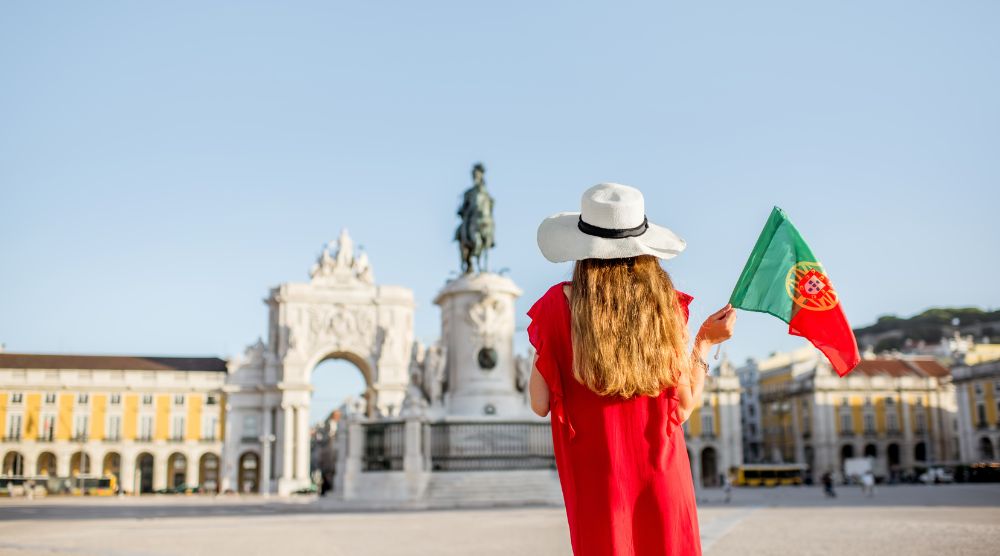
Portugal has become one of Europe’s most popular places to visit and to move to. It is known for its coast, its climate, its safety and cities such as Lisbon and Porto. Only fifteen years ago it was going through a deep financial crisis.
This profile looks at how Portugal is positioned, how it is read from outside, and where the two pull apart, drawing on the major rankings alongside our interviews and reporting from Portugal since 2015.
Country Brand Strength
Portugal placed around twentieth in the Anholt Nation Brands Index 2023 and around thirtieth in Brand Finance‘s Global Soft Power Index that year. In the 2026 Anholt Nation Brands Index it sits in the second of Anholt’s brand bands, alongside Brazil, China, Greece, Mexico, South Korea and the United States.
In 2015, João Freire of IPAM in Lisbon told us that Portugal’s attractiveness had improved even though the country had gone through bankruptcy. Visitor numbers, sales of second homes to foreigners and the number of Erasmus students were all rising. He traced Lisbon’s change back to the 1990s, when its year as European Capital of Culture and the 1998 World Exhibition brought investment in infrastructure.
Economic Position
Portugal is in the middle of the competitiveness rankings. IMD placed it in the high thirties in 2023, and Bloom Consulting’s trade edition of 2022-2023 put it in the low twenties globally. The European Innovation Scoreboard 2023 counted it among the moderate innovators, though its score has risen steadily since 2016.
Freire also saw a change in how Portuguese cities used their money after the crisis. Before it, mayors spent on logos and events with uncertain returns. With less money, he said, they had to think more strategically, and Porto in particular involved its cultural organisations and other stakeholders in a clear plan for the city.
Appeal to Talent
Portugal is one of the most popular countries in the world for people who move abroad. Expat Insider placed it in the top ten in 2023, with high scores for climate, quality of life and safety. INSEAD’s Global Talent Competitiveness Index 2023 put it in the high twenties overall but in the top twenty for its ability to attract people from abroad.
Popularity has a cost. In the Algarve, João Ministro told us in 2019 that housing speculation made it almost impossible for young people to find affordable homes, even in the countryside, and that much of the tourism work paid only the minimum wage.
Sustainability and Quality of Life
Portugal is in the top ten of the Global Peace Index 2023 and was eighteenth in the Sustainable Development Report that year. It placed in the high forties of the Environmental Performance Index 2022 and in the fifties of the World Happiness Report 2023.
Ministro described the Algarve as a paradox: one of Portugal’s richest regions, which also contains some of its poorest councils. Abroad it is known for sun and beaches, yet almost 40% of the region is protected for nature, and he saw the task as branding it as a more varied destination that spreads visitors across the year and into the inland villages.
What Stands Out
Portugal turned a financial crisis into one of Europe’s strongest stories of attractiveness. It is read abroad as safe, sunny and welcoming, and the rankings for peace and expat life confirm that picture.
The next test is whether that success can be shared. Housing costs and low tourism wages put pressure on the people who already live there, and its business case is still less visible than its lifestyle.
Portugal is read as a safe, sunny and welcoming place to visit and live, and that is what it offers. Its business case is less visible.
Lisbon, Porto and the Atlantic coast are well known. Its claims on climate, safety and quality of life are shared with other southern European countries.
Peace, expat satisfaction and the ability to attract talent back the brand. Housing costs, low tourism wages and middling competitiveness weaken it.
Positions are relative to the places in TPBO’s editorial record and based on public material only.
Want the same reading for your own place? Request a free Outside View →
From Our Archive
- 2026IPBA at 10: reflections from the Lisbon conference
- 2026Anholt Nation Brands Index 2026
- 2019João Ministro on Algarve regional development, branding and sustainability
- 2019Algarve: destination strengths, challenges and opportunities
- 2017Current state of place branding practice in Europe
- 2015João Freire on place branding practices in Portugal and the Middle East
About this profile. We combine the main international rankings, including the Anholt Nation Brands Index, Brand Finance’s Global Soft Power Index, IMD’s World Competitiveness Ranking and INSEAD’s Global Talent Competitiveness Index, with our own interviews and reporting. Rankings change every year, so positions are described in broad terms. See the rankings and indices we follow, or explore our other country profiles.