
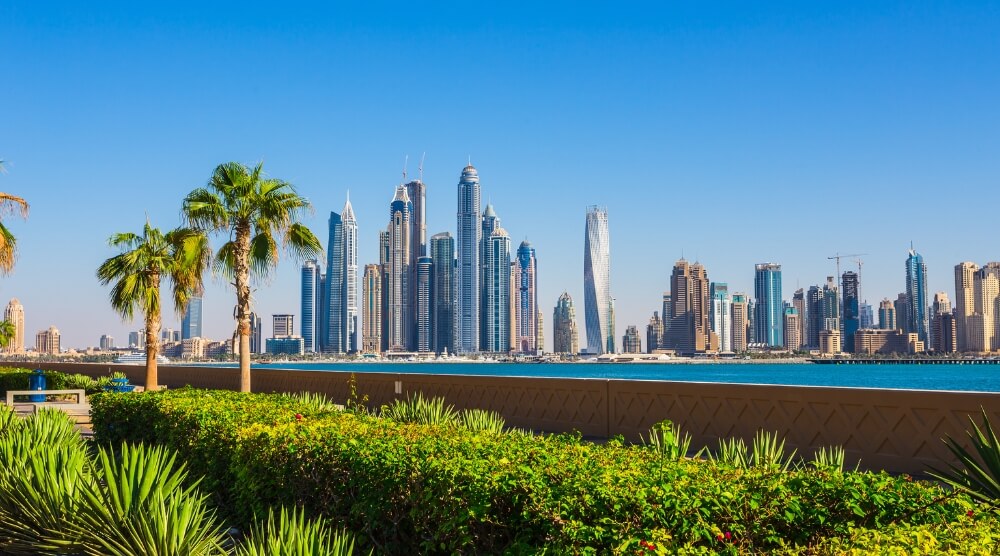
The United Arab Emirates presents itself as a gateway between East and West and as a country built for the future, from artificial intelligence to space exploration. Much of its image abroad is carried by Dubai and by Emirates, its airline.
This profile looks at how the UAE is positioned, how it is read from outside, and where the two pull apart, drawing on the major rankings alongside our coverage of the country and the wider Gulf region.
Country Brand Strength
The UAE’s results depend strongly on who is asked. It was in the top ten of Brand Finance‘s Global Soft Power Index in 2023, and in 2026 Brand Finance ranks it seventh in the world for perceived technology and innovation, third for future growth potential and seventh for investment recommendation. In the Anholt Nation Brands Index, which surveys the general public in 20 countries, it was in the mid-forties in 2023.
As our analysis of the innovation results found, the UAE built its technology reputation through sustained policy: a Minister of State for AI, a compulsory AI curriculum in public schools, smart-city investment in Dubai and Masdar City and its Mars mission. In Brand Finance’s Nation Brand Value ranking for 2026 its value grew 5%, with Emirates named as one of the companies that stand for the country.
Economic Position
The UAE is among the world’s most competitive economies. It held fifth place in IMD’s World Competitiveness Yearbook 2026 and was first of all 70 economies for economic performance. UNCTAD placed it in the mid-teens for foreign investment inflows in 2022, and Dubai entered the top 50 of the Oxford Economics Global Cities Index in 2026.
In 2015, João Freire, who edited a special journal issue on place branding in the Middle East, told us that some countries in the region had realised they could not depend on oil alone, and turned to place branding to attract business, visitors and workers. Competition between them, he said, was driving that change.
Appeal to Talent
The UAE is one of the strongest magnets for international talent. INSEAD’s Global Talent Competitiveness Index 2023 ranked it in the low twenties overall but fourth in the world for attracting people from abroad. Expat Insider placed it in the top fifteen in 2023, and second for career prospects.
Keeping talent is harder. The same INSEAD index placed the UAE around sixtieth for retaining people, and none of its universities was in the global top 100 of the Times Higher Education ranking for 2024.
Sustainability and Quality of Life
The UAE placed in the mid-twenties of the World Happiness Report 2023 and around fortieth in the Environmental Performance Index 2022. It sits in the middle of the Global Peace Index and around eightieth in the Sustainable Development Report, which finds major challenges in several goals, including climate action.
What Stands Out
The UAE is one of the clearest cases in our record of a country that is rated very differently by different audiences. Investors and business audiences see a future-ready, competitive hub, and the competitiveness rankings back them. The general public in many countries rates it much lower.
Its brand has been built through consistent policy over many years rather than single campaigns. The open question is whether it can turn short stays into long careers, and whether its sustainability record can catch up with its ambitions.
Investors read the UAE as a leading, future-ready hub. The general public in many countries rates it far lower.
Dubai, Emirates and its future-focused projects give the UAE a clear image. Its Gulf neighbours now pursue similar positions.
Competitiveness, economic performance and the pull for talent back its business message. Retaining talent and sustainability results weaken it.
Positions are relative to the places in TPBO’s editorial record and based on public material only.
Want the same reading for your own place? Request a free Outside View →
From Our Archive
- 2026Global Cities Index 2026: the top barely moves, but the profiles behind it tell more
- 2026IMD World Competitiveness Yearbook 2026: governance is now the competitive edge
- 2026Why innovation leadership does not always build nation brand equity
- 2026Most valuable nation brands in 2026
- 2023Dubai: city performance, brand strength and reputation
- 2015João Freire on place branding practices in Portugal and the Middle East
About this profile. We combine the main international rankings, including Brand Finance’s Global Soft Power Index and Nation Brand Value, the Anholt Nation Brands Index, IMD’s World Competitiveness Ranking and INSEAD’s Global Talent Competitiveness Index, with our own interviews and reporting. Rankings change every year, so positions are described in broad terms. See the rankings and indices we follow, or explore our other country profiles.