
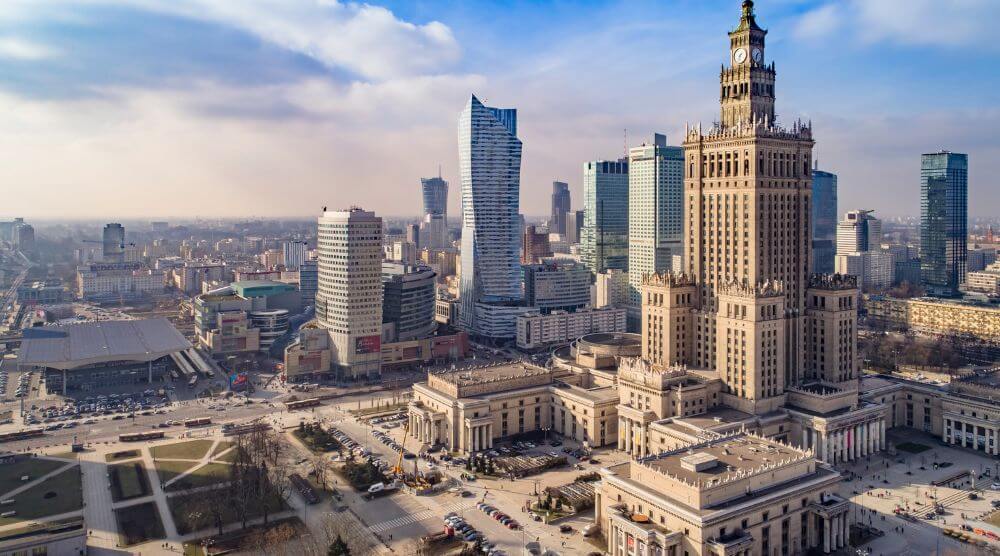
Warsaw, the capital of Poland, is one of Europe’s most dynamic cities. Rebuilt after the Second World War, it has become the leading business centre of Central and Eastern Europe.
This profile looks at how Warsaw is positioned, how it is read from outside, and where the two pull apart, drawing on the major rankings alongside our own coverage.
City Brand Strength
Warsaw’s brand is still catching up with the city. Brand Finance‘s Global City Index placed it in the low sixties in 2024. Resonance’s World’s Best Cities placed it around 40th in 2022 and 2023, and in the mid-seventies in 2024 and 2025.
In a 2021 brand assessment for TPBO, Michał Basiński of Synergia found that Warsaw’s potential exceeded its brand equity: the city gains most when people get to know it, but does not live up to its potential from a distance. He also found its brand management structure insufficient, with no clear ownership, and its green spaces and the Vistula river underused in its image.
Economic Position
Oxford Economics named Warsaw one of its Cities to Watch in 2026, expected to climb the ranking in the coming years. The Kearney Global Cities Index placed it around 60th, and the Innovation Cities Index in the high eighties in 2023. Its role as a financial centre has weakened, to around 100th in the Global Financial Centres Index.
Appeal to Talent
Warsaw is affordable compared with other European capitals, a real advantage for talent. Mercer’s Quality of Living Ranking placed it in the high seventies in 2024, and Numbeo’s Quality of Life Index much lower, around 150th.
Urban Sustainability
Warsaw made one of the biggest jumps in recent sustainability rankings: the Arcadis Sustainable Cities Index 2024 placed it ninth, up from the sixties in 2022. IESE’s Cities in Motion Index placed it around 70th in 2025.
What Stands Out
Warsaw is one of the clearest cases in our record of a city that is better than its image. Its economic growth, outlook and sustainability results are strong, and people who come to know it tend to rate it highly.
The gap is from a distance. Synergia’s diagnosis named the causes: no clear owner of the brand and assets, like its green spaces, that are not yet part of how it is seen. Its top-ten sustainability result is a story it could tell much more.
Warsaw ranks top ten for sustainability and is a city to watch. From a distance, it is still read far below that.
Its energy and rebuilt history are its own. Its business-hub claims are shared with other Central European capitals.
Growth, affordability and sustainability results back the brand. Quality-of-life rankings are the weaker point.
Positions are relative to the places in TPBO’s editorial record and based on public material only.
Want the same reading for your own place? Request a free Outside View →
From Our Archive
- 2026Global Cities Index 2026: the top barely moves, but the profiles behind it tell more
- 2024Arcadis Sustainable Cities Index 2024: top performers, key challenges and trends
- 2021A city brand assessment of Warsaw
- CountryPoland: country profile
About this profile. We combine the main international rankings, including Brand Finance‘s Global City Index, Resonance’s World’s Best Cities, Oxford Economics’ Global Cities Index and the Arcadis Sustainable Cities Index, with our own reporting. Rankings change every year, so positions are described in broad terms. See the rankings and indices we follow, or explore our other city profiles.