“AI is changing everything and nothing all at once.”
That was one of the takeaways City Nation Place shared after its Global conference in London on 4 and 5 November 2026. From the look of it (we followed conversations via social media), it sums up two days pretty well. Forty-six speakers, from Brazil to Thailand and from Liverpool to the Gold Coast, talked about civic pride, measurement, working with neighbours, and yes, a lot of AI.
Since then, LinkedIn has been full of reflections from speakers, award winners and people who were simply in the room. We went through them, together with what City Nation Place posted itself. For those who missed it, here is what stood out.
Costa Rica, again
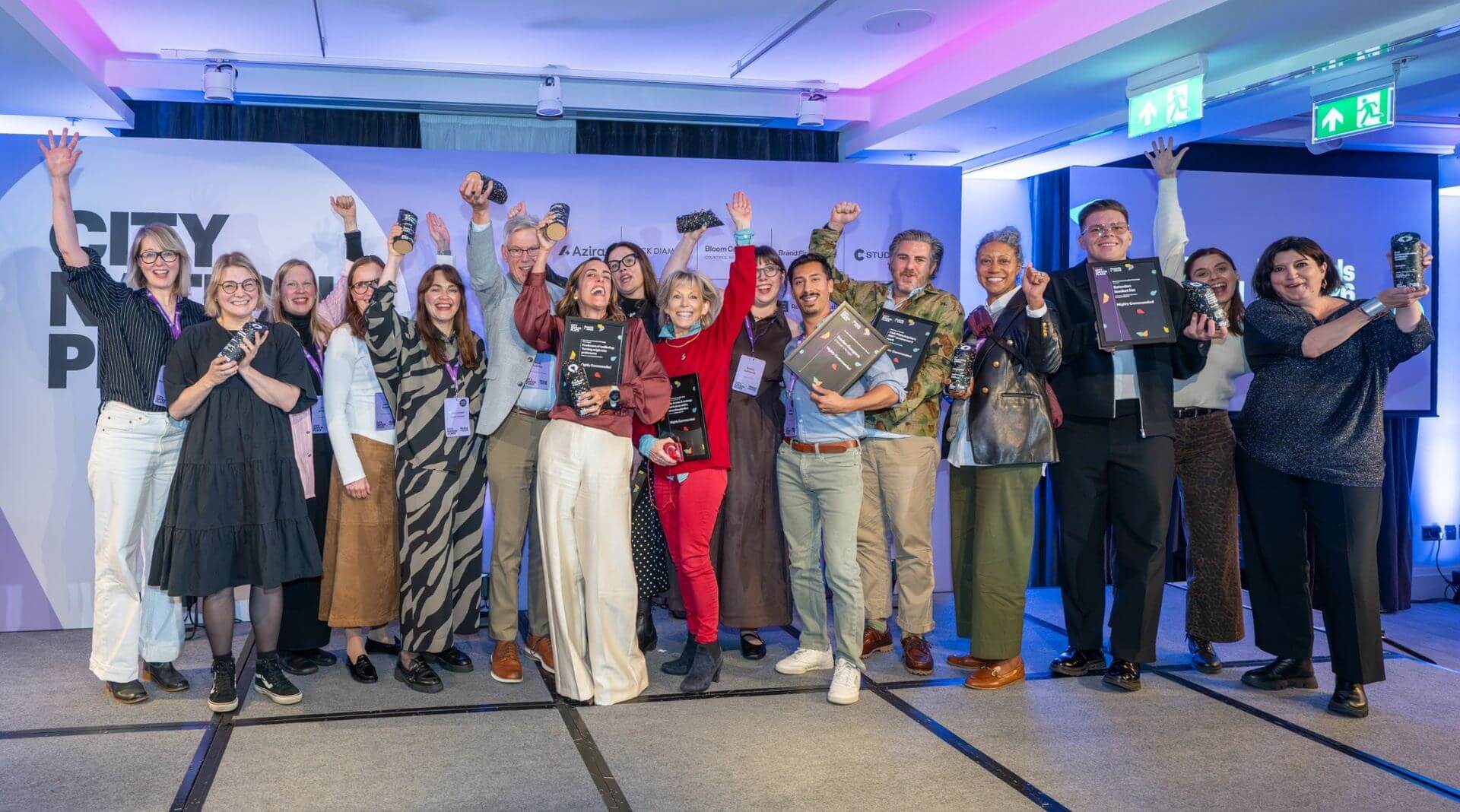
The biggest story of the week came at the awards ceremony that closed the conference. esencial COSTA RICA was named Place Brand of the Year. It is the first country brand to win that award twice, after its first win in 2019.
And it didn’t stop there. Costa Rica also won Best Citizen Engagement for Costa Rica Azul, a free interactive platform about the country’s marine territory and biodiversity. On top of that, it was highly commended for its Producers of Wellbeing campaign, which promoted Costa Rican farm products in Europe and Asia, partly through Amazon’s platforms and, for Asian audiences, with anime references.
The jury recognised a year of work under the country’s 2035 strategy: building preference for Costa Rican products abroad, and a sense of belonging at home. Adriana Acosta, who leads esencial COSTA RICA at PROCOMER, said the awards show how the country brand turns vision into action, together with businesses, public institutions and communities. (We spoke to Adriana earlier this year about Costa Rica’s investment strategy.)
Congratulations came from all sides. Bloom Consulting, who developed the strategy, gave the credit to Adriana’s team. Brand Tasmania (Jess Radford), highly commended in the same category, sent its congratulations in Spanish. And Jacqueline Nakamura, Trade Commissioner Mercosur for NZTE, called the win a reminder of what countries can achieve with a clear and consistent country brand.
The other finalists for Place Brand of the Year were Finland’s Ministry for Foreign Affairs, Visit Frisco, Business Region Göteborg, Visit Philadelphia, Brand Scotland, We Are Staffordshire and Brand Tasmania.
All the winners
According to jury chair Clare Dewhirst, the bar keeps rising, even after twelve years of the awards. Here are the 2026 winners and highly commended entries:
- Place Brand of the Year: esencial COSTA RICA. Highly commended: Brand Tasmania.
- Best Citizen Engagement: esencial COSTA RICA, for Costa Rica Azul.
- Best Communication Strategy, Place Brand: Helsinki Partners, for “Operation: Make Pamela a Hyytiäinen”. Highly commended: esencial COSTA RICA.
- Best Communication Strategy, Economic Development: Work in Estonia, for its first US talent campaign. Highly commended: Visages régionaux, for Baie-James in northern Québec.
- Best Communication Strategy, Tourism: Croatian National Tourist Board, for “Croatia, I hear it’s beautiful”. Highly commended: Visit Estonia, for its Estonian bucket list.
- Best Placemaking Initiative: Visit Philadelphia, for the Philly Pride Visitor Center.
- Best Stakeholder Engagement: The Regional Council of Lapland, for rebuilding trust around a new place brand.
- Best Use of Data: Downtown SF Partnership. Highly commended: Destination Vancouver, for its AI concierge.
- Best Use of Design: Explore Seattle Southside, for the Global Dining District in SeaTac. Highly commended: Visit Philadelphia, for its 250th anniversary mark.
- Future Leader: Evelyn Ashworth, Ottawa Tourism. Highly commended: Dorian Gongora, Choose Chicago.
Full case studies are on the City Nation Place Awards page.
Some of the most moving posts came from finalists who didn’t win. Iryna Ozymok of the Ukraine-Moldova American Enterprise Fund, shortlisted for Best Citizen Engagement with the “City Is Me” urban movement, told the story of teenagers in Lymanivka, in the Kharkiv region. They spent months digging through archives, old photos and local recipes to prepare a festival about their community. Then shelling made it impossible to hold it there. So they moved it into a shelter and online. Her point: belonging to a place means knowing you matter to its future.
Start with the problem
One talk that came up again and again was by Todd Babiak of Brand Gold Coast. His argument: too much place branding jumps straight to the happy ending, with smiling people raising their glasses. A good story needs a problem first. On the Gold Coast, research kept showing that many people had moved there because they couldn’t get a break anywhere else. That became the emotional core of the brand: a city of risk takers that says yes.
Chile and Finland showed what it looks like to listen at home before talking to the world. Constanza Rojas Bravo explained how Marca Chile studies national pride, and what Chileans value about their country, to make better choices rather than to produce a campaign. Meira Pappi of Finland’s Ministry for Foreign Affairs described a funny problem: Finland has been named the world’s happiest country nine years in a row, but at first Finns didn’t recognise themselves in it. The answer was to explain that the ranking measures life satisfaction, not joy, and to position Finland as a place that makes happiness happen by design.
And from Vilnius, Ieva Davydenko of Go Vilnius told how a bowl of cold pink soup became Pink Soup Fest and an international tradition. Her advice: begin with something your residents already care about.
Better together
Several sessions were about places working with their neighbours instead of competing with them. Marco Esser of The Hague & Partners, Jildou de Vries of the Province of South Holland and Kim Heinen of Rotterdam Partners presented New Dutch. The province decided not to build a brand of its own and to lean on the strong city brands of The Hague, Rotterdam, Leiden and Delft. Partners even pass investment leads to a neighbouring city if it has a better chance of landing them. In his own post, Marco described a recent press trip on quantum technology, from research at TU Delft to applications in Rotterdam, Leiden and The Hague.
From Liverpool, council leader Liam Robinson and Simon Reid of the Liverpool City Region Combined Authority explained how the city brand leads, while the growth opportunities span the whole region. Lilas Nascimento of Embratur showed how Brazil now runs regional brands for the Northeast and the Amazon under Marca Brasil, with the Feel Brasil portfolio of more than 100 experiences, 90 percent of them run by small businesses.
Brand Scotland’s Claire Prentice, Luxembourg’s Yannick Majerus and Elizabeth Hawkins from the Town of Newmarket described a place brand as a front door: a shared framework for partners, not a single logo. And José Filipe Torres and Keith Dinnie of Bloom Consulting presented a new report on brand governance in more than 40 countries and cities. Their conclusion: no single model fits everyone.
Measuring it, and what AI makes of it
City Nation Place launched a new report on how places track perceptions of themselves. It started with a question from Helsinki Partners. On stage, Marius Gurskas from the Lithuanian government’s office, Leena Lassila of Helsinki Partners and David Gilbert of Destination Cleveland talked about the gap between what is happening on the ground and how a place is seen. That gap is a reputational risk, they argued, and resident pride should be treated as a business priority.
Fernando Prado of Reputation Lab presented new findings from RepCore Nations 2026, based on more than 124,000 country ratings in 36 markets. His message: reputation pays twice. Countries with a better reputation can sell their products at higher prices, and they tend to pay less to borrow. And since direct experience shapes reputation so much, companies help build it as well.
Maria Lypiatska of Brand Ukraine spoke about disinformation. Catherine Price, Place Brand Manager at Bolton Council, took home her advice: tell your story first, monitor, react wisely, and build alliances. The Greater London Authority added that it makes more sense to spot the pattern behind fake news than to debunk every single case.
Then AI. Stefan Hawes of Resonance presented first results from the Resonance AI Destination Index, which tracks which places AI assistants recommend, and found smaller places outranking much bigger ones. Konrad Jagodzinski and Aglaë Perrin of Brand Finance argued that tourism should be treated as part of a country’s soft power. Natasha Norman of INSTID introduced The Place Compass, a tool for describing a place’s personality.
The mood in the room? Mark Berg Hooley of Move to Gothenburg put it honestly: nearly everyone thought they were behind on AI, and nearly everyone had concerns about it. Before the conference, in an earlier interview, Clare Dewhirst had raised a worry of her own: if AI engines mostly describe a place’s physical and financial assets, and struggle with how a place feels, place marketing could slide back into listing assets.
From the room
Andrew Weir of Destination Toronto liked most how openly people shared both successes and misses. He also invited everyone to City Nation Place Americas in Toronto in June 2027. Jacqueline Nakamura took home a question about the Global South: how can countries there get a stronger voice in these conversations and own their narratives? Lexi Robinson of Destination Cleveland noted the timing: being an American in London during a US election, with sessions on democracy, national pride and misinformation. Brianna Vetrano found comfort in seeing that places around the world struggle with the same things.
And Catherine Price wrote down a line we like: authenticity doesn’t need a perfect story, just one people recognise as their own.
At the close, Adriana Acosta, Todd Babiak and Mark Mobbs of the South Yorkshire Mayoral Combined Authority joined Clare Dewhirst on stage to share their own takeaways.
Our take
Going through all these posts, what strikes us is how practical the conversation has become. Less about logos, more about who does what, how to measure it, and how to bring residents along. AI is everywhere, but people seem more curious than scared.
Costa Rica’s second win says something too. It isn’t the result of one clever campaign but years of consistent work, a clear strategy and a team that keeps delivering.
The next City Nation Place Global takes place in London on 3 and 4 November 2027. Earlier coverage on TPBO: City Nation Place Global 2025 and City Nation Place Global 2024. More on Costa Rica in our Costa Rica spotlight.
Were you in London? Tell us what stayed with you on LinkedIn.
This article is based on public LinkedIn posts by City Nation Place, speakers and delegates, the City Nation Place Awards website and a press release by PROCOMER. Posts in Dutch and Portuguese were translated by us.