In October, Brand Finance published its first China City Index 2026, assessing the reputation and perceptions of 70 Chinese cities based on a nationwide survey of 12,000 people. Beijing comes first, followed by Shanghai and Hangzhou.
The top positions hold few surprises. What we found more interesting is the difference between how residents see their own city and how people elsewhere in China perceive it. Across the study, residents tend to give their home city higher marks for green spaces, public safety, healthcare and overall liveability. It is a finding that deserves attention, and not only in China.
China’s strongest city brands in 2026: the top 10
Five cities, five different strengths
Brand Finance identifies distinct models of urban competitiveness among China’s leading cities. The top five illustrate how different combinations of economic strength, culture and quality of life can shape a city’s reputation.
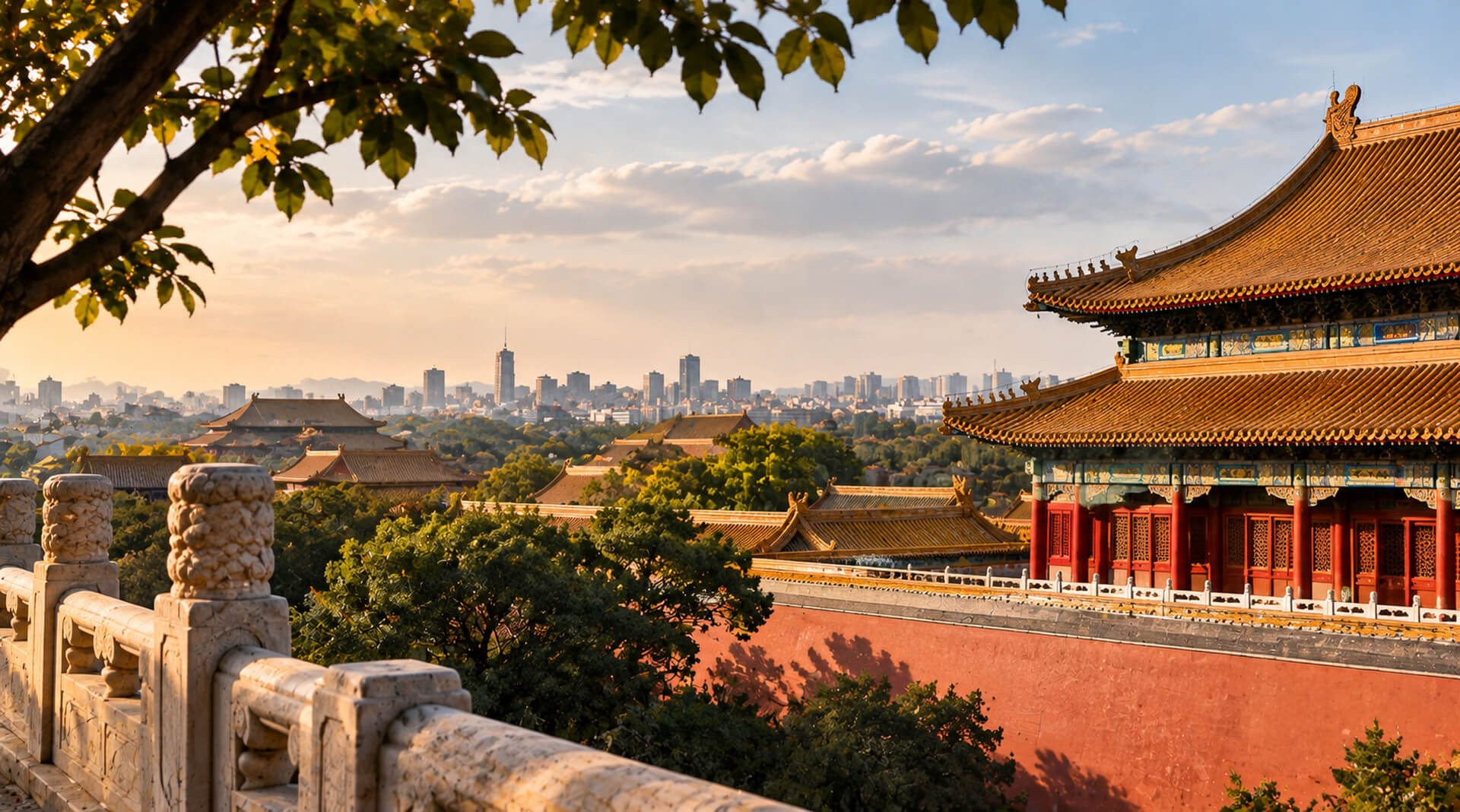
Beijing leads the country for overall reputation, familiarity and visitation. Its strengths include governance, education, healthcare and cultural attractions. It also ranks first in 11 of the 46 individual city attributes assessed among people from outside the city.
Shanghai is China’s commercial and financial centre. It performs particularly well for national and international connectivity and employment opportunities, while ranking second for familiarity and visitation. Its combination of business opportunities, cultural life and international connections gives it a distinct position.
Hangzhou is perhaps the most interesting of the five. It ranks second nationally for reputation, ahead of Shanghai on that measure, and performs well for lifestyle appeal and green spaces. Home to technology companies such as Alibaba and NetEase, as well as West Lake and Longjing tea, Hangzhou combines a strong digital economy with cultural heritage and natural attractions.
Shenzhen leads for entrepreneurship, technological leadership and entrepreneurial spirit. Often described as China’s Silicon Valley, the city is also investing in culture, public spaces and quality of life, signalling an ambition to develop a more rounded international profile.
Chengdu ranks first for lifestyle attractiveness. Its food culture, green spaces and relaxed way of life have become a distinctive competitive advantage, showing how quality of life can contribute to a city’s wider appeal.
There is no single blueprint for a strong city brand. Beijing’s broad reputation, Shanghai’s connectivity, Hangzhou’s combination of technology and heritage, Shenzhen’s entrepreneurial identity and Chengdu’s lifestyle appeal illustrate different ways of building recognition.
What locals see and others miss
The finding that caught our attention is the difference between residents’ assessments of their own cities and the perceptions of people living elsewhere in China.
Across the 70 cities, residents generally give higher ratings for attributes such as green spaces, public safety, healthcare and overall liveability. When the average difference across 46 attributes is considered, 59 cities receive higher ratings from their own residents, while 11 receive higher ratings from people elsewhere.
Of course, people tend to feel positively about the places they call home. But the attributes in question are telling. They are qualities people experience in everyday life and may be less apparent to someone visiting for a few days or forming an impression from a distance.
Scott Chen, Managing Director of Brand Finance China, points to the opportunity for cities such as Suzhou (12th), Kunming (24th), Yangzhou (34th) and Weihai (39th). Their strengths, he argues, can be better communicated by building on the qualities residents already value.
There is an important distinction here. The external perceptions measured by this index are those of people elsewhere in China, not international audiences. Whether the same strengths are recognised abroad is a separate question that would require research among international target groups.
Still, the underlying issue is familiar to place leaders elsewhere: the qualities that make a place attractive to its residents are not necessarily the ones that come to mind when outsiders think about it. Understanding that difference is a useful starting point for both positioning and communication.
Hong Kong in 22nd place
Some readers may be surprised to see Hong Kong in 22nd place, with Macau at 30th. In global financial centre rankings, Hong Kong sits near the very top. In the latest Global Financial Centres Index, it ranks third worldwide, behind New York and London.
The two rankings ask different questions of different audiences. The China City Index measures perceptions among people across China, across seven dimensions ranging from business and investment to culture, governance and liveability. The financial centres index assesses the competitiveness of financial centres, drawing on assessments from finance professionals and supporting data.
The results are not contradictory. They illustrate how a place can perform strongly in one field without necessarily enjoying the same standing across other dimensions of reputation. They also show why it matters to understand who is being asked, what they are being asked, and for what purpose a ranking is being used.
How the China City Index works
The index is based on a nationwide survey of 12,000 respondents evaluating 70 major cities. It examines seven dimensions of city brand performance:
- Business & Investment
- Culture & Heritage
- Education & Science
- Governance
- Liveability
- People & Values
- Sustainability & Transport
The research distinguishes between residents’ views of their own cities and perceptions among respondents living elsewhere in the country. The latter should not be confused with international perceptions.
The published results include an overall ranking and assessments of 46 individual city attributes. The seven dimensions provide a broader framework for understanding the different qualities contributing to each city’s reputation.
For the full results, see the Brand Finance China City Index 2026 report.
What to take from this
Ask residents what makes their city distinctive. Everyday qualities such as public spaces, safety, healthcare and liveability can be important sources of local identity and attractiveness. They may also be underappreciated by external audiences.
Look beyond the overall ranking. Beijing leads overall, but other cities have distinct strengths. Hangzhou’s reputation, Shenzhen’s entrepreneurial identity and Chengdu’s lifestyle appeal illustrate why individual attributes can tell a more useful story than a single position.
Understand whose perceptions you are measuring. Domestic reputation, international reputation and sector-specific competitiveness are different things. The Hong Kong comparison makes this particularly clear. A city can perform strongly in one context and less strongly in another.
For place leaders, the practical question is not simply where their city ranks. It is whether the qualities they want to be known for are actually recognised by the audiences they hope to attract.
For more on how cities compare, explore our Rankings Overview and the City Observatory. On China’s international image, see also our reading of the Global Soft Power Index 2026 and Nation Brand Value 2026.