
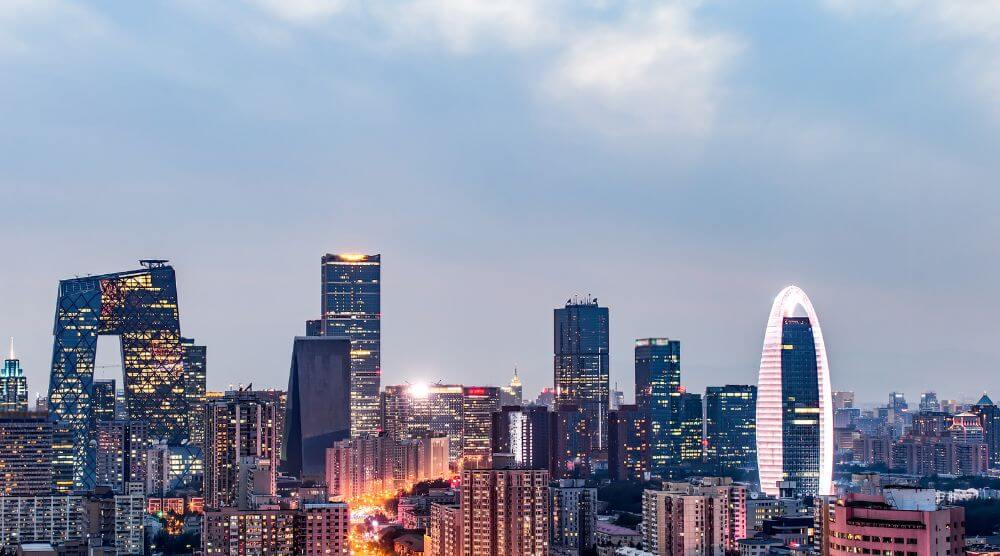
Beijing is the capital of China and its political, cultural and educational centre. The Forbidden City, the hutongs and the Great Wall nearby sit alongside one of Asia’s largest concentrations of corporate headquarters, universities and technology firms.
This profile looks at how Beijing is positioned, how it is read from outside, and where the two pull apart, drawing on the major rankings alongside our own coverage.
City Brand Strength
Brand Finance‘s Global City Index placed Beijing in the high forties in 2024, up from the high fifties. Resonance’s World’s Best Cities placed it in the high teens in 2023 and 2024 and in the mid-thirties in 2025. Abroad, its image is shaped largely by its role as the national capital.
Economic Position
Beijing has held a place in the top ten of the Kearney Global Cities Index since 2019, sixth in 2024. Its financial standing has varied: the Global Financial Centres Index placed it in the top ten from 2020 to 2022 and around 20th in 2025. The Innovation Cities Index has placed it between the high teens and high twenties. Oxford Economics’ Global Cities Index 2026 placed it outside the top 100 overall, but among the cities with the largest expected GDP gains to 2050.
Appeal to Talent
Peking University and Tsinghua University both placed in the global top 20 of the QS World University Rankings 2025, making Beijing a major centre for students and researchers. Daily life scores lower: Mercer placed it in the low 120s for quality of living in 2024, and Numbeo in the mid-220s in 2025. Costs for international staff have eased, from the global top ten in Mercer’s cost of living ranking to the mid-twenties in 2024.
Urban Sustainability
Beijing’s sustainability and city-management results have improved sharply. The Arcadis Sustainable Cities Index placed it 20th in 2024, up from the low seventies in 2022. IESE’s Cities in Motion Index placed it 21st in 2024 and 2025, up from the low eighties in 2019 and 2020, with mobility a strength and environment a weaker point.
What Stands Out
Beijing combines global-city weight, leading universities and a heritage few capitals can match, and its sustainability and city-management results are now among its strongest.
That progress is much less visible than its role as a capital. Liveability is still its weaker side, and the gap between what Beijing has built and how it is read abroad is where its story has most room to grow.
Beijing is read mainly as China’s capital. Its progress on sustainability and city management is much less visible.
Its imperial heritage and role as a centre of learning give it an identity of its own.
Global-city, university and sustainability results back the city. Liveability is weaker.
Positions are relative to the places in TPBO’s editorial record and based on public material only.
Want the same reading for your own place? Request a free Outside View →
From Our Archive
- 2026Global Cities Index 2026: the top barely moves, but the profiles behind it tell more
- 2024Xinxin Liu on city branding in China: navigating urban identity and economic growth
- 2024Arcadis Sustainable Cities Index 2024: top performers, key challenges and trends
- CountryChina: country profile
About this profile. We combine the main international rankings, including Brand Finance‘s Global City Index, Resonance’s World’s Best Cities, the Kearney Global Cities Index, Oxford Economics’ Global Cities Index, IESE’s Cities in Motion Index and the Arcadis Sustainable Cities Index, with our own interviews and reporting. Rankings change every year, so positions are described in broad terms. See the rankings and indices we follow, or explore our other city profiles.