
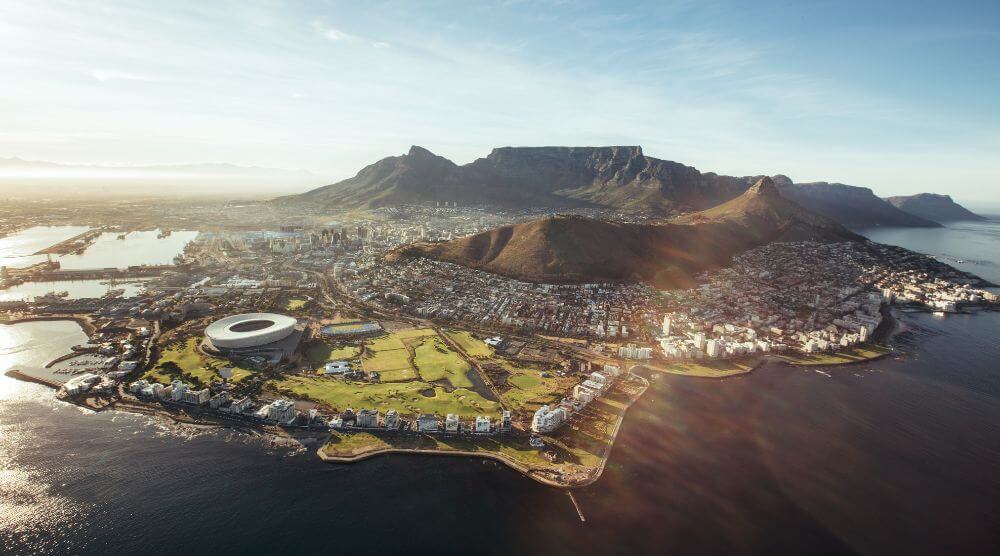
Cape Town, the legislative capital of South Africa, is known around the world for Table Mountain, its coastline and its winelands. It is also a centre for tourism, film, creative industries and a growing technology scene, and home to the University of Cape Town.
This profile looks at how Cape Town is positioned, how it is read from outside, and where the two pull apart, drawing on the major rankings alongside our own coverage.
City Brand Strength
Brand Finance‘s Global City Index placed Cape Town in the mid-sixties of 100 cities in 2024, down from around 60th. Resonance’s World’s Best Cities placed it in the mid-eighties in 2025. Abroad, it is read mainly through its scenery and as a leisure destination.
Economic Position
Cape Town’s standing in global business rankings is modest and has slipped. The Kearney Global Cities Index placed it around 90th in 2024, down from around 80th in 2021 and 2022. The Global Financial Centres Index placed it in the mid-eighties in 2024, down from the low sixties. Oxford Economics’ Global Cities Index 2024 placed it in the mid-440s of 1,000 cities, with environment a relative strength.
Appeal to Talent
The University of Cape Town placed among the world’s top 200 in both the QS and Times Higher Education rankings for 2025. Cape Town is affordable for international staff, beyond 200th in Mercer’s cost of living ranking in 2024. Mercer placed it around 105th for quality of living, and Numbeo in the mid-120s in 2025.
Urban Sustainability
The Arcadis Sustainable Cities Index placed Cape Town in the high nineties of 100 cities in 2024, down from the high eighties in 2022. IESE’s Cities in Motion Index placed it around 141st, with its international profile a strength and social cohesion and mobility weaker.
What Stands Out
Cape Town has one of the most recognisable settings of any city, and its brand rests firmly on it.
The results behind that image are weaker. Global business, sustainability and liveability rankings place it well below its visibility, and several have slipped. Its university, creative industries and technology scene are assets that are much less visible than its scenery.
Cape Town is read clearly as a destination. Its university, creative and technology strengths are much less visible.
Table Mountain and its coastline give it a setting few cities can match.
Its setting, university and costs back the city. Business, sustainability and liveability results are weaker.
Positions are relative to the places in TPBO’s editorial record and based on public material only.
Want the same reading for your own place? Request a free Outside View →
From Our Archive
- 2025Who gets to tell Africa’s story? Thebe Ikalafeng on narrative sovereignty
- 2025Michaëlla Rugwizangoga on Rwanda’s rise and the state of place branding in Africa
- 2024Oxford Economics Global Cities Index 2024: mapping the future of urban success
- CityNairobi: city profile
- CountrySouth Africa: country profile
About this profile. We combine the main international rankings, including Brand Finance‘s Global City Index, Resonance’s World’s Best Cities, the Kearney and Oxford Economics global cities indices, Mercer’s Quality of Living and Cost of Living rankings and the Arcadis Sustainable Cities Index, with our own interviews and reporting. Rankings change every year, so positions are described in broad terms. See the rankings and indices we follow, or explore our other city profiles.