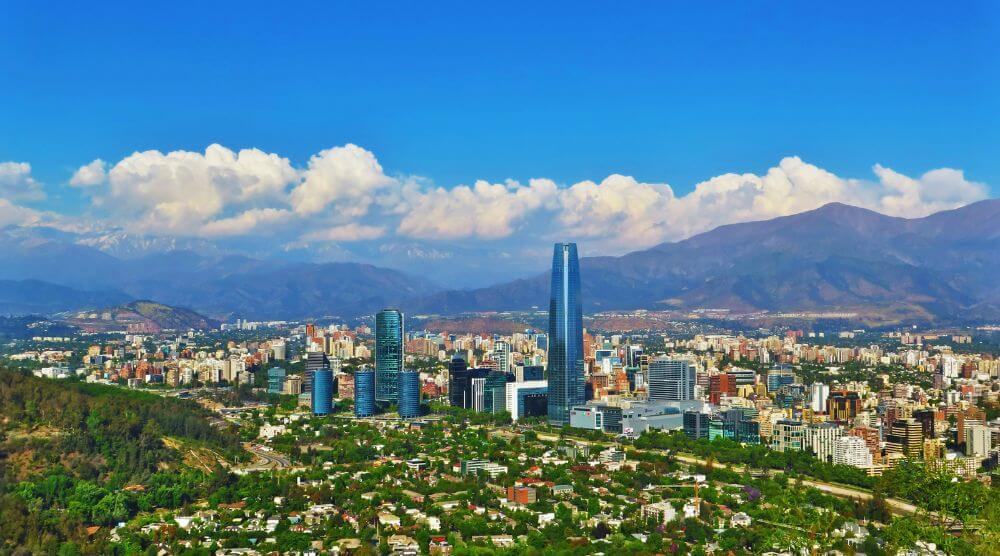
Chile is one of the more stable and better governed countries in Latin America, and its country brand has moved from promoting exports and tourism towards values: democracy, trust and care for the future. Its main challenge, as its former brand director put it to us, is more basic. Much of the world simply does not know it.
This profile looks at how Chile is positioned, how it is read from outside, and where the two pull apart, drawing on the major rankings alongside our own coverage of the country, including our own reporting from the north of Chile.
Country Brand Strength
Chile ranks around fortieth in the Anholt-Ipsos Nation Brands Index and in the fifties of both Brand Finance‘s Global Soft Power Index and U.S. News’ Best Countries. Its strongest results there are for adventure and heritage.
Rossana Dresdner, until recently head of Fundación Imagen de Chile, told us that Latin America’s main challenge, with few exceptions, is simply being known. When she opened a presentation in Uppsala with basic facts about Chile, many in the audience were surprised by how little they knew. Under her leadership Chile launched its “We Care” strategy, built on democracy, stability and sustainability and a commitment to truthfulness, which she compared to Sweden’s new strategy. Earlier, Myriam Gómez of Marca Chile described how the brand works with the economic development agency and the country’s diplomatic missions.
Economic Position
Chile ranks in the mid-forties of IMD’s World Competitiveness Ranking and in the top half of Bloom Consulting’s trade ranking for the Americas. It has one of the highest democracy scores in South America and ranks well for low corruption by regional standards.
Appeal to Talent
Chile leads Latin America in INSEAD’s Global Talent Competitiveness Index, and its leading university tops the regional rankings.
Sustainability and Distinctive Assets
Chile’s sustainability results are mid-table: around thirtieth in the Sustainable Development Report and in the sixties of the Environmental Performance Index.
Its most distinctive asset in our record is the sky. In 2019 we travelled to the Coquimbo region for a series on astrotourism. Luis Chavarría explained how astronomy can contribute to Chile’s economic development, and Lucía Pinto, then the region’s highest authority, why Coquimbo is predestined as a place to look at the stars.
What Stands Out
Chile is a country whose strengths, institutional stability, talent and a hopeful, values-based message, are most convincing to people who already know it.
In TPBO’s reading, its values-based strategy is well founded but shares its language with many other countries, Sweden among them. What only Chile can offer, its astronomy and some of the clearest skies on earth, its range from desert to Patagonia, is better known to specialists than to the wider audiences the brand needs to reach first.
Chile presents itself as a stable democracy with a long-term outlook. Abroad, many people know little about it at all.
Democracy, trust and sustainability are values many countries now claim. Chile’s skies and landscapes are its own.
Democracy, governance and talent scores lead the region. Sustainability results are weaker than the brand’s emphasis suggests.
Positions are relative to the places in TPBO’s editorial record and based on public material only.
Want the same reading for your own place? Request a free Positioning Check →
From Our Archive
- 2025Rossana Dresdner on the global shift toward values-based nation branding
- 2025Santiago de Chile city profile
- 2019Chile: reaching for the stars with astrotourism
- 2019Luis Chavarría on astronomy as an economic development opportunity
- 2019Lucía Pinto on developing Coquimbo as an astrotourism destination
- 2019Sophie Souyet on how astrotourism creates business opportunities
- 2018Myriam Gómez of Marca Chile on country branding strategies
About this profile. We combine the main international rankings, including Brand Finance‘s Global Soft Power Index, with our own interviews and reporting. Rankings change every year, so positions are described in broad terms. See the rankings and indices we follow, or explore our other country profiles.