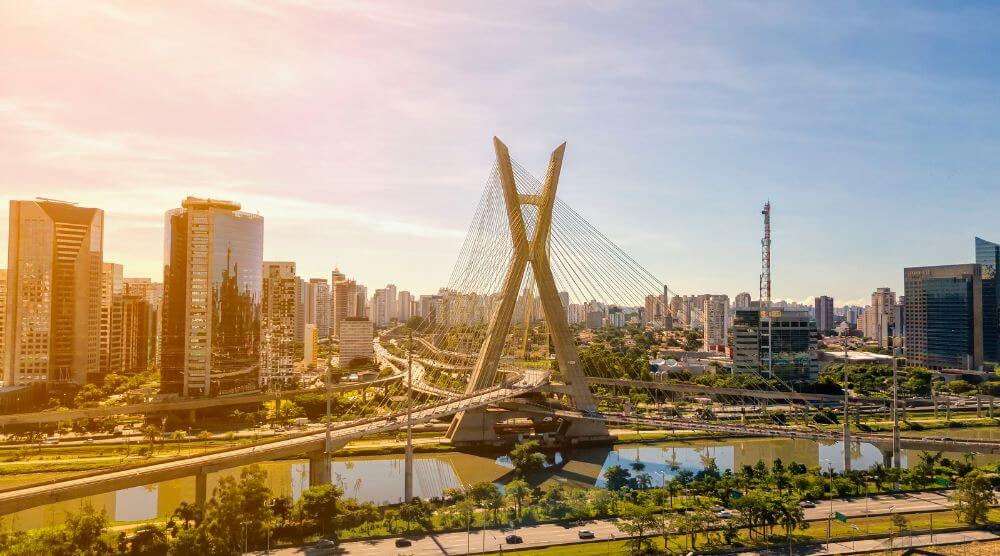
São Paulo is Brazil’s largest city and Latin America’s leading economic and cultural hub. Known for its bustling finance sector, diverse population, and vibrant arts scene, the city plays a crucial role in the region’s business and innovation landscape.
But how do leading rankings and indices assess São Paulo in terms of reputation and influence, business attractiveness, and sustainability?
Overview of São Paulo’s Performance & Potential
The following table offers an overview of São Paulo’s overall performance across various international rankings. For a deeper analysis, our custom reports provide tailored insights for specific contexts, such as cities, regions, or countries.
| Ranking | 2019 | 2020 | 2021 | 2022 | 2023 | 2024 | 2025 |
| Brand Finance Global City Index | – | – | – | – | 75 | 62 | – |
| Resonance World’s Best Cities | – | 59 | 44 | 33 | 27 | 75 | 75 |
| Global Financial Centres Index | – | 83 | 104 | 73 | 99 | 85 | 78 |
| 2Thinknow Innovation Cities Index | 67 | – | – | – | 80 | – | – |
| Kearney Global Cities Index | 33 | 42 | 40 | 45 | 46 | 39 | – |
| Mercer Quality of Living Ranking | 119 | – | – | – | 108 | 103 | – |
| Mercer Cost of Living Ranking | 86 | 130 | 177 | 168 | 152 | 124 | – |
| Numbeo Cost of Living Index | – | 257 | 463 | 441 | 360 | 252 | 255 |
| Numbeo Quality of Life Index | – | 216 | 234 | 236 | 230 | 188 | 248 |
| IESE Cities in Motion Index | 132 | 123 | – | 130 | – | 128 | 127 |
| Arcadis Sustainable Cities Index | – | – | – | 84 | – | 84 | – |
City Brand Strength
São Paulo is Latin America’s largest metropolis and a dynamic global city known for its economic clout, cultural richness, and sprawling urban landscape. Ranked 62nd in Brand Finance’s Global City Index 2024, 75th in Resonance Consultancy‘s World’s Best Cities 2025 report, and 39th in Kearney’s Global Power City Index 2024, São Paulo continues to strengthen its role as a major business hub, cultural center, and gateway to the wider South American market.
Appeal to Investors and Business
São Paulo is a major economic and innovation centre in Latin America, characterized by a diverse industrial base and a growing entrepreneurial ecosystem. Ranked 80th in 2Thinknow’s Innovation Cities 2023 Index, the city shows emerging strengths in technology adoption, creative industries, and business innovation. Its 78th position in the GFCI 37 Rank reflects São Paulo’s role as a key financial hub within Brazil and the broader region, supporting trade, investment, and regional connectivity despite ongoing challenges in infrastructure and urban development.
Appeal to Talent
São Paulo presents a complex urban landscape marked by its status as Brazil’s economic powerhouse and cultural heart. Ranked 103rd in Mercer’s Quality of Living Ranking 2024 and 248th in Numbeo’s Quality of Life Index 2025, the city offers vibrant cultural diversity and economic opportunity but faces significant challenges related to infrastructure, safety, and social inequality. São Paulo’s cost of living is relatively high for the region, ranking 124th in Mercer’s Cost of Living Index 2024 and 255th in Numbeo’s Cost of Living Index 2025, reflecting both steep housing costs and disparities in affordability across its diverse population.
Urban Sustainability
São Paulo faces significant challenges as it strives to balance rapid urban growth with sustainability and social inclusion. Ranked 127th in the IESE Cities in Motion Index 2025 and 84th in the Arcadis Sustainable City Index 2024 , the city is working to improve its environmental resilience, infrastructure, and governance amid pressures from congestion, pollution, and social inequality
Our Key Takeaways
São Paulo stands as Latin America’s foremost economic and cultural powerhouse, known for its vast and diverse economy, dynamic creative industries, and role as a regional financial center. The city benefits from a rich cultural scene, extensive infrastructure, and a large, skilled workforce, driving innovation across sectors like finance, manufacturing, and technology. However, São Paulo faces pressing challenges including severe housing shortages, traffic congestion, and significant social inequality.
- Strengths: Largest economy in Latin America, cultural vibrancy, key financial hub.
- Weaknesses: Infrastructure strain, persistent income disparities, urban congestion.
- Opportunities: Expansion of affordable housing, improvements in public transit, growth in tech-driven industries.
- Threats: Environmental challenges (pollution, flooding), widening social divides, urban sprawl.
Last updated in August 2025. Explore more city profiles here.
Did you know? Our custom reports complement publicly available rankings by offering a deeper look at your city’s performance and potential. They combine independent benchmarking across key indices with expert community feedback—highlighting how your city is perceived and where it stands out. Designed to support place branding leaders, these reports provide clear, actionable insights to strengthen strategy, positioning, and international reputation.
📊 Want to see an example? Contact us today!
Disclaimer: The information in this article is intended to provide a general overview of São Paulo’s economic and cultural landscape and facilitate comparison over time. While we strive for accuracy and completeness, the data is provided “as is” without warranty of any kind. Please verify any information before relying on it for decision-making purposes.


