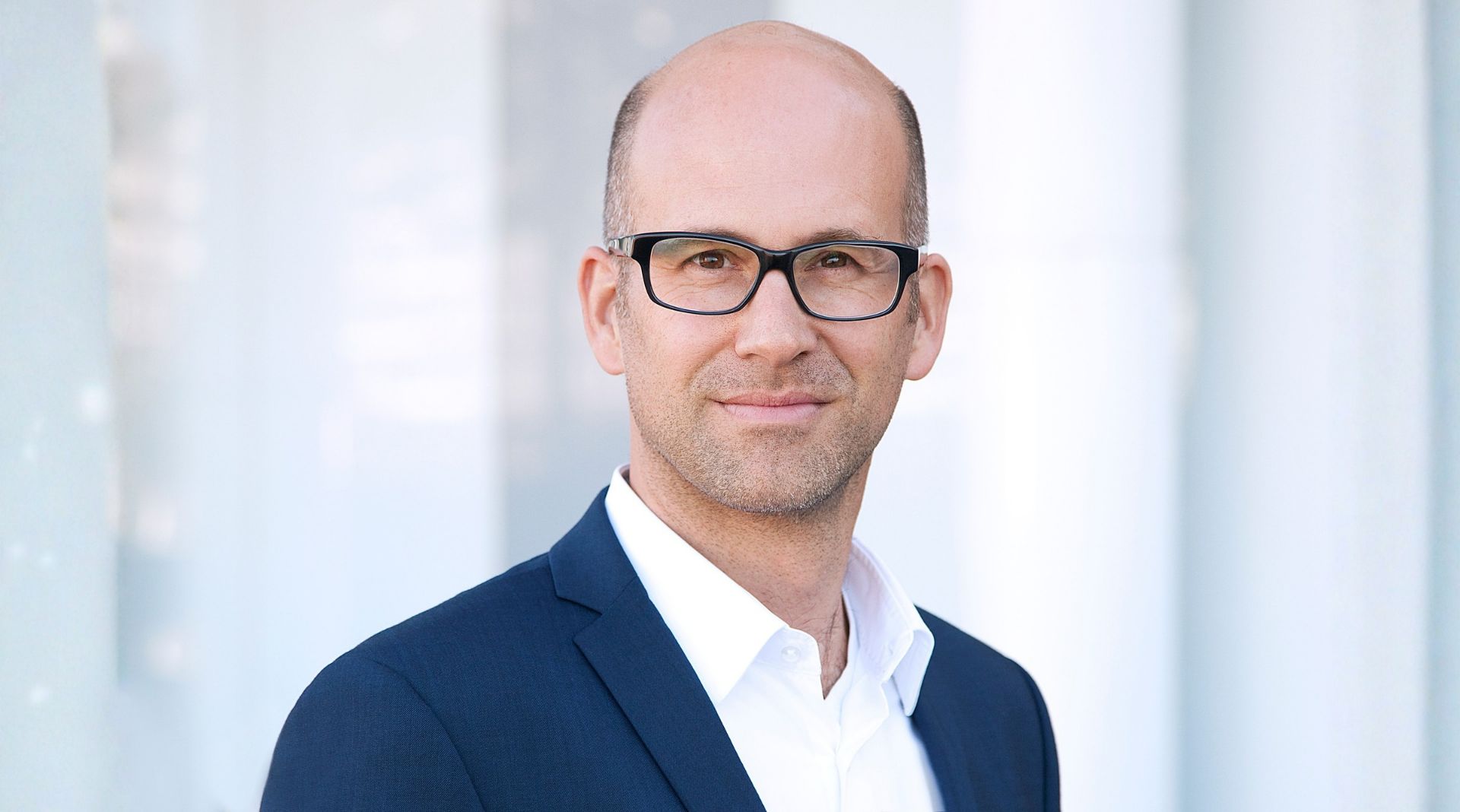
Stefan Nöthen is Head of Strategy & Brand Management at Hamburg Marketing, where he has led the strategic and operational management of the Hamburg brand since 2013. Hamburg Marketing works within an integrated holding structure alongside Hamburg Tourism and Hamburg Invest, ensuring that visitors, talent and investors encounter the same core brand across a maximum of touchpoints.
In this conversation, Stefan explains why Hamburg’s international challenge is one of awareness rather than image, how a single brand can carry many evolving stories, and why the future of place marketing lies in proving what a city stands for rather than simply asserting it.
Stefan, in our earlier conversation you described Hamburg as a city with a strong profile among those who know it, but with relatively low awareness outside Europe. When you look at Hamburg from the outside, what do you think people still misunderstand (or simply don’t know) about the city?
I would make a clear distinction between awareness and profile: Hamburg’s international challenge is much more about awareness than about misunderstanding.
Our research shows that among people who know Hamburg, the perception of the city is remarkably consistent. There are surprisingly few major misconceptions. Hamburg is associated with openness, quality of life, a strong maritime identity and a future-oriented outlook.
The issue is that outside Europe too few people know enough about Hamburg in the first place. So our task is not to invent or fundamentally correct the city’s profile. It is to increase awareness and make the existing profile more visible.
That is actually a very good position to be in: we know what Hamburg stands for. We now need more of the right people internationally to know it too.
Hamburg is simultaneously a major tourism destination, an economic and investment location, and a place competing for international talent. How much do you think these audiences should be addressed through one overarching Hamburg story?
We need one overarching brand, but we do not need one overarching story. In fact, we want to tell many different and constantly evolving stories — but they should all be rooted in the same Hamburg brand.
Different audiences give us different starting points. A visitor may enter through culture, water or nightlife; an investor through networks, innovation or industry; a talent through career opportunities and quality of life. These are different functional attributes and therefore different stories.
But if the brand works, they should ultimately lead back to the same core: a place characterised by openness, connections, contrasts, curiosity and the opportunity to discover and develop something new. So, the principle is not “one story fits all”. It is many relevant stories for one recognisable brand.
Where do you see the greatest gap today between the Hamburg you experience on the ground and the Hamburg that is visible internationally?
The remarkable thing is that we do not see a serious perception gap between Hamburg as it is experienced and Hamburg as it is perceived. Our research found a surprisingly consistent picture inside and outside the city. That is a rather luxurious starting position for place marketing: we do not have to correct a fundamentally distorted image.
The remaining gap is mainly one of visibility and depth. Internationally, individual icons such as the port or the Elbphilharmonie travel more easily than the full breadth of Hamburg — the connections between business, science, culture, urban development and quality of life.
So again, the challenge is less about changing perceptions and more about widening and deepening them.
If international awareness is the main challenge, rather than defining the brand itself, what makes that difficult to solve? Is it primarily a question of markets, resources, coordination, channels — or something else?
It is certainly a combination, but we put focus and coordination quite high on the list.
The amount of content people are exposed to — and can choose from — has grown enormously. Every city, region, company, media organisation and creator is competing for attention. Simply producing more content is therefore not the answer.
Place marketing also has a structural complexity that a commercial brand does not have. There are many audiences, many partners and many legitimate perspectives on a city. Tourism, investment, culture, science, business and talent all have their own priorities. The challenge is to create enough coherence for these activities to reinforce one another without making everything look the same.
And finally, we have to be selective. Our strategy increasingly asks not how we can generate more of everything, but how we can generate more of the right things: the right audiences, the right markets, the right stories and the right interactions.
Which international audiences or markets matter most to Hamburg over the next few years, and why?
Our current geographic priorities are the United States, the United Kingdom and the Scandinavian region. Within those markets, however, the important question is who we want to reach.
On the business side, this includes innovative and knowledge-based companies, investors, start-ups and businesses connected to Hamburg’s clusters and future-oriented technologies. International talent is increasingly important as well, particularly highly qualified and internationally mobile professionals. And international visitors remain a major audience, following their own market and customer logic.
Internationalisation is not about being equally visible everywhere. We want Hamburg to be relevant in the right markets to the right people.
From your experience, what tends to make international audiences actually pay attention to a place like Hamburg? Is it a particular story, sector, person, experience or moment?
International attention usually comes when an abstract proposition becomes tangible through a real place, project, person or moment. Almost every city can claim to be innovative, sustainable or creative. What matters is the proof.
The Elbphilharmonie is a good Hamburg example: it is not only an architectural and cultural landmark, but also tangible evidence of ambition and willingness to create something new. The same applies to mobility, renewable energy, science or technology. They become interesting internationally when people can see what is actually happening and meet the people behind it. Events can create similar moments of attention.
For place marketing, the shift is essentially from “Hamburg says” to “Hamburg demonstrates.”
For place marketing, the shift is essentially from “Hamburg says” to “Hamburg demonstrates.”
How do you balance the ambition to become more internationally visible with the risk of becoming more generic? In other words, how do you grow reach without losing specificity?
Reach should grow through better distribution, not through a broader and more generic identity. Cities become interchangeable very quickly when everybody talks about being innovative, sustainable, vibrant and liveable.
For Hamburg, specificity comes from real characteristics: the water, the contrasts, the understatement, the mixture of tradition and change, and a city that deliberately retains some rough edges. We therefore try to communicate real people and places rather than an idealised, polished city. The same applies to future topics. A trend is only useful for the Hamburg brand if there is genuine substance behind it. Authenticity still is key.
Looking ahead three to five years, what would make you say that Hamburg has made real progress internationally? What would you be able to see or measure?
Real progress would mean greater awareness among the right audiences combined with a stronger understanding of what Hamburg stands for. We would look first at reach in our priority markets, then at engagement and consideration: are relevant people and organisations interacting with Hamburg and seriously considering the city?
Beyond that come concrete outcomes such as qualified business contacts, investment interest, talent interest and relevant tourism demand. But perception matters just as much as volume. We want to know whether Hamburg is increasingly associated with the qualities we aim to strengthen internationally.
Which other city or place do you think is doing an especially interesting job of building international recognition — and what do you think they are getting right?
We do not really believe in having one benchmark city — different places inspire us for very different reasons.
London & Partners is interesting from the perspective of governance and integrated city marketing. In Germany, smaller cities such as Münster or Bielefeld offer interesting approaches to citizen engagement. We often look to Scandinavia for creative branding and content; Oslo is one example. And Estonia is fascinating in terms of digitalisation and the consistency with which a place can become associated with a future-oriented topic.
More broadly, the international network of place branders is incredibly valuable. There is a great culture of exchange in our profession. The point is not to copy another place. It is to learn from many places and understand what can meaningfully be transferred to your own context.
And finally, what have you personally learned from working on Hamburg’s international positioning that you think other cities could benefit from?
Our biggest lesson is to start with evidence rather than intuition. For Hamburg, we invested heavily in understanding how people actually perceive the place: qualitative research, stakeholder perspectives, social intelligence and quantitative research involving almost 4,000 people. Our positioning emerged from building that solid foundation.
Secondly, a place brand is created across countless touchpoints owned by many different organisations and people. Trying to encourage, align and sometimes nudge the owners of those touchpoints is probably the most exhausting — but also the most rewarding — part of a place marketer’s job.
Thank you, Stefan.
Connect with Stefan Nöthen on LinkedIn, or learn more about Hamburg Marketing.
For more perspectives from practitioners and thinkers shaping the future of place branding, explore our Place Brand Leaders interviews.