Working together with local stakeholders across sectors and industries has long become the way forward for destinations keen to enhance their sustainability. But how to do it, and which pitfalls to avoid?
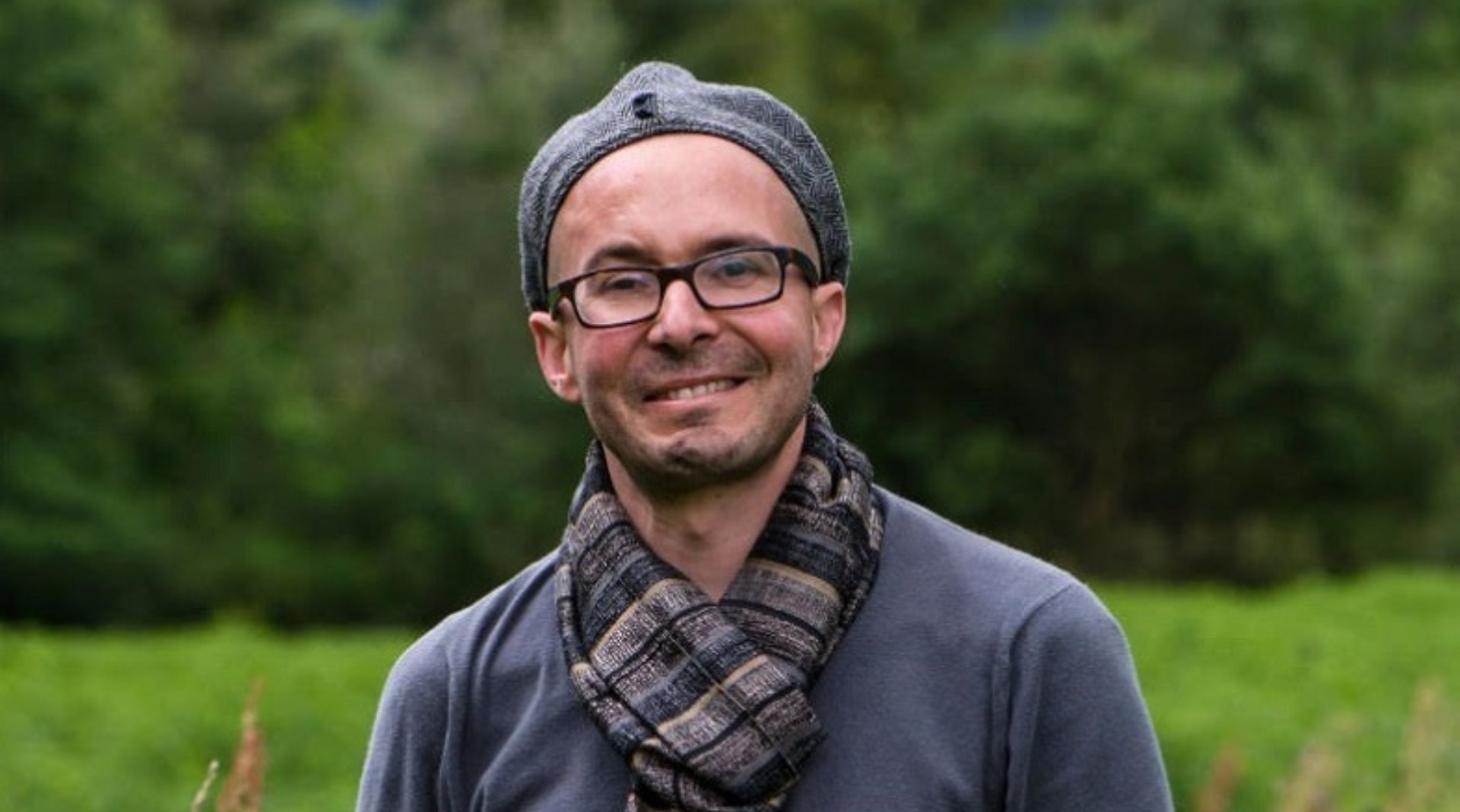
Kaspar Howald, Director of Valposchiavo Turismo, in this interview shares the story of “100% Valposchiavo”: how it started and what’s next for this alpine destination in the very south-east of Switzerland.
This interview first appeared on Sustainability Leaders United in November 2019, following a visit to Valposchiavo. SLU ran as an independent platform from 2014 until 2025 and is now part of The Place Brand Observer.
Kaspar, in 2016 your community received the Swiss Milestone Award of Excellence in Tourism for your initiative 100% Valposchiavo. Do you remember how it all started?
The story of “100% Valposchiavo” started already in 2012 when the local farmers were confronted with a huge infrastructural project by the local energy provider. One of the consequences of this project would have been the loss of some acres of farmland in one of the most fertile zones of the Valposchiavo. The farmers had to ask themselves how to use the remaining farmland more effectively and how to become more competitive on the market, to compensate for this loss.
In response to this challenge, the local farmer associations started working on a project for regional development, of which one aim was to reinforce existing and to build new locally closed value chains to augment the sale of products based on local raw materials. The local DMO was from the beginning a partner of this project.
I got involved in the process when I came to Poschiavo as director of Valposchiavo Turismo, at the beginning of 2014. From the start, I was convinced that “100% Valposchiavo” could be a very strong USP for a destination like Valposchiavo.
The healthy, innovative and diversified agriculture (more than 90% of the farmland is cultivated by farms certified by the organic farming label bio suisse), the strong food processing sector and the rich and lively culinary tradition make the Valposchiavo an interesting destination for conscious tourism.
What is 100% Valposchiavo about, and what are its objectives?
“100% Valposchiavo” is a collaborative project between agriculture, local trade and tourism to build and strengthen locally closed value chains, from the production through transformation to consumption.
The main objectives are to increase the local added value generated through tourism and to distribute this added value to other economic sectors of the valley.
In this way, tourism can contribute to the sustainable economic development of the region and can play an important role to preserve and increase local workplaces, as well as to maintain know-how and tradition.
Looking back over five years, would you say the purpose of the initiative has been reached?
“100% Valposchiavo” is a very ambitious project and even if we have been working on it for five years now and can see positive results, the mission is by far not accomplished yet. For instance, the collaboration between producers and gastronomy has to become much closer. The chefs have to adapt their menus much more to the different seasonal offers and they have to become more resourceful in the use of local raw materials.
Also, we would like to offer our guests more possibilities to have a real experience of different examples of our locally closed value chains: from farm to table. There is still a lot of work to be done.
Restaurant and hotel managers in Valposchiavo are visibly passionate about the project. Why has it been able to become such a success?
I think it’s hard to find an alpine valley where you have such a large offer of locally produced food. Then there was already existing cooperation between agriculture and gastronomy because there were family ties or friendships between the actors of these two sectors.
Most important, however, I think is pride and self-confidence. People from Valposchiavo are very attached to their territory. They are convinced that Valposchiavo is one of the most beautiful alpine valleys, that here you eat the best food made from the best ingredients. This self-confidence is an important part of authentic hospitality.
Urs Wohler emphasized that anyone who wants long-term success must work together regionally. How do you encourage collaboration among stakeholders in Valposchiavo?
People from Valposchiavo, perhaps because of its geographically peripheral position, have always been used to working together and to finding local solutions to different challenges. This collaborative spirit helps a lot and it allowed us to build up the project with a strict bottom-up approach. So we tried to involve all relevant stakeholders from the beginning.
It helped a lot that all the main interest groups, the farmers’ associations from Poschiavo and Brusio, the local trade association and the gastronomy sector, were convinced by the potential of “100% Valposchiavo” right from the start.
Another important factor is quick wins, like prizes and media coverage, which are good stimuli to keep on working. In the long run, however, you need economic success. As long as the stakeholders are sure that they get some benefit out of the project, they will stick to it.
All too often destinations develop well-meaning sustainability strategies but fail at implementation. What does it take to succeed?
The most important thing is to build your strategy on existing foundations. Your possible stakeholders have to embrace the strategy and consider it a part of themselves. So a top-down approach surely won’t work.
Then there must also be some fun in it. The most gratifying effect of “100% Valposchiavo” for me is to see the enthusiasm with which our stakeholders invent new products: pizza, gin, eight types of different ravioli, ketchup and much more, and create new collaborations. This shows that they really share the “100% Valposchiavo” spirit.
What role does the Rhaetian Railway play for Valposchiavo and the sustainable development of the destination?
The Rhaetian Railway is our most important transport connection to our two main markets, Switzerland and Northern Italy. Unfortunately, still, a great majority of our guests arrive by private transport. But the Rhaetian Railway has a huge symbolic value for our valley.
Indeed, the Valposchiavo is far away from everything but you can get there with one of the most beautiful alpine railways, listed since 2008 as a UNESCO World Heritage site. This distinction played an important role for the self-awareness of the people from Valposchiavo and somehow enforced a decidedly sustainable approach to the further development of the region: if UNESCO considers our valley as a World Heritage site, it is our job to preserve its natural beauty and its qualities.
Which are the main challenges of creating and managing a destination brand with a strong focus on sustainability?
The main challenge is to keep the partners going and to keep up the enthusiasm. Now, after five years of intensive work on the project, sometimes I hear a partner who tells me: it’s time to invent something new. So I have to explain that it’s true we were getting used to “100% Valposchiavo” and it is not so thrilling anymore as it was in the beginning. But still, the biggest part of our potential guests does not know the project and that’s why we have to go on with it.
In tourism, we are used to giving too much importance to the concept of “novelty”. “What is your news for next season?” is a common question between the operators, but I think, at least for small destinations, marketing using novelties is not sustainable. We lack the big investments to finance novelties and most of all we lack the marketing power to let our potential guests know about them.
That’s why small destinations, and perhaps also bigger ones, should stick to marketing by topics, for example Valposchiavo with the topic of local products. The market for this topic is big enough, and probably growing in the future. We have to be persistent and self-confident to play this tune for the coming years.
Is cooperation beyond tourism players, for example with farmers, becoming more important for destinations in alpine regions?
In alpine regions like the Valposchiavo, where tourism is not the main economic sector, I’m sure that cooperation between players from different sectors will become more and more important.
The main goal of tourism in alpine regions should be to contribute to sustainable development and a viable future for the region. To reach this goal, tourism has to integrate itself in the local economic setting. Standing alone, tourism won’t be able to generate enough added value to keep alive peripheral alpine valleys, and alpine valleys who cease to live do not attract tourism.
What’s next for 100% Valposchiavo?
We will have to work a lot more on the formation of our partners. The farmers have to know more about the needs of the hoteliers, and vice versa, to coordinate the balance between supply and demand and to improve the quality of our touristic offer.
Furthermore, we would like to put into practice our concept of the so-called “agriturismo diffuso”, adapted from the “albergo diffuso”. The idea is that our farms are too small to offer accommodation for guests like classical agrotourism.
So we try to encourage collaborations between farmers and the accommodation sector in the sense that the accommodation sector will accommodate the guests and the farmers will offer “agricultural experiences” during the day, which allow our guests to fully grasp the concept of “100% Valposchiavo”.
Thank you, Kaspar.
More about Valposchiavo.