As governments increasingly compete to attract investment, talent and innovation, AI is becoming more than a technology agenda. It is emerging as a strategic asset that influences how places are perceived internationally and how competitive they remain in a rapidly changing global economy.
We spoke with Laurence Liew on Singapore’s AI strategy, the importance of trust and governance, and why the country’s greatest strength lies not in scale but in its ability to translate ambition into practical outcomes.
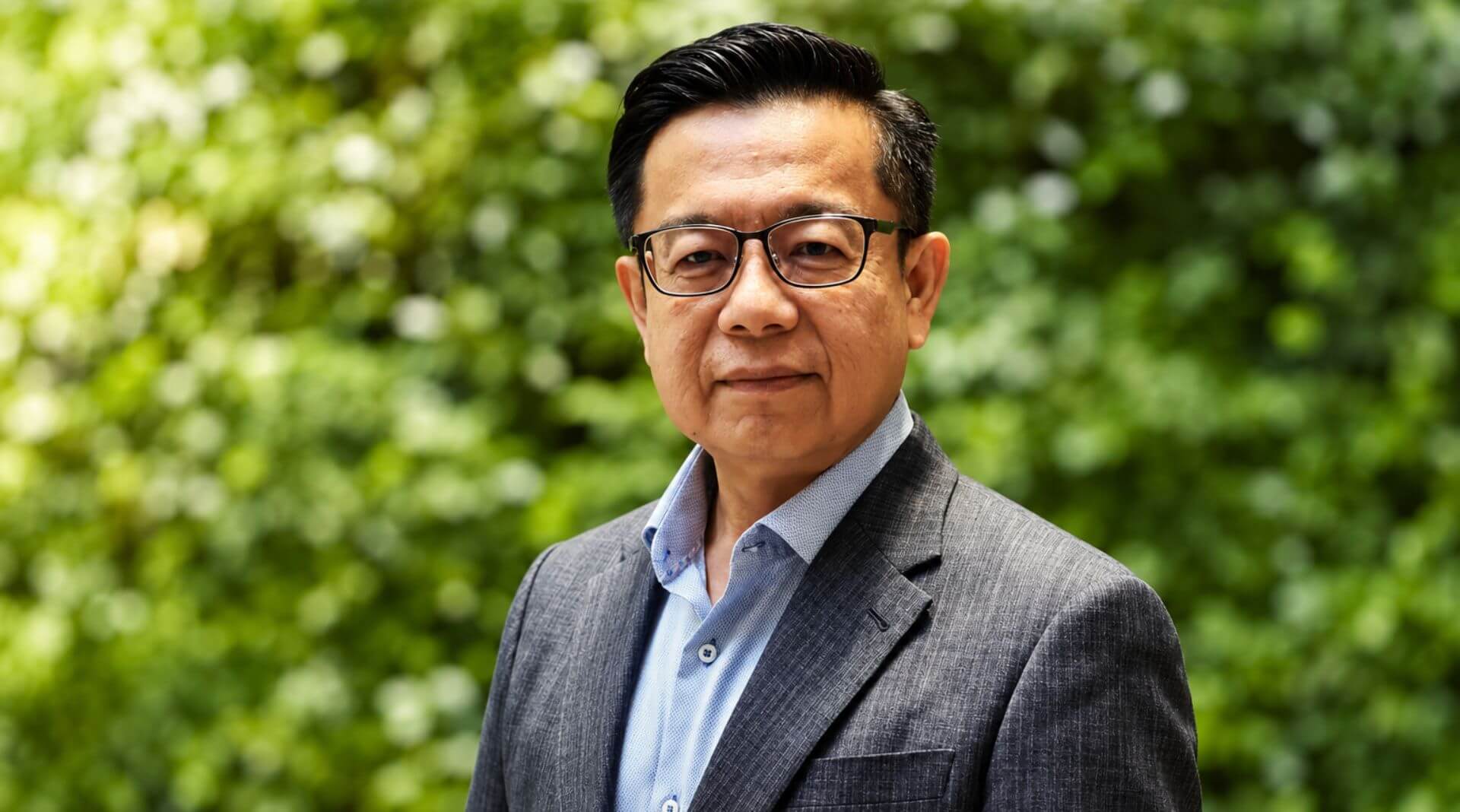
Mr Liew is the Director of AI Innovation at AI Singapore, Singapore’s national artificial intelligence programme. Over the past decade, he has helped shape the country’s approach to AI adoption, talent development and industry collaboration, working at the intersection of technology, economic competitiveness and innovation.
Singapore has long been recognised for effective governance, connectivity and economic competitiveness. How has AI become part of that broader international positioning?
AI has become less a standalone “tech” story and more a lens through which Singapore signals what it has always tried to offer: trust, reliability, and the ability to translate ambition into execution.
For investors and multinationals, a credible national AI strategy is now shorthand for a government that understands where value is heading and can be relied upon to build the infrastructure, talent and governance around it.
In that sense AI reinforces Singapore’s long-standing proposition as a stable, well-governed base from which to operate across Asia, rather than replacing it.
Many countries are investing heavily in artificial intelligence. Looking back, which strategic choices have been most important in shaping Singapore’s approach?
Three stand out.
First, a deliberate focus on deployment over hype, getting AI into real enterprise and public-sector use cases rather than chasing frontier research alone.
Second, treating talent as infrastructure. Programmes that convert local professionals into practitioners are as central as compute or capital.
Third, pairing ambition with trustworthy governance. Frameworks like Singapore’s Model AI Governance approach and AI Verify are designed to make responsible AI a competitive feature, not a compliance burden.
Together these choices support the wider economic aim of moving Singaporean firms up the value chain and keeping the workforce relevant.
International coverage often focuses on AI strategies and funding announcements. What aspects of Singapore’s AI ecosystem do you feel remain underappreciated?
The depth of the applied ecosystem.
Much international coverage focuses on strategy documents and funding announcements, but the more distinctive story is the connective tissue underneath: the way industry, government and the talent pipeline are wired together so that a company can go from problem to deployed solution with real local capability.
The scale of the home market is small; the sophistication of how the pieces fit together is not, and that is genuinely hard to replicate.
Beyond technology itself, how is AI influencing Singapore’s ability to attract investment, businesses and highly skilled talent?
It is increasingly a deciding factor in where firms locate higher-value functions, R&D, data and AI teams, regional decision-making, rather than just back-office operations.
For skilled individuals, the draw is the chance to work on applied problems with regional reach inside a stable, well-connected environment.
AI capability has become part of the overall “operating environment” that Singapore competes on, alongside rule of law, connectivity and ease of doing business.
Looking ahead, what do you believe will define Singapore’s competitive advantage over the next decade?
Not raw scale. Singapore will never win on that.
Its advantage will lie in trust, integration and adaptability: being the place where AI is deployed responsibly and at speed, where governance is credible enough to be exported as a standard, and where the talent base keeps pace with the technology.
If Singapore stays disciplined about turning strategy into deployed outcomes, that combination will be difficult for larger players to match.
To explore AI Singapore’s programmes and initiatives, visit AI Singapore. You can also follow Laurence Liew’s work on LinkedIn.