
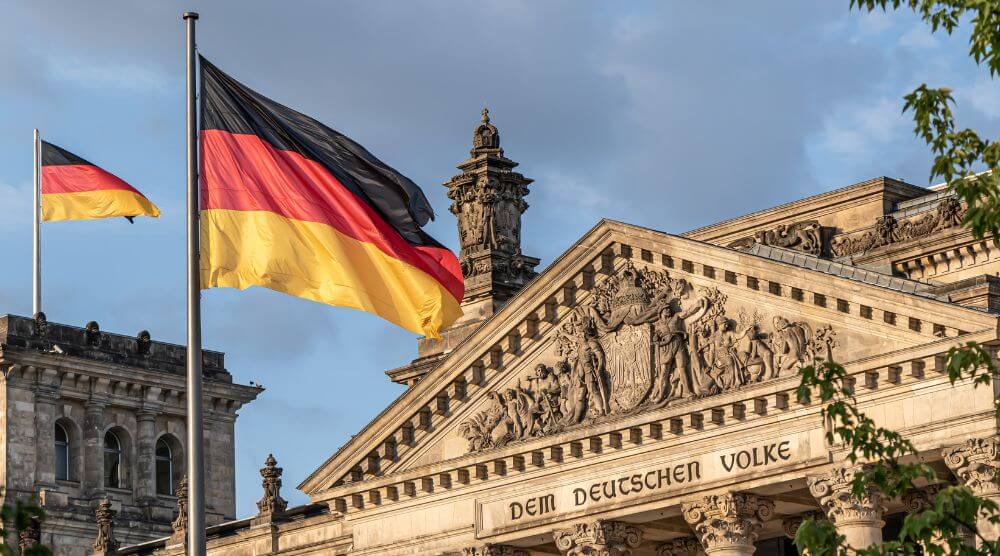
Germany has been among the most admired countries in the world for two decades. It is known for its exports, its engineering and its institutions, and much of the place branding in our record happens in cities such as Hamburg and Berlin.
This profile looks at how Germany is positioned, how it is read from outside, and where the two pull apart, drawing on the major rankings alongside our own coverage of the country since 2014.
Country Brand Strength
Germany placed fifth in the 2026 Anholt Nation Brands Index, three places lower than the year before, after sharing the top two places with Japan since 2023. Anholt stresses that its loss was small and its reputation is not in trouble. In 2014, when Germany led the index, we looked at the reasons.
Oliver Zöllner of Stuttgart Media University told us that Germany’s image changed over about fifteen years, and that planned campaigns had little to do with it. The turning point, in his view, was the 2006 football World Cup, helped by Berlin’s pull as a creative city and the country’s welcome for refugees.
Economic Position
Germany has the third most valuable nation brand in Brand Finance’s Nation Brand Value ranking, though its value fell 8% in 2026. In the Anholt index, its strongest area is exports, carried by well-known consumer brands, and Reputation Lab places it among the top five countries for the value of a “made in” label.
The competitiveness indices are less positive. Germany fell seven places to twenty-second in IMD’s World Competitiveness Ranking in 2023, with business efficiency down to twenty-ninth.
Appeal to Talent
Germany ranked fourteenth in INSEAD’s Global Talent Competitiveness Index 2023 and has eight universities in the global top 100. Munich and Berlin both sit in the top ten of the latest QS Best Student Cities ranking. Expat surveys are much harsher: Expat Insider placed Germany 49th out of 53 countries in 2023, despite good scores for salary, job security and career prospects.
In Hamburg, Stefan Nöthen of Hamburg Marketing told us the city’s challenge abroad is awareness rather than image.
Sustainability and Quality of Life
Germany ranked fourth in the Sustainable Development Report 2023 and thirteenth in the Environmental Performance Index 2022, and third in the Good Country Index 2024.
German cities in our record show how place branding has changed. Peter Pirck of Brandmeyer Markenberatung described a move from city marketing that tries to cover everything to city brand management built on a few themes and on residents’ involvement, and our Bielefeld case shows a city that rebranded with its residents.
What Stands Out
Germany’s reputation is high and steady, built less by campaigns than by its products, its institutions and moments such as 2006.
The weaker signals are economic and everyday: competitiveness rankings have fallen, the brand’s value dropped in 2026, and newcomers rate daily life in Germany among the lowest of the countries surveyed.
Germany is seen much as it presents itself: reliable, well run and strong in exports. Its creative and cultural side comes through mainly via Berlin.
Made in Germany is one of the strongest country-of-origin labels in the world, a position few countries can claim.
Reputation and sustainability results back the brand. Falling competitiveness and a weak welcome for expats are the soft spots.
Positions are relative to the places in TPBO’s editorial record and based on public material only.
Want the same reading for your own place? Request a free Outside View →
From Our Archive
- 2026Stefan Nöthen on building Hamburg’s international awareness
- 2026Hamburg: city brand, positioning and reputation
- 2024Good Country Index 2024: Finland leads, followed by Sweden and Germany
- 2018Thorsten Kausch on Hamburg, MICE and the future of city marketing
- 2018How Bielefeld used participatory city branding
- 2017Peter Pirck on city branding practices in Germany
- 2017Eight city marketing trends from Städte als Marken
- 2017How Hamburg moved from destination marketing to city branding
- 2017Sebastian Zenker: four lessons from Hamburg
- 2017Oliver Zöllner on place branding in Germany
- 2017Petra Trimborn on destination branding and sustainability in Germany
- 2017Björn P. Jacobsen on cross-border place branding in Europe
- 2016How LIKE BERLIN helps residents express their view of the city
- 2015Christof Biggeleben on city branding, history and Berlin
- 2014Why Germany first in the 2014 Nation Brands Index is good news
About this profile. We combine the main international rankings, including Brand Finance‘s Nation Brand Value and the Anholt Nation Brands Index, with our own interviews and reporting. Rankings change every year, so positions are described in broad terms. See the rankings and indices we follow, or explore our other country profiles.