
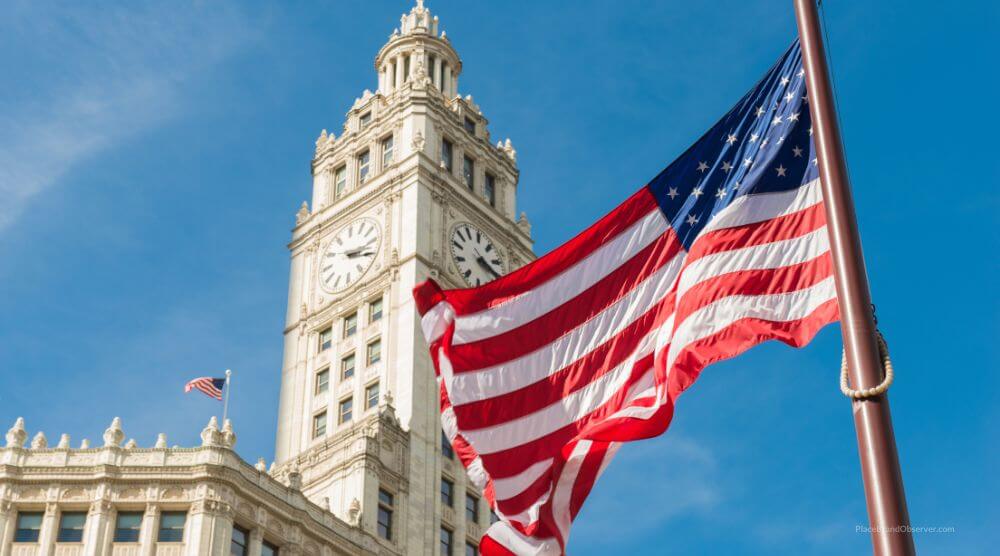
The United States has the world’s largest economy and its most valuable nation brand. It is known for its technology companies, universities, culture and cities such as New York, Los Angeles and Chicago. In the past two years its international reputation has fallen in almost every ranking we follow.
This profile looks at how the United States is positioned, how it is read from outside, and where the two pull apart, drawing on the major rankings alongside our interviews with American city and regional leaders since 2017.
Country Brand Strength
The US fell from 14th to 17th in the 2026 Anholt Nation Brands Index, after leaving the top ten for the first time in 2025. It has moved down from the top brand band, and for favourability it is now in the high twenties. This year the losses came mainly from countries that used to rate it highly, such as India. Americans rate their own country higher than last year, so the gap between how Americans and the rest of the world see the US is now close to 15 points.
Brand Finance still places the US first in its Global Soft Power Index, but with the steepest decline of any country in 2026, led by governance, international relations and friendliness. Its Nation Brand Value remains the highest in the world at US$34.7 trillion, 7% lower than in 2025, and Reputation Lab’s RepCore Nations 2026 found no recovery from its setback the year before.
In a 2021 guest commentary, Hjörtur Smárason argued that a place brand is built by what a country does, not what it says, and that trust takes much longer to rebuild than to lose. He saw the deepest problem in a divided identity at home, where party had become a stronger part of many people’s identity than nationality.
Economic Position
The economic picture is stronger than the reputational one. The US climbed back into the top ten of IMD’s World Competitiveness Yearbook 2026, with infrastructure rising to third in the world. American brands account for more than three-quarters of the value of Brand Finance’s Technology 100, even though the US is only third for perceived technology and innovation, as our analysis of the innovation results found.
Much of the positioning work happens in regions and cities. In Minneapolis–Saint Paul, Peter Frosch of GREATER MSP told us in 2026 that the region has set itself missions in health technology, clean energy, food and AI, and delivered its first sustainable aviation fuel to the airport after a three-year sprint. His aim is for the region to become known as the problem-solving capital of North America.
Appeal to Talent
American cities remain among the world’s strongest talent magnets, with 34 of the top 100 places in the Oxford Economics Global Cities Index. At national level, the picture has weakened. INSEAD’s Global Talent Competitiveness Index placed the US ninth in 2025, its lowest result ever. New international student enrolment fell by 17% in autumn 2025, and new student visas by 36%, as our review of five talent rankings found.
Cost is the other limit. In the QS Best Student Cities ranking, Boston, New York and San Francisco all score below 7 out of 100 for affordability, and no North American city is in the top ten.
Sustainability and Quality of Life
The US sits in the lower part of the Global Peace Index. Oxford Economics, which ranks New York first overall, places it in the 160s for both environment and governance, with high housing costs among its weaknesses. In the Anholt index, the US is now 46th of 50 countries on whether it behaves responsibly on international peace and security.
Our interviews with American place leaders point to a different, more local story. Cities and regions such as Cleveland and Minneapolis–Saint Paul are working on civic confidence, quality of life and their own economic strengths.
What Stands Out
The United States shows how quickly a strong national reputation can weaken when trust is in question. Its economy, companies and universities are still among the world’s strongest, and Brand Finance still ranks it first for soft power, but nearly every perception ranking has moved the same way.
For its cities and regions, this means the national image now helps less than it used to. Places such as Minneapolis–Saint Paul are building their own stories on concrete missions and results, which may matter more to investors and talent than the country’s image abroad.
Americans rate their country more highly than last year, while the rest of the world rates it lower. The gap between the two views is now close to 15 points.
Its companies, culture, universities and cities make the US one of the most recognisable countries in the world.
Economic strength, technology and universities back the brand. Falling trust, visa policy, safety and the cost of living in its major cities weaken it.
Positions are relative to the places in TPBO’s editorial record and based on public material only.
Want the same reading for your own place? Request a free Outside View →
From Our Archive
- 2026Anholt Nation Brands Index 2026: Japan leads, Italy rises, the US falls further
- 2026The US in decline as hard power returns: Global Soft Power Index 2026
- 2026Peter Frosch on neighborism, big missions and Minnesota’s next economy
- 2026David Gilbert on place leadership, civic confidence and Cleveland’s evolution
- 2025America’s Best Cities 2025: top 10, trends and takeaways
- 2023Amanda Ellis on livability priorities and the rise of small cities in the US
- 2021Is America back again? Rebuilding Brand America
- 2018Efe Sevin on exurban place branding, Brand America and the American Dream
About this profile. We combine the main international rankings, including the Anholt Nation Brands Index, Brand Finance’s Global Soft Power Index and Nation Brand Value, RepCore Nations, IMD’s World Competitiveness Ranking and INSEAD’s Global Talent Competitiveness Index, with our own interviews and reporting. Rankings change every year, so positions are described in broad terms. See the rankings and indices we follow, or explore our other country profiles.