
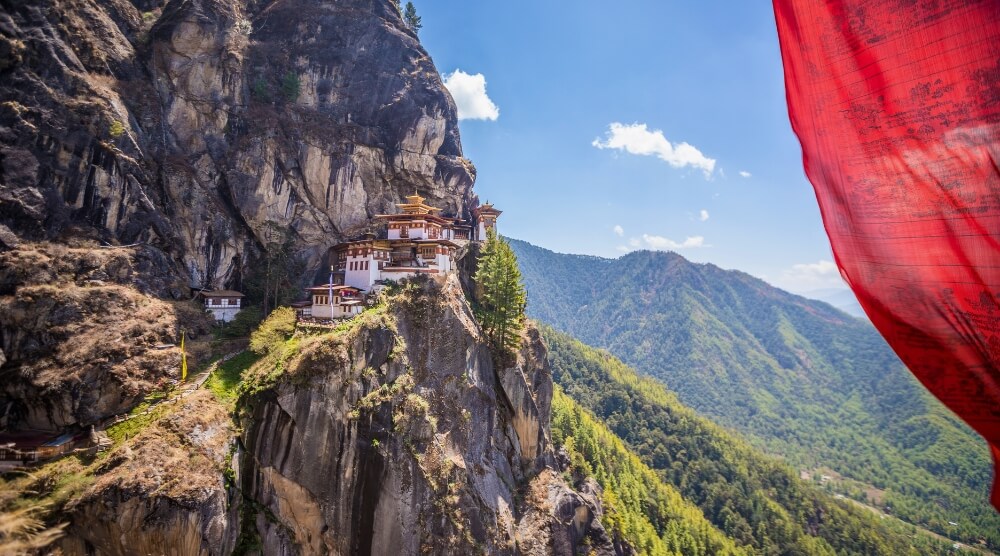
Bhutan is a small Himalayan kingdom between India and China. It is known around the world for one idea: Gross National Happiness, a way of measuring progress that gives wellbeing, culture and the environment the same weight as economic growth.
This profile looks at how Bhutan is positioned, how it is read from outside, and where the two pull apart, drawing on our archive and the major international rankings.
Country Brand Strength
Bhutan entered Brand Finance‘s Global Soft Power Index in 2024, in the low 120s. Its global influence is small, but its central idea travels much further than its size would suggest.
In a 2016 essay for TPBO, nation brand expert Aparna Sharma called Bhutan a “demure brand”. Gross National Happiness, she argued, is a powerful contribution from an otherwise unassuming country. Bhutan has the ingredients of a nation brand, from its tourism line “Happiness is a Place” to clear national priorities, but no umbrella brand that presents them together.
Economic Position
Bhutan has chosen a cautious path. Its tourism policy has focused on high value and low volume since 1974, later adjusted to high value and low impact. Foreign investment has been limited: Sharma noted reports of fewer than 60 foreign investments over nearly a decade up to 2013.
The government has said it welcomes investment, but only from businesses that are clean, green and sustainable, such as renewable energy, organic farming, tourism, education and IT. Bloom Consulting placed Bhutan around 150th for its trade brand and in the low 130s for tourism in 2022-2023.
Appeal to Talent
Bhutan provides free health care and education, but Sharma pointed to challenges around jobs, infrastructure and skilled talent, alongside the hopes of a growing middle class. The major talent rankings do not yet cover it.
Sustainability and Quality of Life
Bhutan’s brand rests on sustainability, and much of it is backed by facts: it is carbon neutral and about 70% of the country is forest. Gross National Happiness is measured every year with an index of more than 120 indicators, and new policies are screened against it.
It placed in the high teens of the Global Peace Index 2023, first in South Asia, and in the mid-twenties of the Corruption Perceptions Index 2022. Other results are more mixed: the Sustainable Development Report 2023 placed it in the low sixties, with major challenges on hunger, decent work and life on land, and its environmental performance score has fallen over the past decade.
What Stands Out
Few countries have an idea as clearly their own as Gross National Happiness. It is what people know about Bhutan, and it matches how the country presents itself.
The challenge is less about being seen correctly than about being seen at all. Bhutan manages change at its own pace, and its brand reflects that choice. Its economic and social pressures are where the idea will be tested.
Bhutan is read much as it presents itself: through Gross National Happiness and its natural setting.
Gross National Happiness is an idea no other country can claim.
Carbon neutrality, forests, peace and low corruption back the brand. Jobs, development and environmental trends test it.
Positions are relative to the places in TPBO’s editorial record and based on public material only.
Want the same reading for your own place? Request a free Outside View →
From Our Archive
- 2017Current state of place branding practice in Asia
- 2016Country brands Asia: Bhutan, a demure brand (Aparna Sharma)
About this profile. We combine the main international rankings, including Brand Finance’s Global Soft Power Index, Bloom Consulting’s Country Brand Ranking, the Global Peace Index and the Sustainable Development Report, with our own interviews and reporting. Rankings change every year, so positions are described in broad terms. See the rankings and indices we follow, or explore our other country profiles.