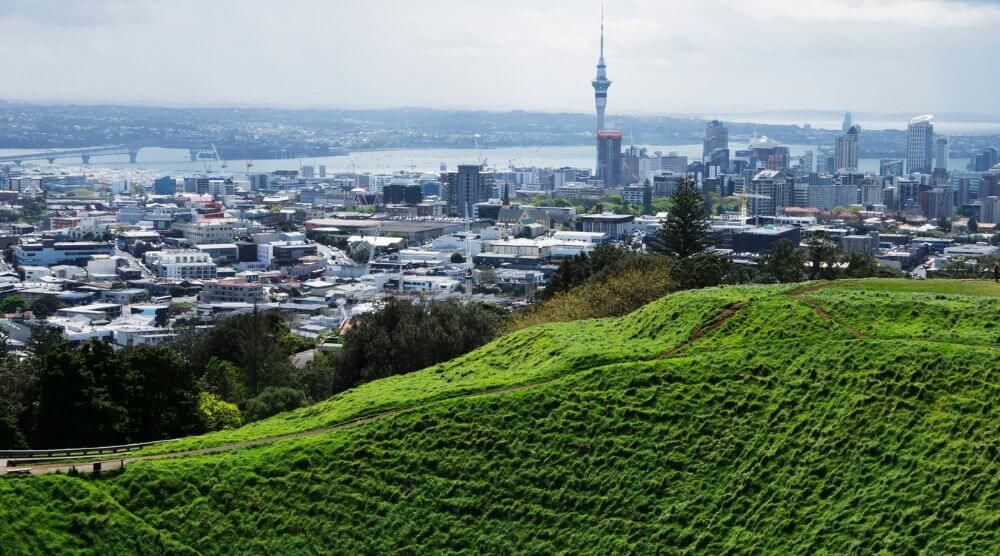
Auckland, Tāmaki Makaurau, is New Zealand‘s largest city and its economic centre. Its brand won City Nation Place’s Place Brand of the Year in 2020, and it was built on one of the most thorough research processes we have documented.
This profile looks at how Auckland is positioned, how it is read from outside, and where the two pull apart, drawing on the major rankings alongside our own coverage of the city.
City Brand Strength
Auckland has risen steadily in Resonance’s World’s Best Cities, from the high nineties to the high forties, while falling back in Brand Finance‘s Global City Index.
Shelley Watson and Clare Barker of Auckland Unlimited told us that their research showed a city with strong rational appeal and weak emotional appeal. Their analysis covered workshops with residents and iwi partners, surveys abroad and some 92 million online conversations. It found two narrative gaps: the world does not know that New Zealand has a metropolis, and few people outside the country know how present Māori culture is in daily city life. The brand they built rests on four themes: Place of Mana, Collective Worlds, Playground for Ideas and Urban Oasis.
Economic Position
Auckland does not appear in the major financial centre rankings and sits in the seventies of the Innovation Cities Index, though it has improved. Its strongest sectors, as Auckland Unlimited describes them, are creative and tech industries including screen production, food and beverage, advanced manufacturing and tourism.
Screen production is the clearest international proof: major productions for Amazon and Netflix have been based in the city.
Appeal to Talent
Auckland ranks among the top five of Mercer’s Quality of Living Ranking, one of the highest positions of any city in TPBO’s Observatory. Its cost of living has risen sharply, and its main competition for talent is close by, in Australia’s larger cities.
Urban Sustainability
Auckland sits in the forties of IESE’s Cities in Motion Index and around thirtieth in IMD’s Smart City Index. Auckland Unlimited has tied sustainability to the Māori value of kaitiakitanga, guardianship of the land and sea, which also shaped its most successful campaign, released during the first pandemic lockdown.
What Stands Out
Auckland knows its own legibility gap better than most cities, because it went looking for it. It found a city admired for its setting and its quality of life but not recognised as a metropolis, and a living indigenous culture that is largely invisible from outside.
In TPBO’s reading, Auckland’s brand is unusually well grounded. What remains open is whether the urban and economic story, Playground for Ideas, can earn the same recognition as the natural setting that has always carried New Zealand’s image.
Auckland presents itself as a city, with Māori culture at its centre. What people find is New Zealand’s nature, with the city in the background.
A bicultural city with a living indigenous culture is something few places can claim. Quality of life is shared with many others.
Quality of life is backed by top-five rankings. The business and innovation story has less evidence on show, beyond screen production.
Positions are relative to the places in TPBO’s editorial record and based on public material only.
Want the same reading for your own place? Request a free Positioning Check →
From Our Archive
- 2021Auckland city branding success story: Place Brand Leaders podcast
- 2021Auckland showcase: Shelley Watson and Clare Barker on building the city brand
- 2021Brand New Zealand: reputation strengths and positioning opportunities
- 2018Rodney Payne on the Tourism Sentiment Index by Destination Think
About this profile. We combine the main international rankings, including Brand Finance‘s Global City Index and Resonance’s World’s Best Cities, with our own interviews and reporting. Rankings change every year, so positions are described in broad terms. See the rankings and indices we follow, or explore our other city profiles.