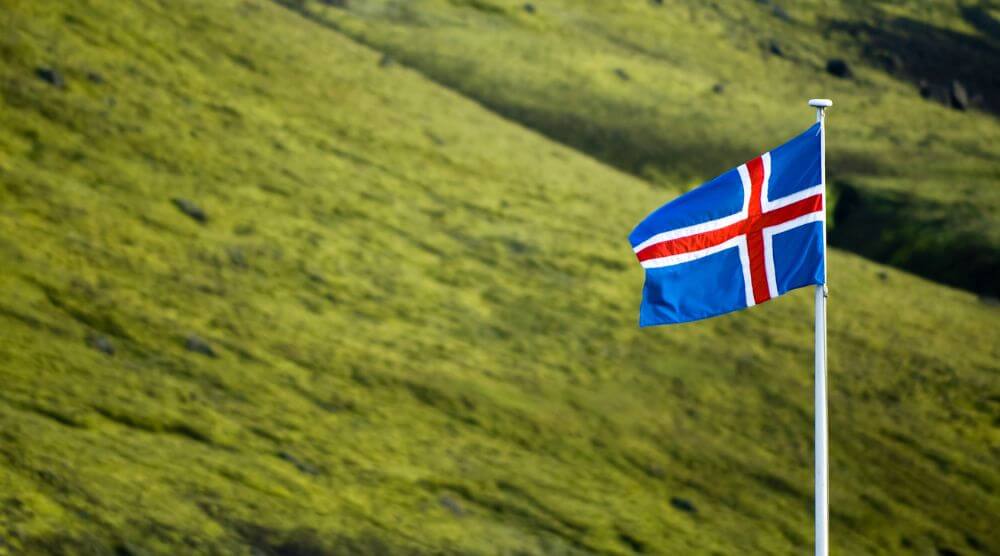
Iceland turned two crises into a reputation. After the financial crash of 2008 and the volcanic eruption of 2010, which put the country in the news for the wrong reasons, it rebuilt its international image around nature, culture and a newly unified promotion agency. Tourism became its largest industry.
This profile looks at how Iceland is positioned, how it is read from outside, and where the two pull apart, drawing on the major rankings alongside our own coverage of the country since 2016.
Country Brand Strength
Iceland ranks in the low twenties of the Anholt-Ipsos Nation Brands Index and in the thirties of Brand Finance‘s Global Soft Power Index, a strong result for a country of its size.
Inga Hlín Pálsdóttir, then a director at Promote Iceland, told us in 2016 how the agency was set up in 2010 to bring trade, investment and destination marketing under one roof. It organised its work around six growth pillars rather than industries: sustainable energy, tourism, arts and creativity, food, IT and tech, and health and wellness. Her aim was to add people, culture and the economy to a tourism brand long built on nature alone. Brand tracking at the time showed winter interest in key markets up by more than half within three years.
Economic Position
Iceland ranks in the mid-teens of IMD’s World Competitiveness Ranking and among the strong innovators of the European Innovation Scoreboard. Bloom Consulting’s rankings show the gap clearly: its tourism brand sits in the global top forty, its trade and investment brand far lower.
Appeal to Talent
Iceland is in the top fifteen of INSEAD’s Global Talent Competitiveness Index, strongest on knowledge skills.
Sustainability and Quality of Life
Iceland has led the Global Peace Index for well over a decade and ranks near the top of the World Happiness Report and in the top ten of the Environmental Performance Index. Visit Reykjavik was named by Chile’s Rossana Dresdner as an example of a destination strategy that goes beyond tourism, with sustainability at its core. Robert A. Saunders looked at how screen tourism and Nordic Noir have shaped the image of countries like Iceland.
What Stands Out
Iceland’s tourism brand is one of the clearest recovery stories in our record. Within a few years, a country associated with a banking collapse and an ash cloud became a destination people put at the top of their lists.
In TPBO’s reading, that success also shaped the image. Iceland is known for its landscape, and much less for its economy, its innovation or its energy. Promote Iceland set out to change that a decade ago. The rankings suggest the destination still speaks much louder than the country behind it.
Iceland’s nature comes through clearly. Its economy, energy and innovation, which it also promotes, are much less visible.
Few places have landscapes as recognisable. Its Nordic values are shared with its neighbours.
Peace, happiness and environmental rankings back the brand strongly. Its trade and investment brand is far weaker.
Positions are relative to the places in TPBO’s editorial record and based on public material only.
Want the same reading for your own place? Request a free Positioning Check →
From Our Archive
- 2025Rossana Dresdner on values-based nation branding (on Visit Reykjavik)
- 2020Robert A. Saunders on screen tourism, nation branding and the Nordic Noir effect
- 2017Reflections on the international branding strategy of the Nordic region
- 2016Inga Hlín Pálsdóttir on destination branding and Iceland
About this profile. We combine the main international rankings, including Brand Finance‘s Global Soft Power Index, with our own interviews and reporting. Rankings change every year, so positions are described in broad terms. See the rankings and indices we follow, or explore our other country profiles.